Gündüz Ercan, Ülger Burak Veli, İbiloğlu İbrahim, Ekinci Aysun, Dursun Recep, Zengin Yılmaz, İçer Mustafa, Uslukaya Ömer, Ekinci Cenap, Güloğlu Cahfer
Department of Emergency Medicine, Faculty of Medicine, Dicle University, Diyarbakır, Turkey.
Department of General Surgery, Faculty of Medicine, Dicle University, Diyarbakır, Turkey.
Med Sci Monit. 2015 Apr 19;21:1107-14. doi: 10.12659/MSM.893180.
The aim of this study was to investigate the protective effects of L-glutamine (GLN) against liver and kidney injury caused by acute toxicity of deltamethrin (DLM).
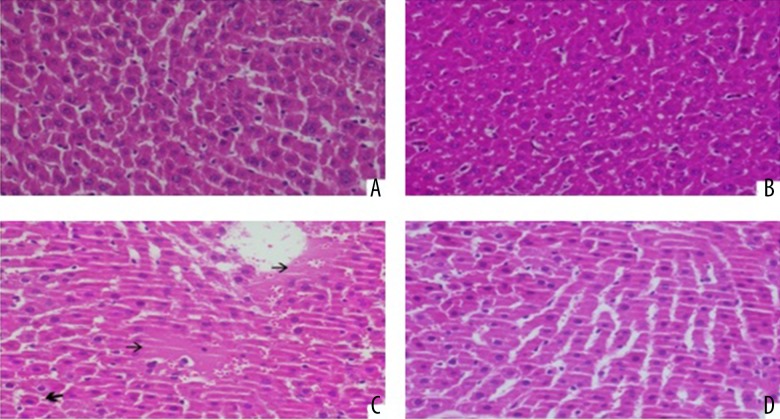
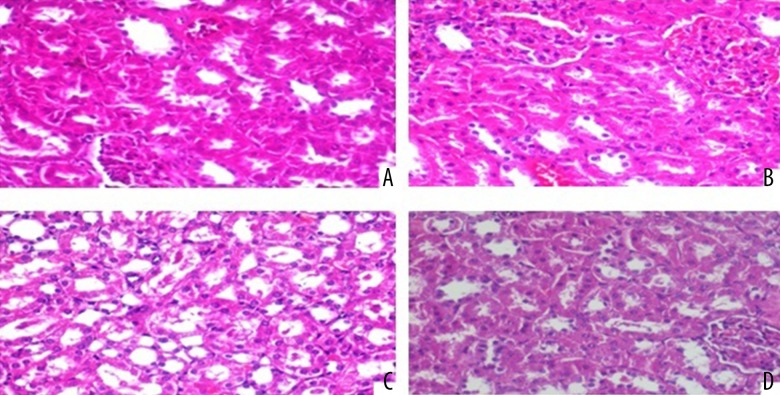
Thirty-two rats were indiscriminately separated into 4 groups with 8 rats each: control group (distilled water; 10 ml/kg, perorally [p.o.]), DLM group (35 mg/kg p.o. one dose.), GLN group (1.5 gr/kg, p.o. single dose.) and DLM (35 mg/kg p.o. one dose.) + GLN group (1.5 gr/kg, p.o. one dose after 4 hours.). Testing for total antioxidant status (TAS), total oxidant status (TOS), interleukin-1 beta (IL-1β), tumor necrosis factor-alpha (TNF-α), and interleukin-6 (IL-6) analyses were performed on tissue samples, and alanine aminotransferase (ALT), aspartate aminotransferase (AST), lactate dehydrogenase (LDH), urea, and creatinine were analyzed on serum samples. Liver and kidney samples were histopathologically analyzed.
The TOS level in liver was significantly higher in the DLM group than in the control group, and the level in DLM+GLN group was considerably lower than in the DLM group. The TAS level in the DLM+GLN group was considerably higher than in the control and DLM groups. The TAS level in kidney tissues was considerably lower in the DLM group than in controls, but was similar to other groups. Histopathological analyses of liver tissues established a significant difference between DLM and DLM+GLN groups in terms of grade 2 hepatic injury. However, no significant difference was found between DLM and DLM+GLN groups in terms of kidney injury.
Glutamine leads to significant improvement in deltamethrin-induced acute hepatotoxicity in terms of histopathologic results, tissue oxidative stress parameters, and serum liver function marker enzymes.
本研究旨在探讨L-谷氨酰胺(GLN)对溴氰菊酯(DLM)急性毒性所致肝、肾损伤的保护作用。
32只大鼠随机分为4组,每组8只:对照组(蒸馏水;10 ml/kg,口服[p.o.])、DLM组(35 mg/kg口服,单剂量)、GLN组(1.5 g/kg,口服,单剂量)和DLM(35 mg/kg口服,单剂量)+GLN组(1.5 g/kg,4小时后口服,单剂量)。对组织样本进行总抗氧化状态(TAS)、总氧化状态(TOS)、白细胞介素-1β(IL-1β)、肿瘤坏死因子-α(TNF-α)和白细胞介素-6(IL-6)分析,并对血清样本进行丙氨酸氨基转移酶(ALT)、天冬氨酸氨基转移酶(AST)、乳酸脱氢酶(LDH)、尿素和肌酐分析。对肝和肾样本进行组织病理学分析。
DLM组肝脏中的TOS水平显著高于对照组,而DLM+GLN组的水平明显低于DLM组。DLM+GLN组的TAS水平明显高于对照组和DLM组。DLM组肾组织中的TAS水平明显低于对照组,但与其他组相似。肝组织的组织病理学分析显示,DLM组和DLM+GLN组在2级肝损伤方面存在显著差异。然而,DLM组和DLM+GLN组在肾损伤方面未发现显著差异。
从组织病理学结果、组织氧化应激参数和血清肝功能标记酶来看,谷氨酰胺可显著改善溴氰菊酯诱导的急性肝毒性。