Jones Dean P, Sies Helmut
1 Department of Medicine, Emory University , Atlanta, Georgia .
2 Institute for Biochemistry and Molecular Biology I, Heinrich Heine University Düsseldorf , Düsseldorf, Germany .
Antioxid Redox Signal. 2015 Sep 20;23(9):734-46. doi: 10.1089/ars.2015.6247. Epub 2015 Jun 1.
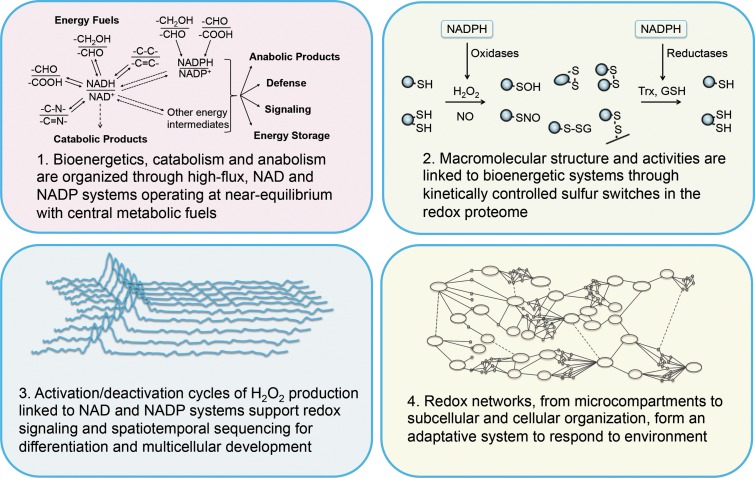
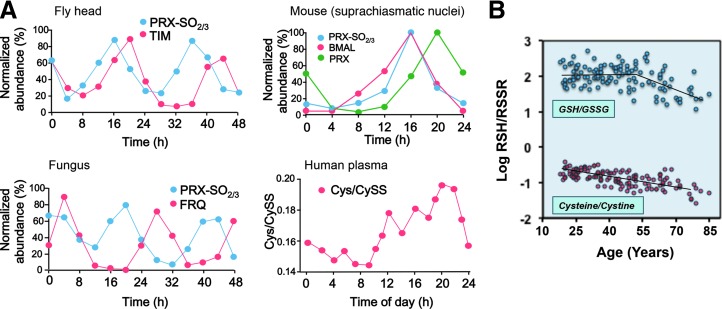
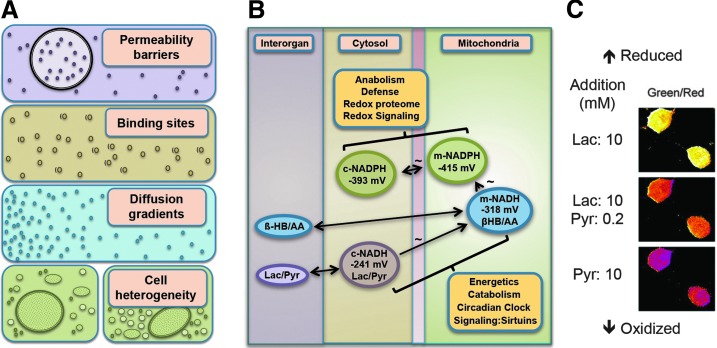
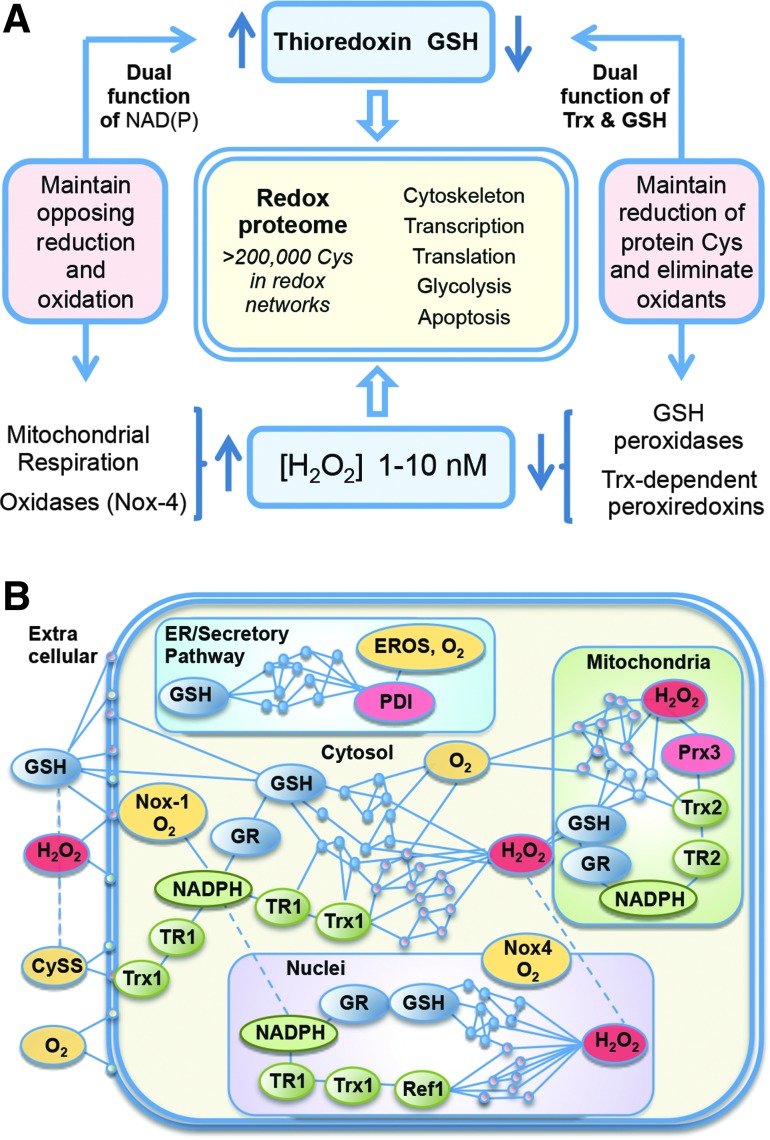
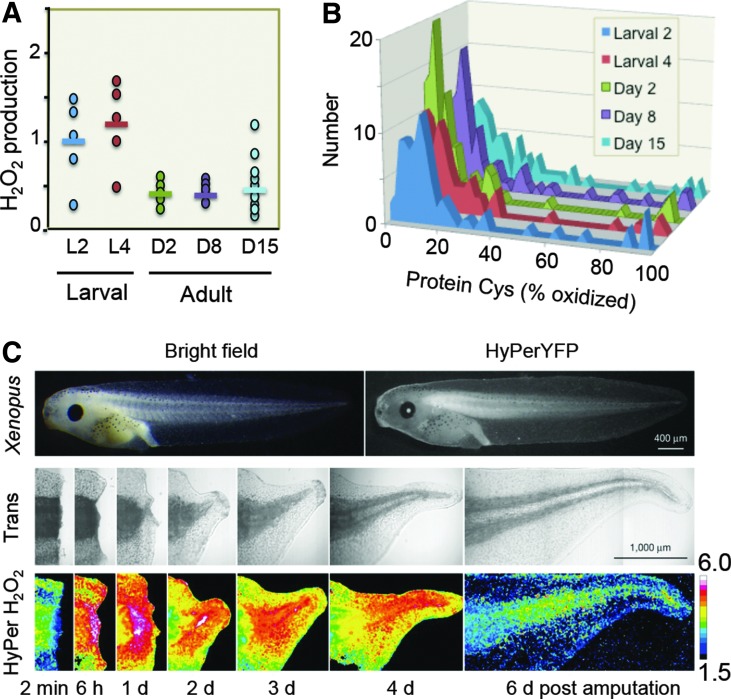
The redox code is a set of principles that defines the positioning of the nicotinamide adenine dinucleotide (NAD, NADP) and thiol/disulfide and other redox systems as well as the thiol redox proteome in space and time in biological systems. The code is richly elaborated in an oxygen-dependent life, where activation/deactivation cycles involving O₂ and H₂O₂ contribute to spatiotemporal organization for differentiation, development, and adaptation to the environment. Disruption of this organizational structure during oxidative stress represents a fundamental mechanism in system failure and disease.
Methodology in assessing components of the redox code under physiological conditions has progressed, permitting insight into spatiotemporal organization and allowing for identification of redox partners in redox proteomics and redox metabolomics.
Complexity of redox networks and redox regulation is being revealed step by step, yet much still needs to be learned.
Detailed knowledge of the molecular patterns generated from the principles of the redox code under defined physiological or pathological conditions in cells and organs will contribute to understanding the redox component in health and disease. Ultimately, there will be a scientific basis to a modern redox medicine.
氧化还原密码是一组原则,它定义了烟酰胺腺嘌呤二核苷酸(NAD、NADP)、硫醇/二硫键及其他氧化还原系统以及生物系统中硫醇氧化还原蛋白质组在空间和时间上的定位。该密码在依赖氧气的生命过程中得到了充分阐述,其中涉及O₂和H₂O₂的激活/失活循环有助于分化、发育以及对环境适应的时空组织。氧化应激期间这种组织结构的破坏是系统故障和疾病的一种基本机制。
评估生理条件下氧化还原密码组成部分的方法已经取得进展,这有助于深入了解时空组织,并能在氧化还原蛋白质组学和氧化还原代谢组学中识别氧化还原伙伴。
氧化还原网络和氧化还原调节的复杂性正在逐步显现,但仍有许多需要了解。
详细了解细胞和器官在特定生理或病理条件下由氧化还原密码原则产生的分子模式,将有助于理解健康和疾病中的氧化还原成分。最终,现代氧化还原医学将有科学依据。