Zhang Jun, Troendle James, Grantz Katherine L, Reddy Uma M
Xinhua Hospital, Shanghai Jiao Tong University School of Medicine, Shanghai, China.
National Heart Lung Blood Institute, National Institutes of Health, Maryland.
Am J Obstet Gynecol. 2015 Jun;212(6):750.e1-4. doi: 10.1016/j.ajog.2015.04.014. Epub 2015 Apr 16.
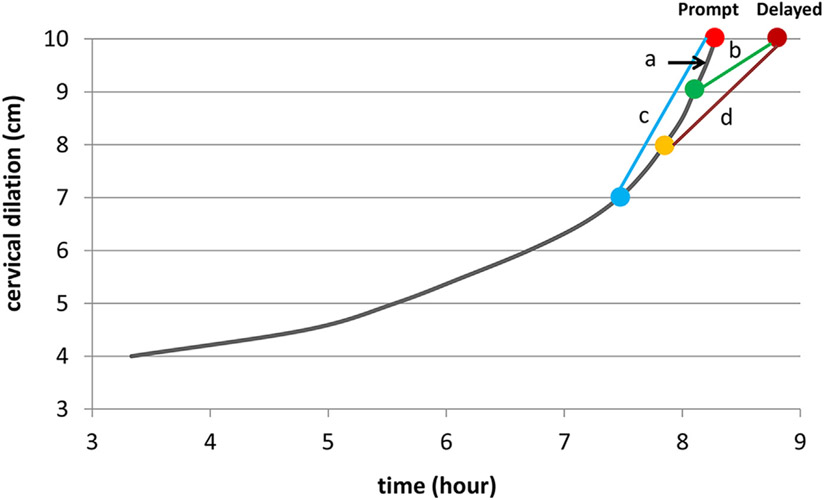
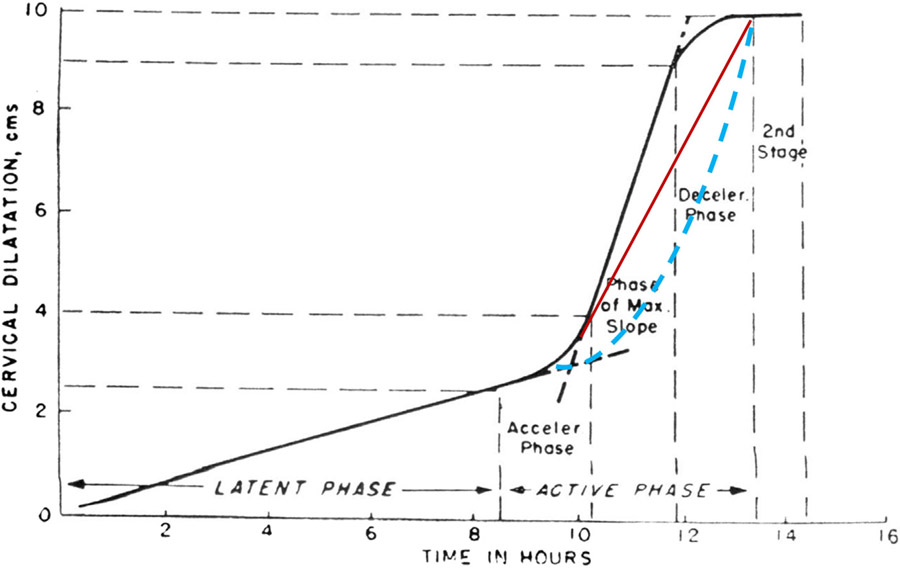
In a recent review by Cohen and Friedman, several statistical questions on modeling labor curves were raised. This article illustrates that asking data to fit a preconceived model or letting a sufficiently flexible model fit observed data is the main difference in principles of statistical modeling between the original Friedman curve and our average labor curve. An evidence-based approach to construct a labor curve and establish normal values should allow the statistical model to fit observed data. In addition, the presence of the deceleration phase in the active phase of an average labor curve was questioned. Forcing a deceleration phase to be part of the labor curve may have artificially raised the speed of progression in the active phase with a particularly large impact on earlier labor between 4 and 6 cm. Finally, any labor curve is illustrative and may not be instructive in managing labor because of variations in individual labor pattern and large errors in measuring cervical dilation. With the tools commonly available, it may be more productive to establish a new partogram that takes the physiology of labor and contemporary obstetric population into account.
在科恩和弗里德曼最近的一篇综述中,提出了几个关于产程曲线建模的统计学问题。本文表明,要求数据拟合预先设定的模型,或者让一个足够灵活的模型拟合观测数据,这是原始弗里德曼曲线与我们的平均产程曲线在统计建模原则上的主要区别。一种基于证据构建产程曲线并确定正常值的方法应允许统计模型拟合观测数据。此外,平均产程曲线活跃期减速期的存在受到了质疑。强行将减速期作为产程曲线的一部分,可能会人为提高活跃期的进展速度,对4至6厘米的早期产程影响尤为显著。最后,任何产程曲线都只是说明性的,由于个体产程模式的差异以及宫颈扩张测量的较大误差,它在产程管理中可能并无指导意义。利用现有的工具,建立一个考虑到产程生理学和当代产科人群的新产程图可能更有成效。