Rahavi Hossein, Hashemi Seyed Mahmoud, Soleimani Masoud, Mohammadi Jamal, Tajik Nader
Division of Transplant Immunology and Immunogenetics, Immunology Research Center (IRC), Iran University of Medical Sciences, Tehran, Iran.
Department of Immunology, School of Medicine, Shahid Beheshti University of Medical Sciences, Tehran, Iran ; Department of Stem Cell Biology, Stem Cell Technology Research Center, Tehran, Iran.
J Diabetes Res. 2015;2015:878535. doi: 10.1155/2015/878535. Epub 2015 Mar 29.
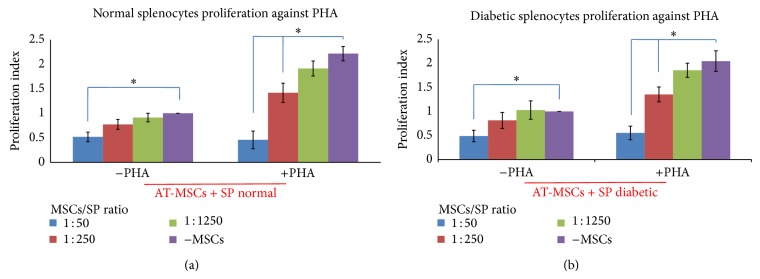
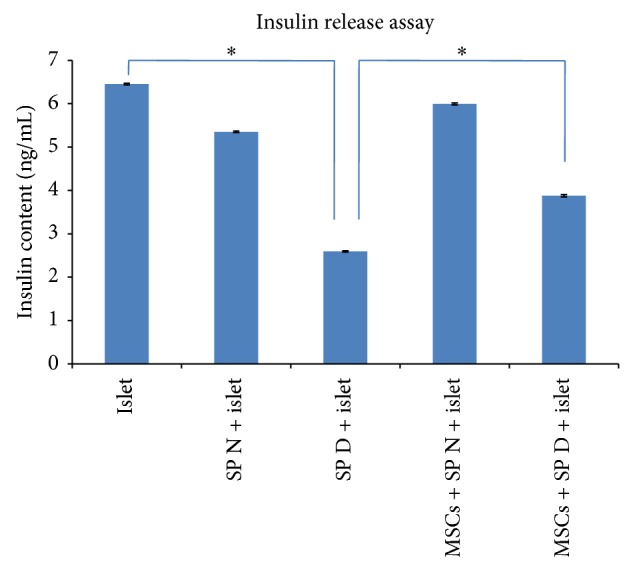
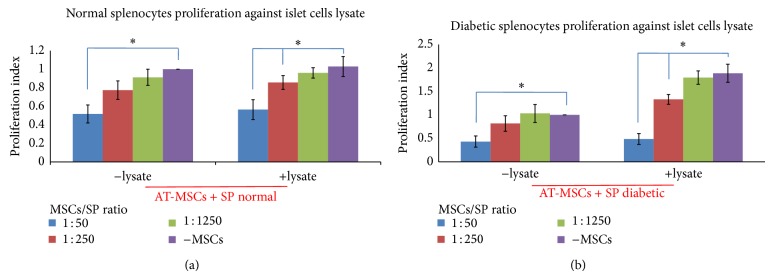
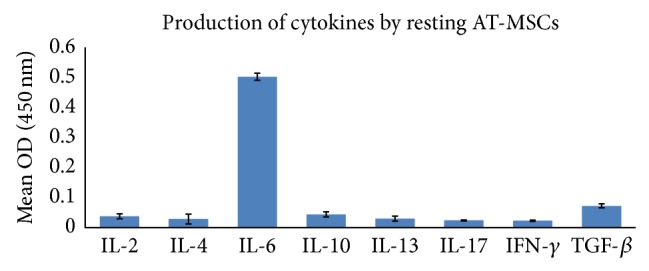
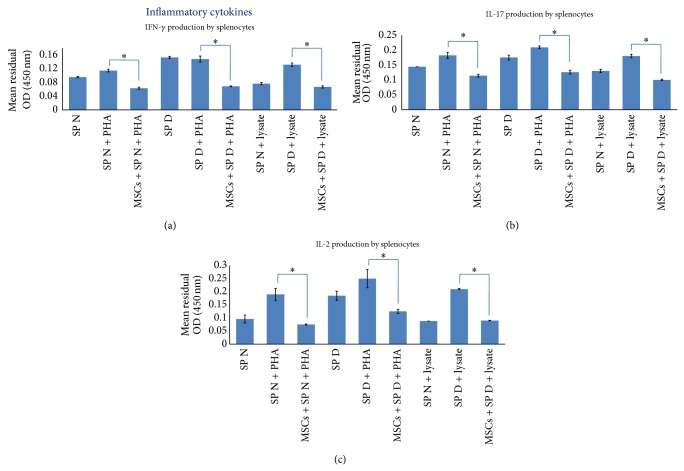
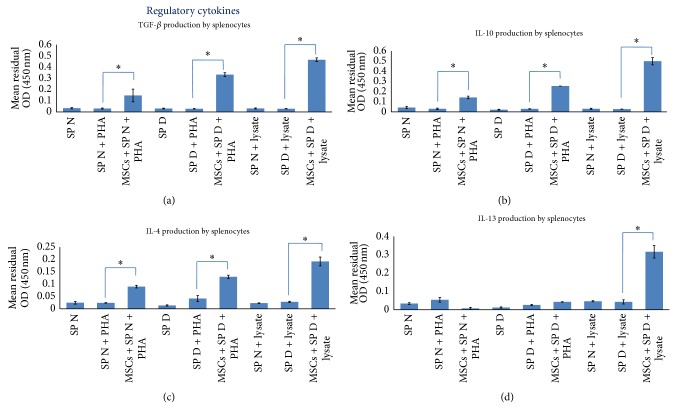
Regenerative and immunomodulatory properties of mesenchymal stem cells (MSCs) might be applied for type 1 diabetes mellitus (T1DM) treatment. Thus, we proposed in vitro assessment of adipose tissue-derived MSCs (AT-MSCs) immunomodulation on autoimmune response along with beta cell protection in streptozotocin- (STZ-) induced diabetic C57BL/6 mice model. MSCs were extracted from abdominal adipose tissue of normal mice and cultured to proliferate. Diabetic mice were prepared by administration of multiple low-doses of streptozotocin. Pancreatic islets were isolated from normal mice and splenocytes prepared from normal and diabetic mice. Proliferation, cytokine production, and insulin secretion assays were performed in coculture experiments. AT-MSCs inhibited splenocytes proliferative response to specific (islet lysate) and nonspecific (PHA) triggers in a dose-dependent manner (P < 0.05). Decreased production of proinflammatory cytokines, such as IFN-γ, IL-2, and IL-17, and increased secretion of regulatory cytokines such as TGF-β, IL-4, IL-10, and IL-13 by stimulated splenocytes were also shown in response to islet lysate or PHA stimulants (P < 0.05). Finally, we demonstrated that AT-MSCs could effectively sustain viability as well as insulin secretion potential of pancreatic islets in the presence of reactive splenocytes (P < 0.05). In conclusion, it seems that MSCs may provide a new horizon for T1DM cell therapy and islet transplantation in the future.
间充质干细胞(MSCs)的再生和免疫调节特性可能适用于1型糖尿病(T1DM)的治疗。因此,我们提出在体外评估脂肪组织来源的间充质干细胞(AT-MSCs)对自身免疫反应的免疫调节作用以及在链脲佐菌素(STZ)诱导的糖尿病C57BL/6小鼠模型中对β细胞的保护作用。从正常小鼠的腹部脂肪组织中提取MSCs并进行培养以增殖。通过给予多次低剂量的链脲佐菌素制备糖尿病小鼠。从正常小鼠中分离胰岛,并从正常和糖尿病小鼠中制备脾细胞。在共培养实验中进行增殖、细胞因子产生和胰岛素分泌测定。AT-MSCs以剂量依赖性方式抑制脾细胞对特异性(胰岛裂解物)和非特异性(PHA)刺激物的增殖反应(P < 0.05)。在对胰岛裂解物或PHA刺激物的反应中,还显示受刺激的脾细胞产生的促炎细胞因子如IFN-γ、IL-2和IL-17减少,而调节性细胞因子如TGF-β、IL-4、IL-10和IL-13的分泌增加(P < 0.05)。最后,我们证明在存在反应性脾细胞的情况下,AT-MSCs可以有效地维持胰岛的活力以及胰岛素分泌潜力(P < 0.05)。总之,似乎间充质干细胞可能为未来的T1DM细胞治疗和胰岛移植提供新的前景。