Ma Jiguang, Duan Wanxing, Han Suxia, Lei Jianjun, Xu Qinhong, Chen Xin, Jiang Zhengdong, Nan Ligang, Li Jiahui, Chen Ke, Han Liang, Wang Zheng, Li Xuqi, Wu Erxi, Huo Xiongwei
Department of Oncology, First Affiliated Hospital, Xi'an Jiaotong University, Xi'an, China.
Department of Hepatobiliary Surgery, First Affiliated Hospital, Xi'an Jiaotong University, Xi'an, China.
Oncotarget. 2015 Aug 28;6(25):20993-1003. doi: 10.18632/oncotarget.3663.
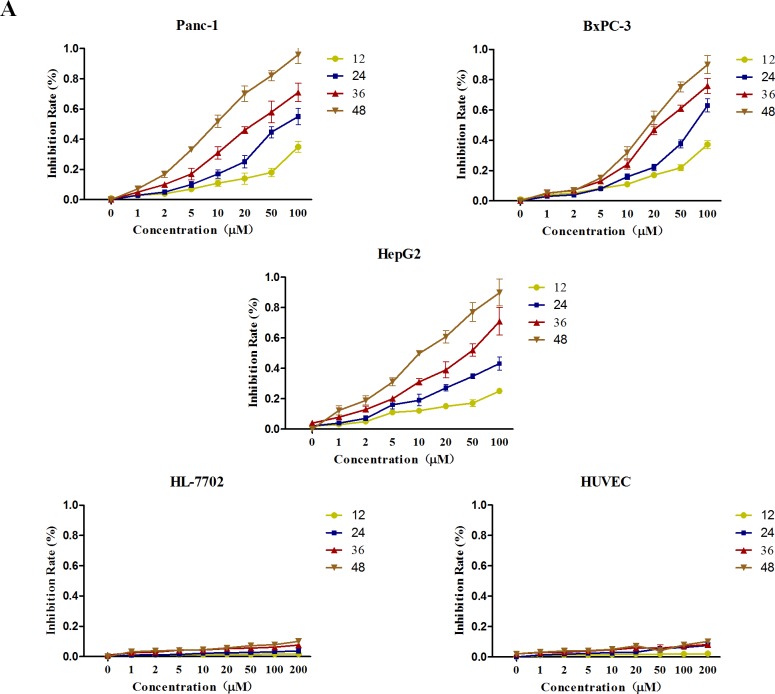
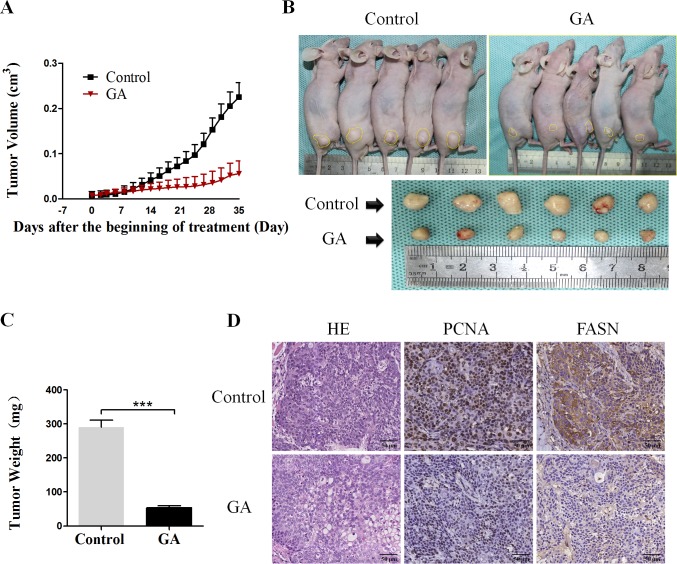
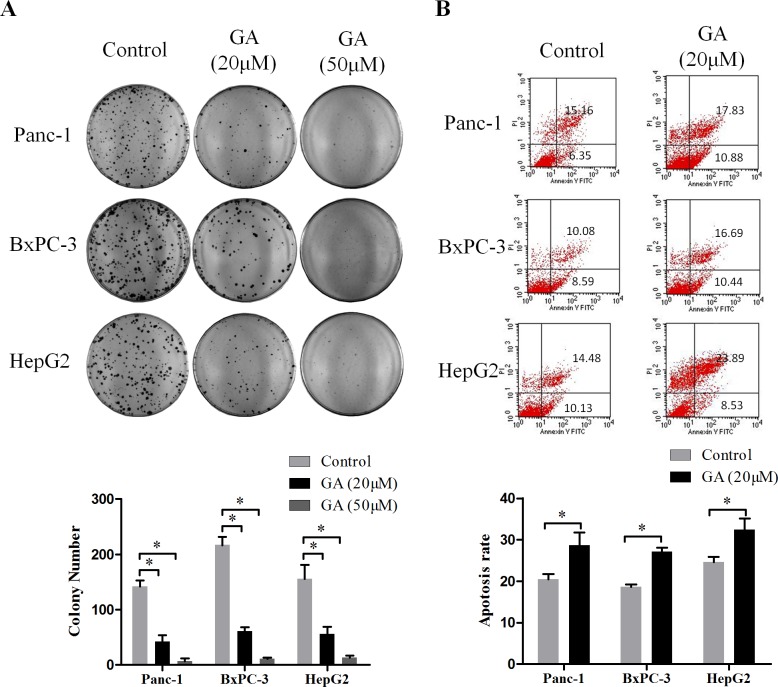
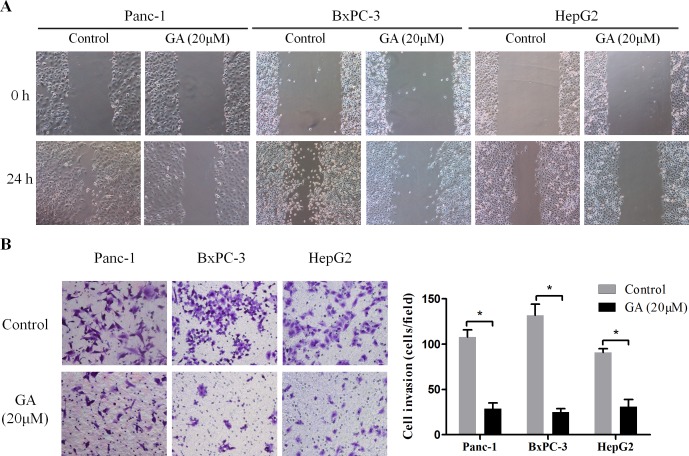
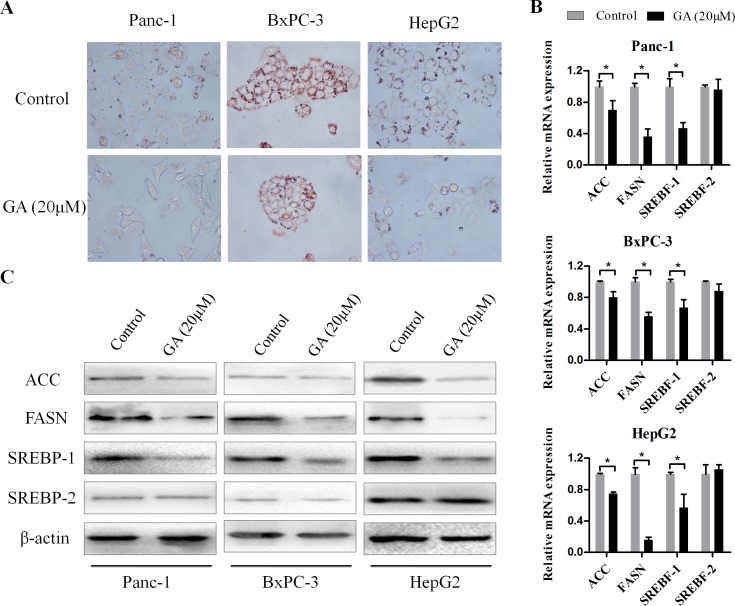
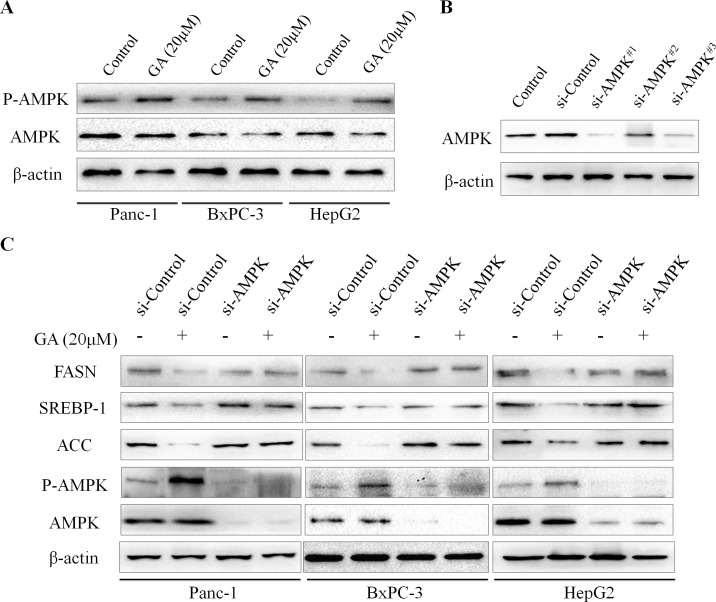
Ginkgolic acid (GA) is a botanical drug extracted from the seed coat of Ginkgo biloba L. with a wide range of bioactive properties, including anti-tumor effect. However, whether GA has antitumor effect on pancreatic cancer cells and the underlying mechanisms have yet to be investigated. In this study, we show that GA suppressed the viability of cancer cells but has little toxicity on normal cells, e.g, HUVEC cells. Furthermore, treatment of GA resulted in impaired colony formation, migration, and invasion ability and increased apoptosis of cancer cells. In addition, GA inhibited the de novo lipogenesis of cancer cells through inducing activation of AMP-activated protein kinase (AMPK) signaling and downregulated the expression of key enzymes (e.g. acetyl-CoA carboxylase [ACC], fatty acid synthase [FASN]) involved in lipogenesis. Moreover, the in vivo experiment showed that GA reduced the expression of the key enzymes involved in lipogenesis and restrained the tumor growth. Taken together, our results suggest that GA may serve as a new candidate against tumor growth of pancreatic cancer partially through targeting pathway driving lipogenesis.
银杏酸(GA)是从银杏种子外皮中提取的一种植物药,具有广泛的生物活性,包括抗肿瘤作用。然而,GA对胰腺癌细胞是否具有抗肿瘤作用及其潜在机制尚待研究。在本研究中,我们发现GA可抑制癌细胞的活力,但对正常细胞(如人脐静脉内皮细胞)毒性较小。此外,GA处理导致癌细胞集落形成、迁移和侵袭能力受损,并增加癌细胞凋亡。此外,GA通过诱导AMP活化蛋白激酶(AMPK)信号通路激活,抑制癌细胞的从头脂肪生成,并下调参与脂肪生成的关键酶(如乙酰辅酶A羧化酶[ACC]、脂肪酸合酶[FASN])的表达。此外,体内实验表明,GA降低了参与脂肪生成的关键酶的表达,并抑制了肿瘤生长。综上所述,我们的结果表明,GA可能部分通过靶向驱动脂肪生成的途径,作为一种抗胰腺癌肿瘤生长的新候选药物。