Ke Liang, Mason Rebecca S, Kariuki Maina, Mpofu Elias, Brock Kaye E
Faculty of Health Sciences, University of Sydney, Sydney, NSW, Australia.
Faculty of Medicine, University of Sydney, Sydney, NSW, Australia.
Integr Blood Press Control. 2015 Apr 8;8:13-35. doi: 10.2147/IBPC.S49958. eCollection 2015.
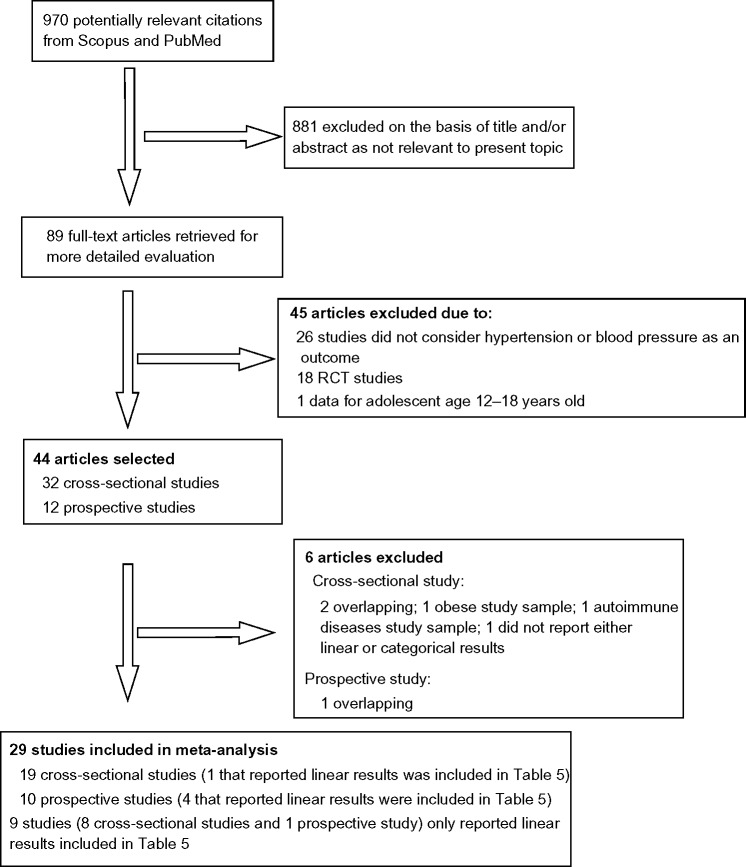
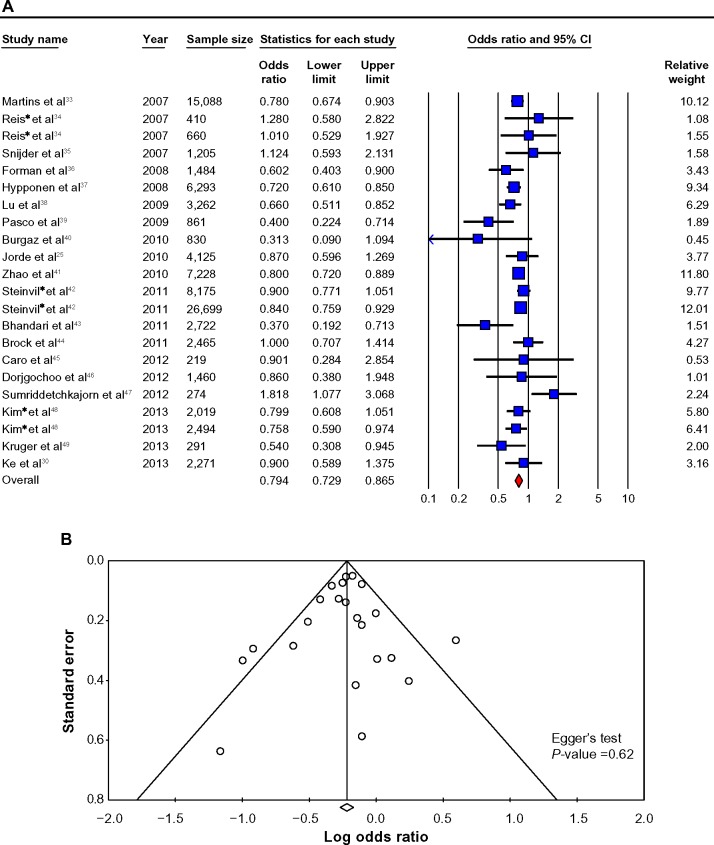
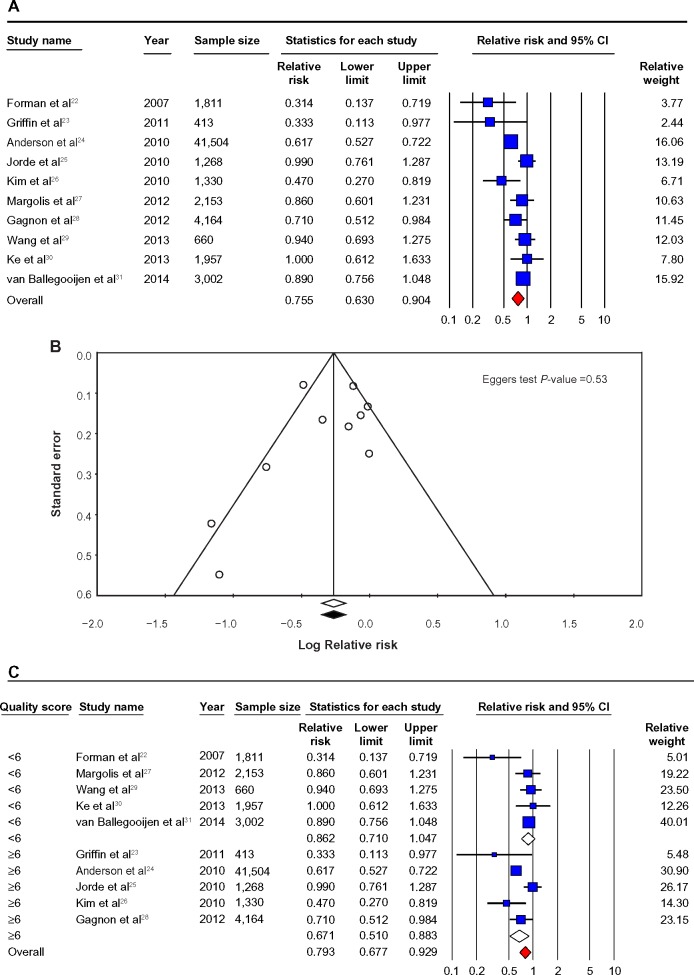
Vitamin D is a steroid prohormone synthesized in the skin following ultraviolet exposure and also achieved through supplemental or dietary intake. While there is strong evidence for its role in maintaining bone and muscle health, there has been recent debate regarding the role of vitamin D deficiency in hypertension based on conflicting epidemiological evidence. Thus, we conducted a scoping systematic literature review and meta-analysis of all observational studies published up to early 2014 in order to map trends in the evidence of this association. Mixed-effect meta-analysis was performed to pool risk estimates from ten prospective studies (n=58,262) (pooled risk for incident hypertension, relative risk [RR] =0.76 (0.63-0.90) for top vs bottom category of 25-hydroxyvitamin D [25OHD]) and from 19 cross-sectional studies (n=90,535) (odds ratio [OR] =0.79 (0.73-0.87)). Findings suggest that the better the assessed quality of the respective study design, the stronger the relationship between higher 25OHD levels and hypertension risk (RR =0.67 (0.51-0.88); OR =0.77 (0.72-0.89)). There was significant heterogeneity among the findings for both prospective and cross-sectional studies, but no evidence of publication bias was shown. There was no increased risk of hypertension when the participants were of older age or when they were vitamin D deficient. Younger females showed strong associations between high 25OHD levels and hypertension risk, especially in prospective studies (RR =0.36 (0.18-0.72); OR =0.62 (0.44-0.87)). Despite the accumulating evidence of a consistent link between vitamin D and blood pressure, these data are observational, so questions still remain in relation to the causality of this relationship. Further studies either combining existing raw data from available cohort studies or conducting further Mendelian analyses are needed to determine whether this represents a causal association. Large randomized controlled trials are also needed to determine whether vitamin supplementation may be beneficial in the prevention or the treatment of hypertension.
维生素D是一种类固醇前体激素,在紫外线照射后于皮肤中合成,也可通过补充剂或饮食摄入获得。虽然有充分证据表明其在维持骨骼和肌肉健康方面发挥作用,但基于相互矛盾的流行病学证据,近期关于维生素D缺乏在高血压中的作用存在争议。因此,我们对截至2014年初发表的所有观察性研究进行了一项范围界定的系统文献综述和荟萃分析,以梳理这一关联证据的趋势。采用混合效应荟萃分析汇总了10项前瞻性研究(n = 58,262)(25-羟基维生素D [25OHD]最高与最低类别相比,高血压发病风险合并相对风险[RR] = 0.76(0.63 - 0.90))和19项横断面研究(n = 90,535)(优势比[OR] = 0.79(0.73 - 0.87))的风险估计值)。研究结果表明,各自研究设计的评估质量越高,25OHD水平升高与高血压风险之间关系越强(RR = 0.67(0.51 - 0.88);OR = 0.77(0.72 - 0.89))。前瞻性研究和横断面研究的结果均存在显著异质性,但未显示出发表偏倚的证据。参与者年龄较大或维生素D缺乏时,高血压风险并未增加。年轻女性中,高25OHD水平与高血压风险之间存在较强关联,尤其是在前瞻性研究中(RR = 0.36(0.18 - 0.72);OR = 0.62(0.44 - 0.87)))。尽管越来越多的证据表明维生素D与血压之间存在一致联系,但这些数据是观察性数据,因此这种关系的因果性仍存在疑问。需要进一步研究,要么合并现有队列研究的原始数据,要么进行进一步的孟德尔分析,以确定这是否代表因果关联。还需要大型随机对照试验来确定补充维生素是否对预防或治疗高血压有益。