Tricco Andrea C, Cogo Elise, Isaranuwatchai Wanrudee, Khan Paul A, Sanmugalingham Geetha, Antony Jesmin, Hoch Jeffrey S, Straus Sharon E
Knowledge Translation Program, Li Ka Shing Knowledge Institute, St. Michael's Hospital, 30 Bond Street, Toronto, ON, M5B 1W8, Canada.
Epidemiology Division, Dalla Lana School of Public Health, University of Toronto, 155 College Street, Toronto, ON, M5T 3M7, Canada.
BMC Med. 2015 Apr 22;13:90. doi: 10.1186/s12916-015-0326-3.
Complex wounds present a substantial economic burden on healthcare systems, costing billions of dollars annually in North America alone. The prevalence of complex wounds is a significant patient and societal healthcare concern and cost-effective wound care management remains unclear. This article summarizes the cost-effectiveness of interventions for complex wound care through a systematic review of the evidence base.
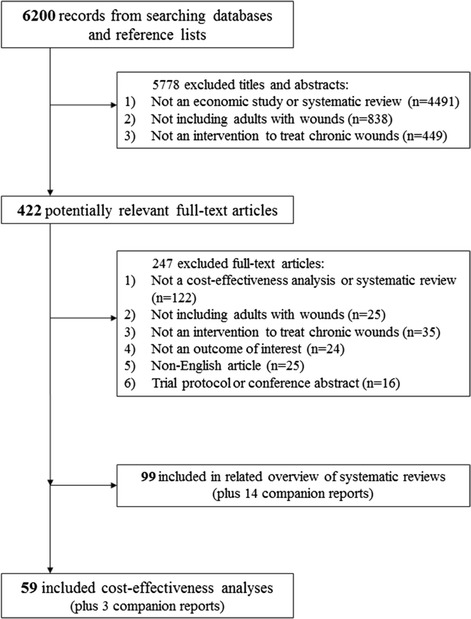
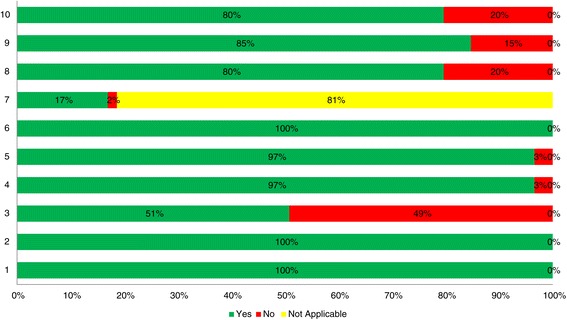
We searched multiple databases (MEDLINE, EMBASE, Cochrane Library) for cost-effectiveness studies that examined adults treated for complex wounds. Two reviewers independently screened the literature, abstracted data from full-text articles, and assessed methodological quality using the Drummond 10-item methodological quality tool. Incremental cost-effectiveness ratios were reported, or, if not reported, calculated and converted to United States Dollars for the year 2013.
Overall, 59 cost-effectiveness analyses were included; 71% (42 out of 59) of the included studies scored 8 or more points on the Drummond 10-item checklist tool. Based on these, 22 interventions were found to be more effective and less costly (i.e., dominant) compared to the study comparators: 9 for diabetic ulcers, 8 for venous ulcers, 3 for pressure ulcers, 1 for mixed venous and venous/arterial ulcers, and 1 for mixed complex wound types.
Our results can be used by decision-makers in maximizing the deployment of clinically effective and resource efficient wound care interventions. Our analysis also highlights specific treatments that are not cost-effective, thereby indicating areas of resource savings. Please see related article: http://dx.doi.org/10.1186/s12916-015-0288-5.
复杂伤口给医疗系统带来了巨大的经济负担,仅在北美地区,每年的花费就高达数十亿美元。复杂伤口的患病率是患者和社会医疗保健的重大关注点,而具有成本效益的伤口护理管理仍不明确。本文通过对证据基础的系统评价,总结了复杂伤口护理干预措施的成本效益。
我们在多个数据库(MEDLINE、EMBASE、Cochrane图书馆)中搜索了关于治疗复杂伤口的成人患者的成本效益研究。两名评审员独立筛选文献,从全文文章中提取数据,并使用德拉蒙德10项方法学质量工具评估方法学质量。报告了增量成本效益比,若未报告,则进行计算并换算为2013年的美元。
总体而言,纳入了59项成本效益分析;在纳入的研究中,71%(59项中的42项)在德拉蒙德10项检查表工具上得分8分或更高。基于这些,发现与研究对照相比,22种干预措施更有效且成本更低(即占优):9种用于糖尿病溃疡,8种用于静脉溃疡,3种用于压疮,1种用于混合性静脉和静脉/动脉溃疡,1种用于混合性复杂伤口类型。
我们的结果可供决策者用于最大限度地部署临床有效且资源高效的伤口护理干预措施。我们的分析还突出了那些不具有成本效益的特定治疗方法,从而指出了可节省资源的领域。请参阅相关文章:http://dx.doi.org/10.1186/s12916-015-0288-5。