Liao Yunjun, Zeng Zhaowei, Lu Feng, Dong Ziqing, Chang Qiang, Gao Jianhua
Department of Plastic and Cosmetic Surgery, Nanfang Hospital, Southern Medical University, Guang Zhou, Guang Dong, P.R, China.
PLoS One. 2015 Apr 22;10(4):e0125254. doi: 10.1371/journal.pone.0125254. eCollection 2015.
Adipocytes can dedifferentiate into fibroblast-like cells in vitro and thereby acquire proliferation and multipotent capacities to participate in the repair of various organs and tissues. Whether dedifferentiation occurs under physiological or pathological conditions in vivo is unknown.
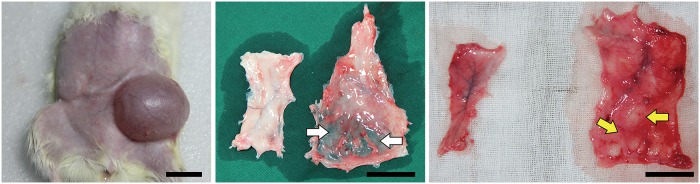
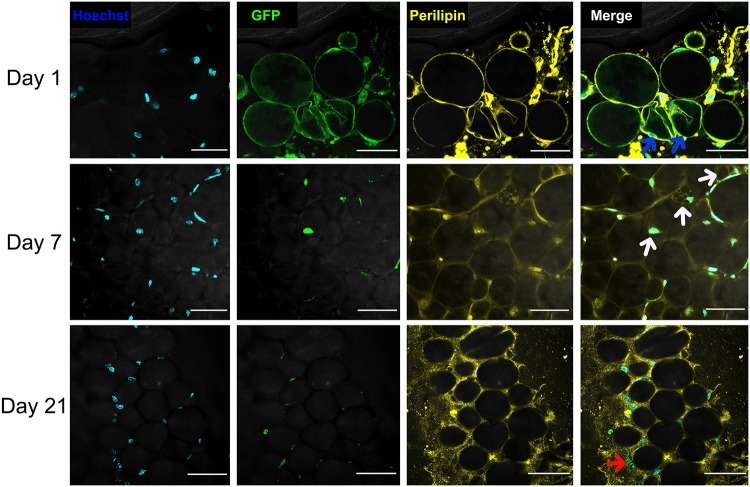
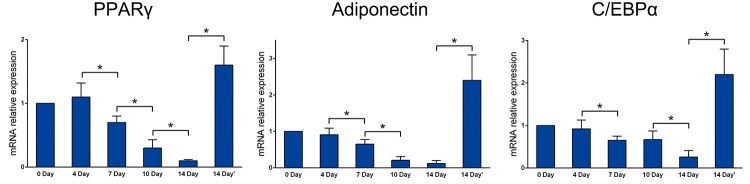
A tissue expander was placed under the inguinal fat pads of rats and gradually expanded by injection of water. Samples were collected at various time points, and morphological, histological, cytological, ultrastructural, and gene expression analyses were conducted. In a separate experiment, purified green fluorescent protein+ adipocytes were transplanted into C57 mice and collected at various time points. The transplanted adipocytes were assessed by bioluminescence imaging and whole-mount staining.
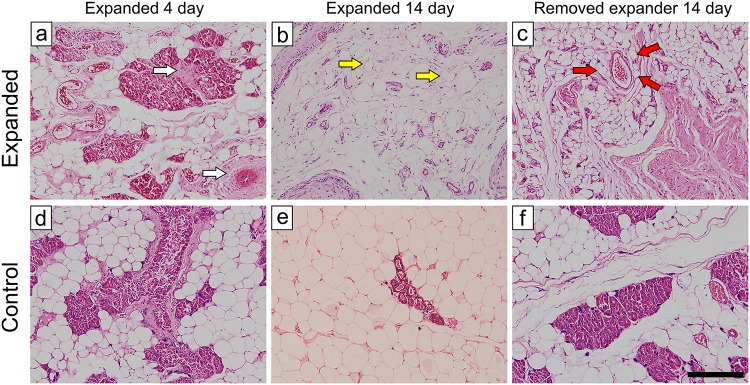
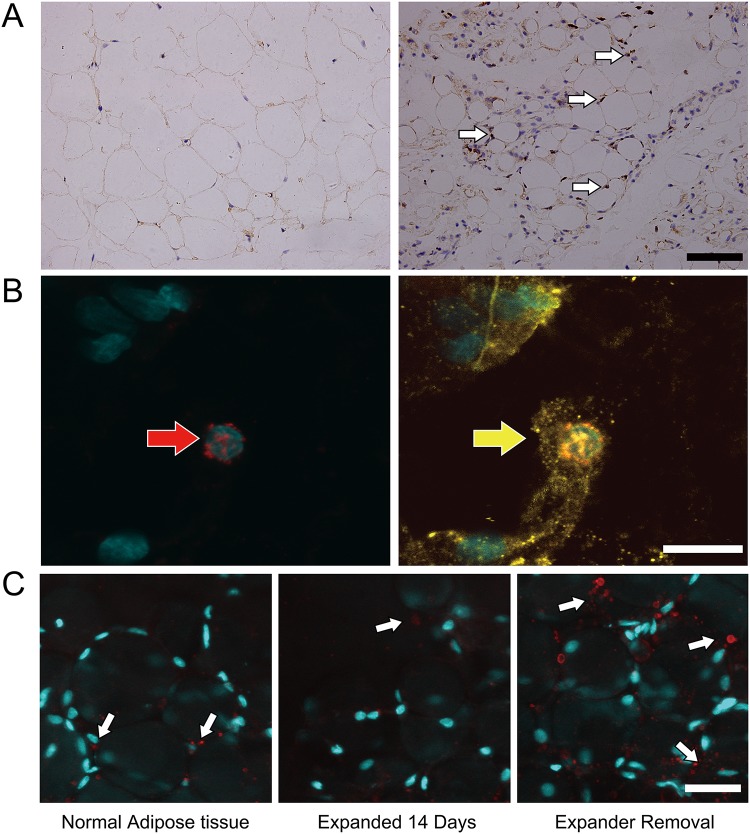
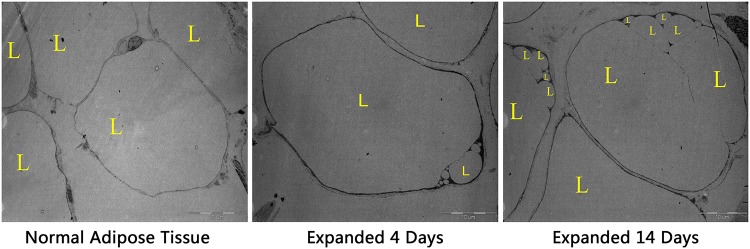
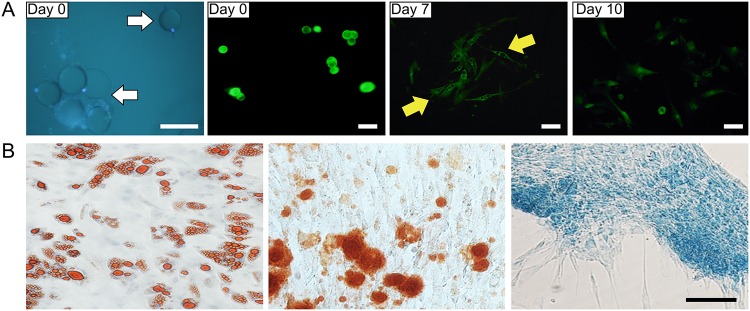
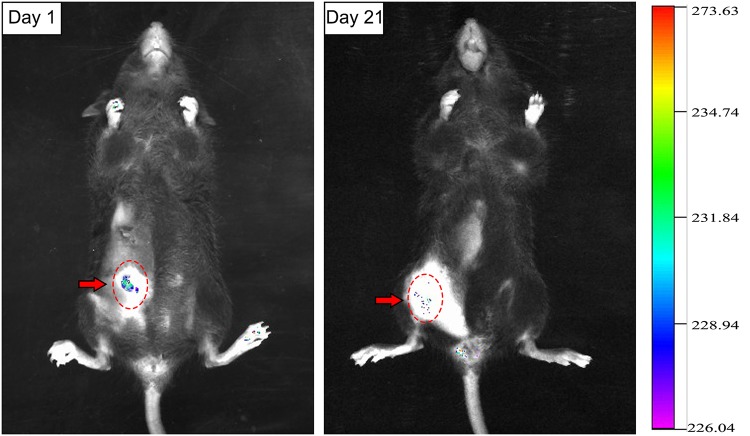
The expanded fat pad was obviously thinner than the untreated fat pad on the opposite side. It was also tougher in texture and with more blood vessels attached. Hematoxylin and eosin staining and transmission electron microscopy indicated there were fewer monolocular adipocytes in the expanded fat pad and the morphology of these cells was altered, most notably their lipid content was discarded. Immunohistochemistry showed that the expanded fat pad contained an increased number of proliferative cells, which may have been derived from adipocytes. Following removal of the tissue expander, many small adipocytes were observed. Bioluminescence imaging suggested that some adipocytes survived when transplanted into an ischemic-hypoxic environment. Whole-mount staining revealed that surviving adipocytes underwent a process similar to adipocyte dedifferentiation in vitro. Monolocular adipocytes became multilocular adipocytes and then fibroblast-like cells.
Mature adipocytes may be able to dedifferentiate in vivo, and this may be an adipose tissue self-repair mechanism. The capacity of adipocytes to dedifferentiate into stem cell-like cells may also have a more general role in the regeneration of many tissues, notably in fat grafting.
脂肪细胞在体外可去分化为成纤维细胞样细胞,从而获得增殖和多能能力,参与各种器官和组织的修复。在体内生理或病理条件下是否会发生去分化尚不清楚。
将组织扩张器置于大鼠腹股沟脂肪垫下,通过注水逐渐扩张。在不同时间点采集样本,进行形态学、组织学、细胞学、超微结构和基因表达分析。在另一个实验中,将纯化的绿色荧光蛋白阳性脂肪细胞移植到C57小鼠体内,并在不同时间点采集样本。通过生物发光成像和整体染色对移植的脂肪细胞进行评估。
扩张后的脂肪垫明显比另一侧未处理的脂肪垫薄。其质地也更硬,附着的血管更多。苏木精-伊红染色和透射电子显微镜显示,扩张后的脂肪垫中单个脂肪细胞较少,且这些细胞的形态发生了改变,最显著的是其脂质含量减少。免疫组织化学显示,扩张后的脂肪垫中增殖细胞数量增加,这些细胞可能来源于脂肪细胞。移除组织扩张器后,观察到许多小脂肪细胞。生物发光成像表明,一些脂肪细胞移植到缺血缺氧环境中后存活了下来。整体染色显示,存活的脂肪细胞经历了一个类似于体外脂肪细胞去分化的过程。单个脂肪细胞变成多泡脂肪细胞,然后变成成纤维细胞样细胞。
成熟脂肪细胞在体内可能能够去分化,这可能是一种脂肪组织自我修复机制。脂肪细胞去分化为干细胞样细胞的能力在许多组织的再生中可能也具有更普遍的作用,尤其是在脂肪移植中。