Glińska Sława, Gapińska Magdalena, Michlewska Sylwia, Skiba Elżbieta, Kubicki Jakub
Laboratory of Microscopy Imaging and Advanced Biological Technics, Faculty of Biology and Environmental Protection, University of Lodz, Banacha 12/16, 90-237, Lodz, Poland.
Institute of General and Ecological Chemistry, Lodz University of Technology, Żeromskiego 116, 90-924, Lodz, Poland.
Protoplasma. 2016 Mar;253(2):367-77. doi: 10.1007/s00709-015-0816-3. Epub 2015 Apr 24.
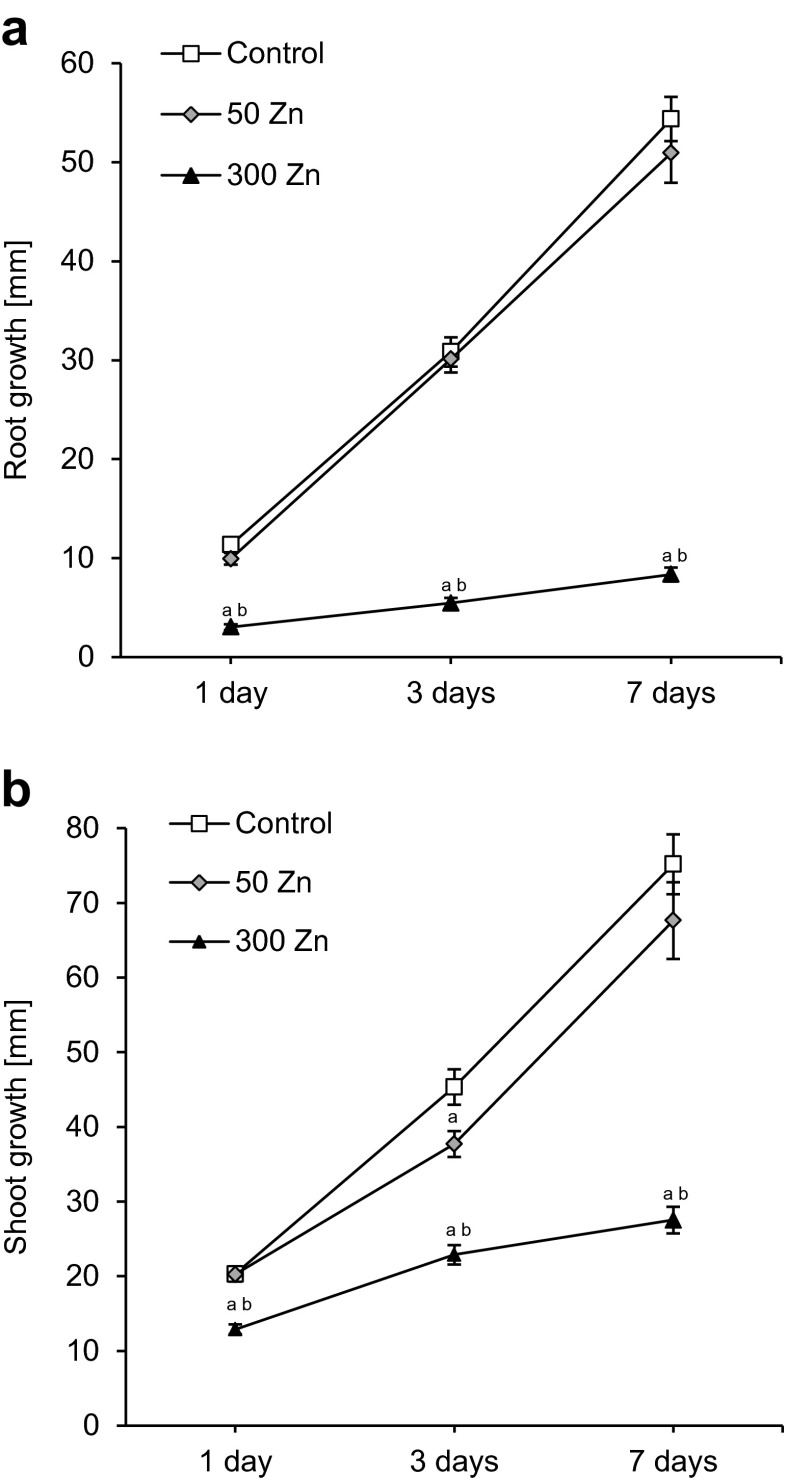
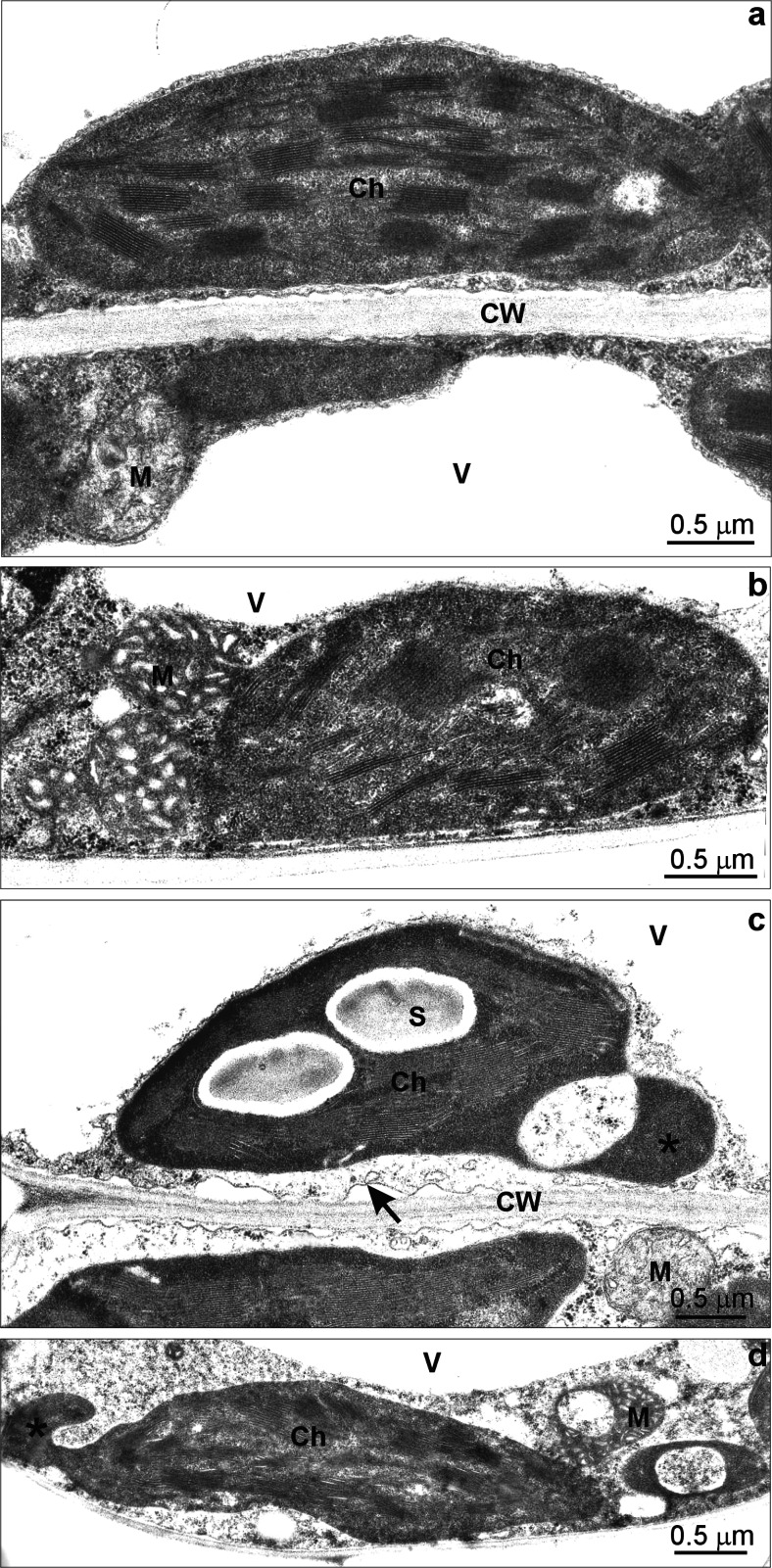
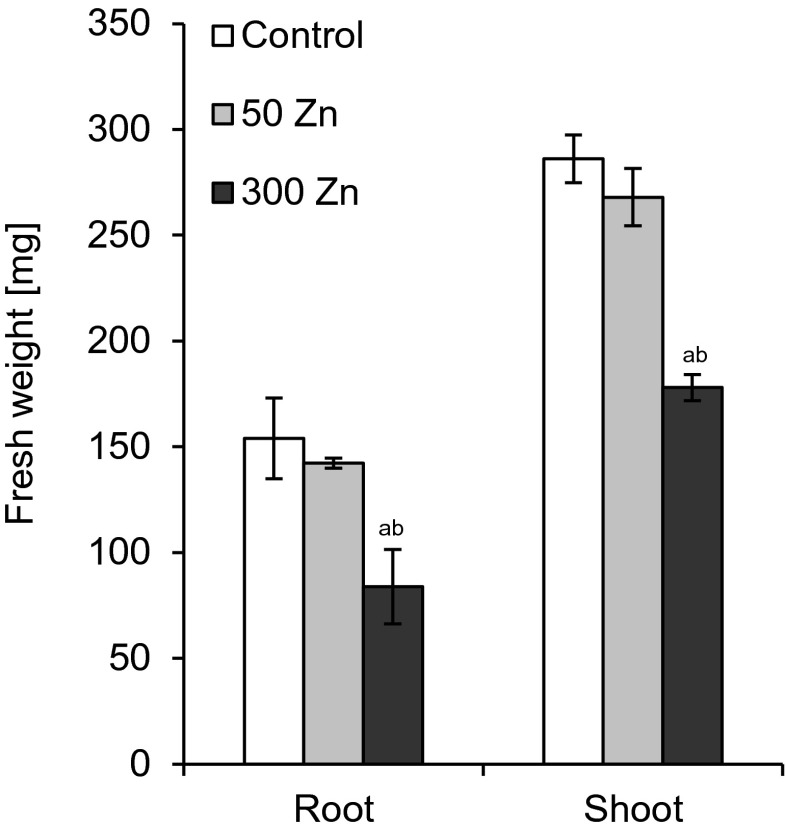
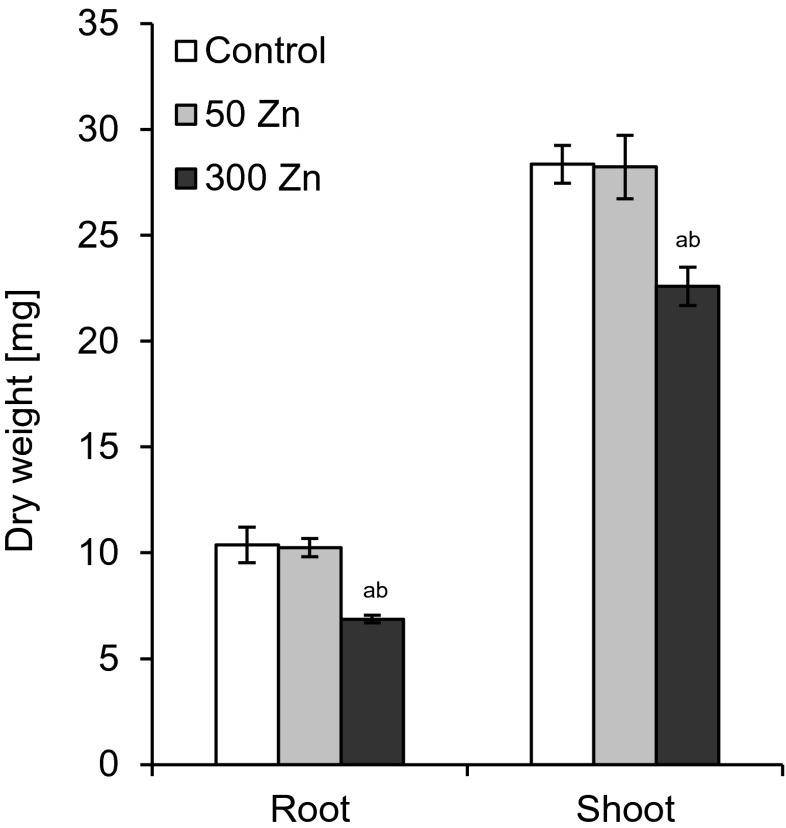
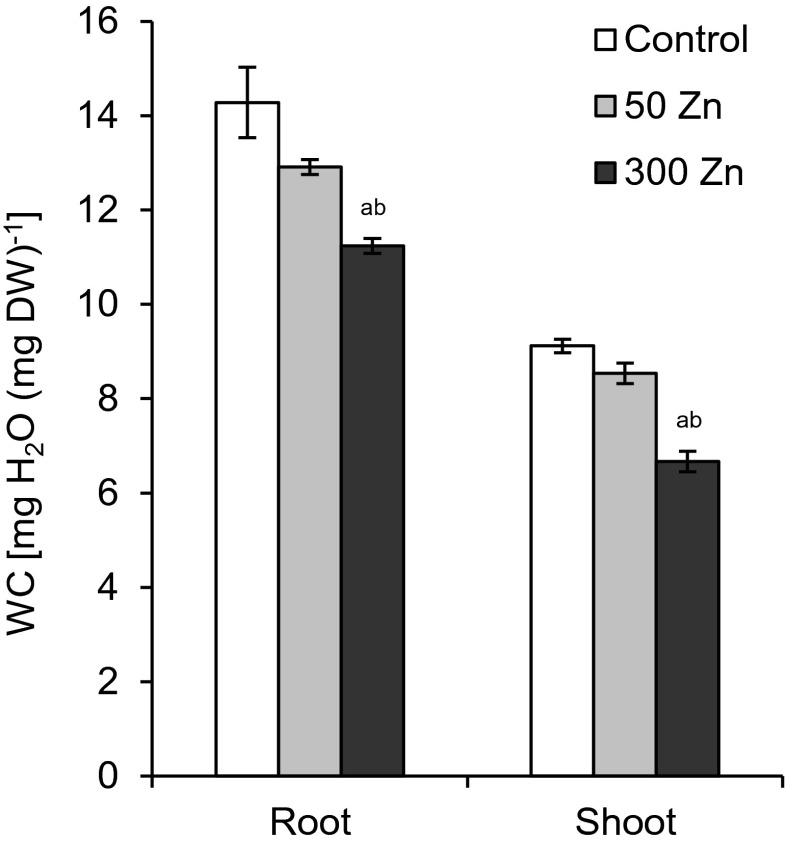
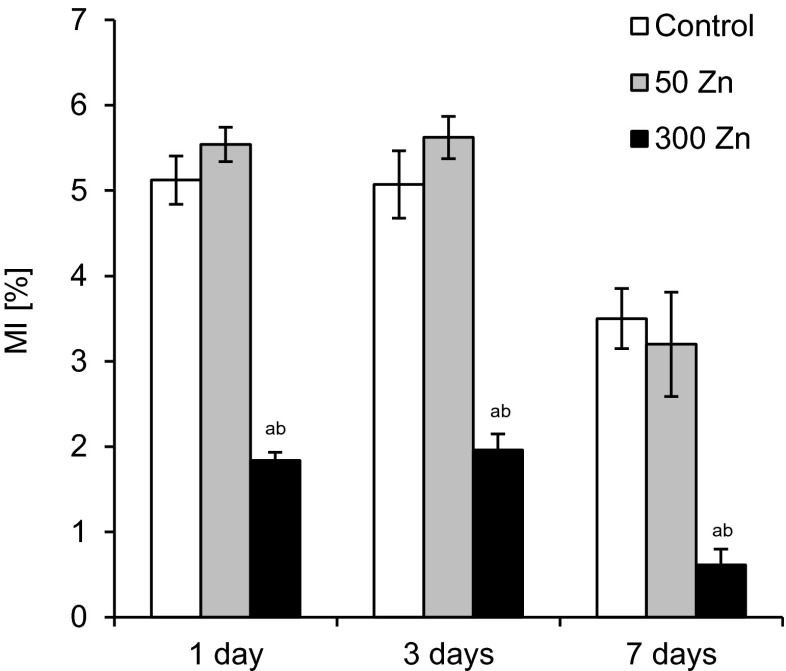
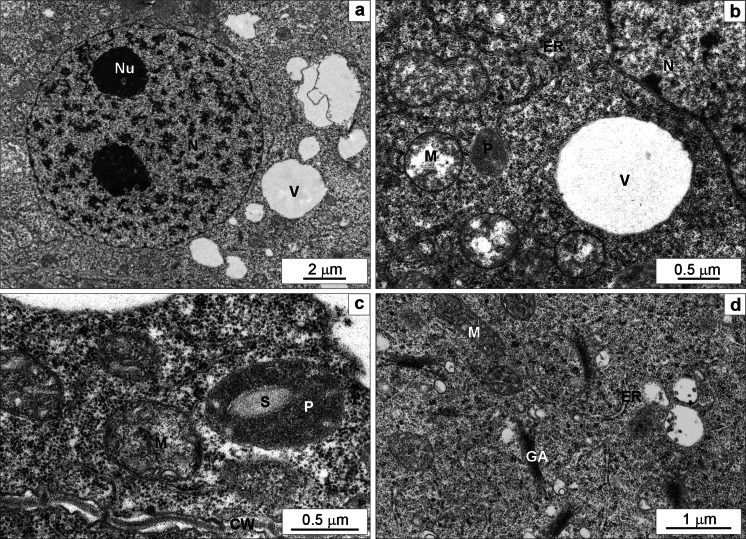
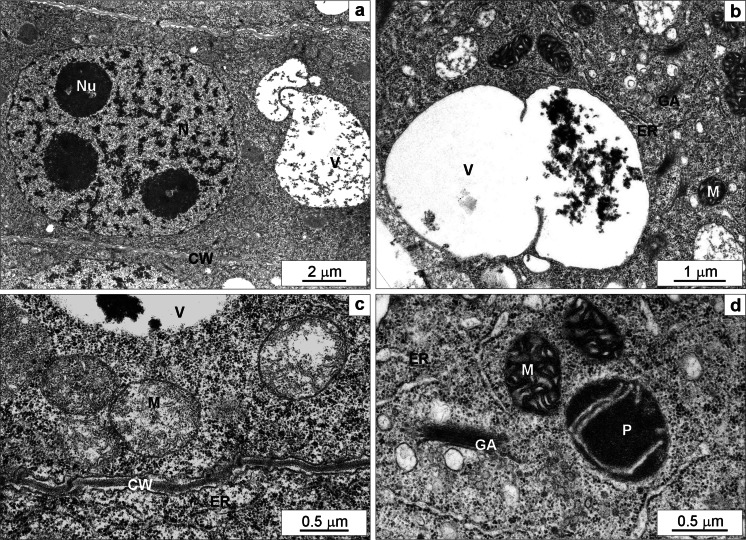
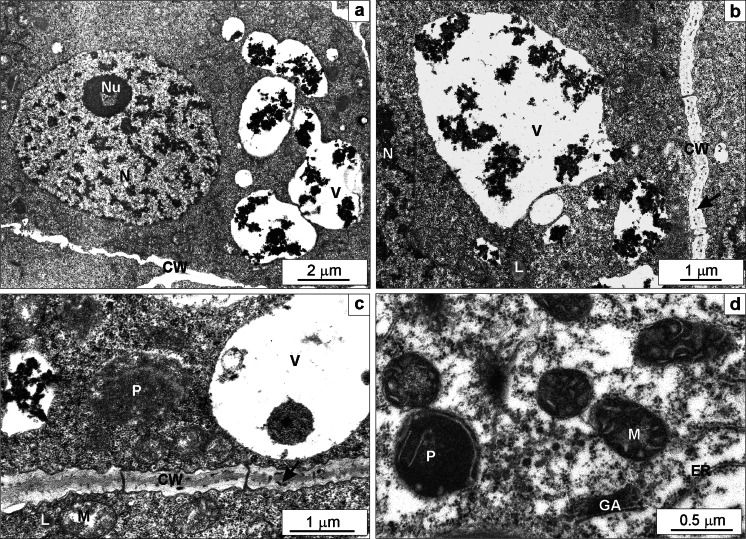
The effects of 50 and 300 mg L(-1) Zn(2+) (50 Zn and 300 Zn) were investigated in Triticum aestivum (cv. Żura) grown hydroponically for 7 days. Although wheat treated with 50 Zn took up relatively high amount of the metal (8,943 and 1,503 mg kg(-1) DW in roots and shoots, respectively), none of the morphological and cytological parameters were changed. After 300 Zn, the metal concentration increased to 32,205 and 5,553 mg kg(-1) DW in roots and shoots, respectively. It was connected with the depletion of shoot and root growth, their fresh and dry weight, water content and mitotic index of root meristematic cells. Microelement contents (Cu, Mn and Fe) after 50 Zn were changed only in roots, while 300 Zn disturbed ion balance in whole plants. The most evident ultrastructural alterations of root meristematic cells caused by both tested Zn(2+) doses included increased vacuolization, accumulation of granular deposits inside vacuoles and cell wall thickening. The effect of 300 Zn on root cell ultrastructure was greater that of 50 Zn. The majority of mitochondria had condensed matrix and swollen cristae, plastids contained plastoglobuli, nucleoli were ring-shaped, thinned down cytoplasm with lipid droplets and swollen endoplasmic reticulum cisternae appeared. In mesophyll cells, 50 Zn caused slight reorganization of chloroplast thylakoids and formation of condensed mitochondria. Three hundred Zn triggered more extensive, but not degenerative, changes: plasmolysis of some cells; chloroplasts with protrusions, changed thylakoid organisation and often large starch grains; irregular, condensed mitochondria. The results indicate that T. aestivum cv. Żura is relatively tolerant to Zn stress.
研究了50和300 mg L(-1) Zn(2+)(50 Zn和300 Zn)对水培7天的普通小麦(品种Żura)的影响。尽管用50 Zn处理的小麦吸收了相对较高量的金属(根和地上部中分别为8,943和1,503 mg kg(-1)干重),但形态学和细胞学参数均未改变。在300 Zn处理后,根和地上部中金属浓度分别增加到32,205和5,553 mg kg(-1)干重。这与地上部和根的生长、鲜重和干重、含水量以及根分生组织细胞的有丝分裂指数的降低有关。50 Zn处理后微量元素含量(铜、锰和铁)仅在根中发生变化,而300 Zn扰乱了整株植物的离子平衡。两种测试的Zn(2+)剂量引起的根分生组织细胞最明显的超微结构改变包括液泡化增加、液泡内颗粒沉积物积累和细胞壁增厚。300 Zn对根细胞超微结构的影响大于50 Zn。大多数线粒体基质浓缩、嵴肿胀,质体含有质体小球,核仁呈环形,细胞质变薄并伴有脂滴,内质网池肿胀。在叶肉细胞中,50 Zn导致叶绿体类囊体略有重组并形成浓缩的线粒体。300 Zn引发了更广泛但非退化性的变化:一些细胞发生质壁分离;叶绿体有突起、类囊体组织改变且常有大淀粉粒;线粒体不规则且浓缩。结果表明,普通小麦品种Żura对锌胁迫具有相对耐受性。