Mackay Douglas R, Ullman Katharine S
Department of Oncological Sciences, Huntsman Cancer Institute, University of Utah, Salt Lake City, UT 84112.
Department of Oncological Sciences, Huntsman Cancer Institute, University of Utah, Salt Lake City, UT 84112
Mol Biol Cell. 2015 Jun 15;26(12):2217-26. doi: 10.1091/mbc.E14-11-1563. Epub 2015 Apr 22.
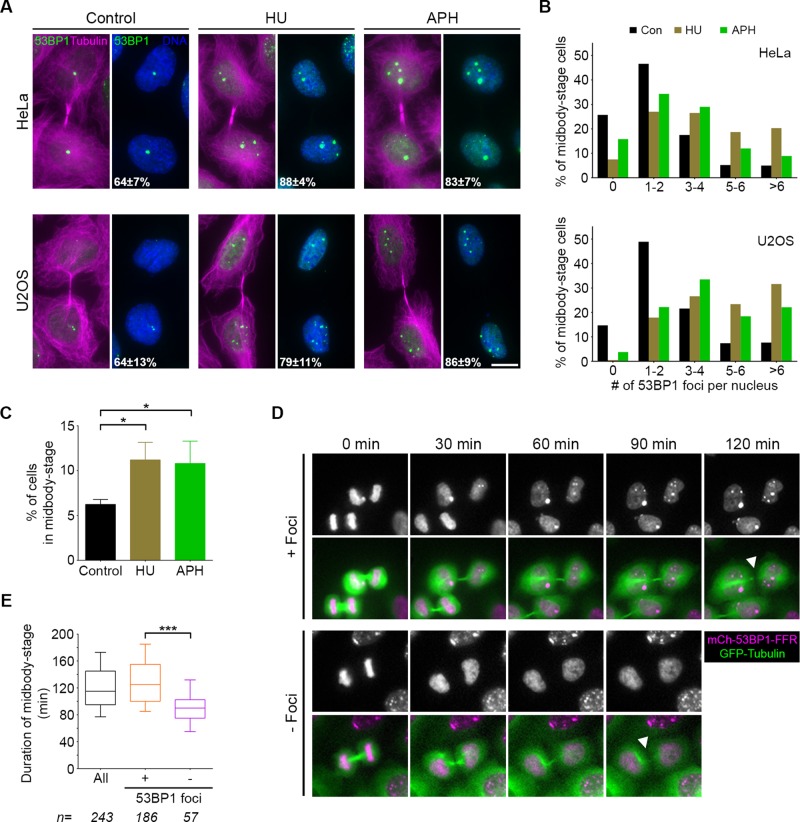
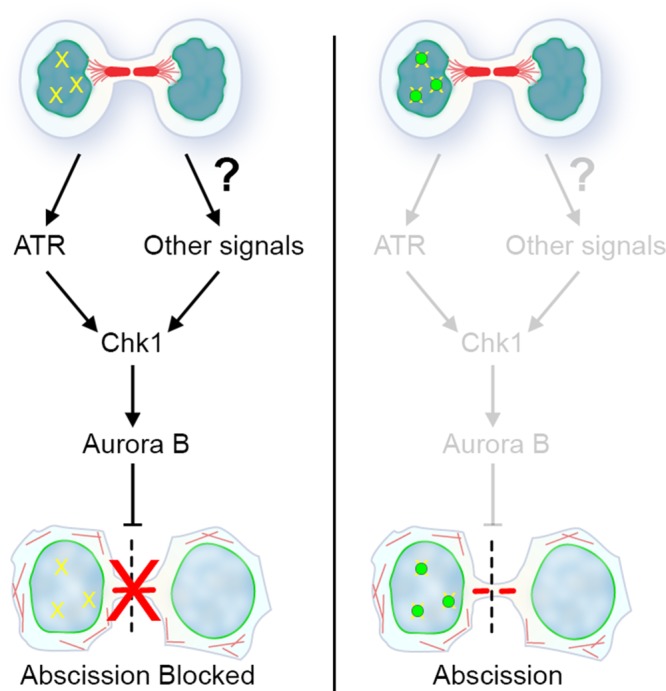
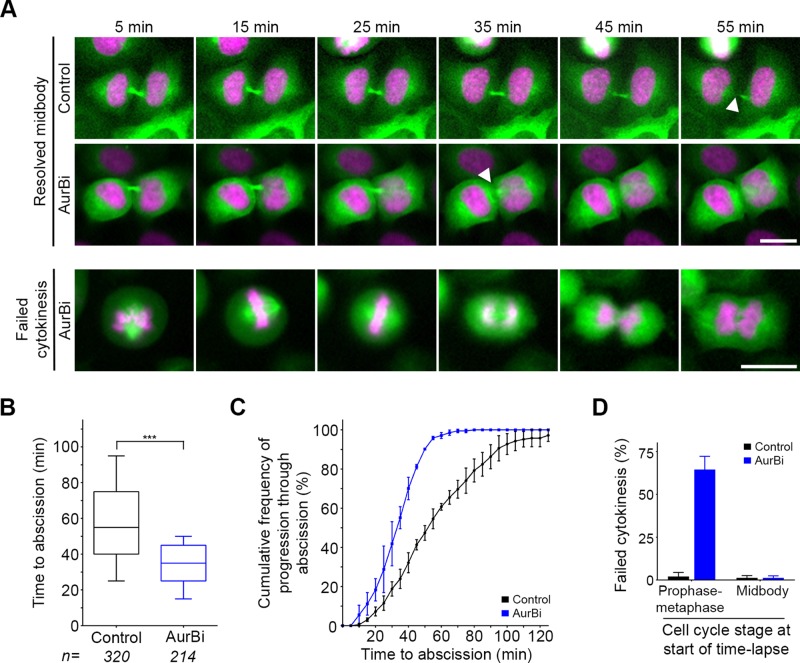
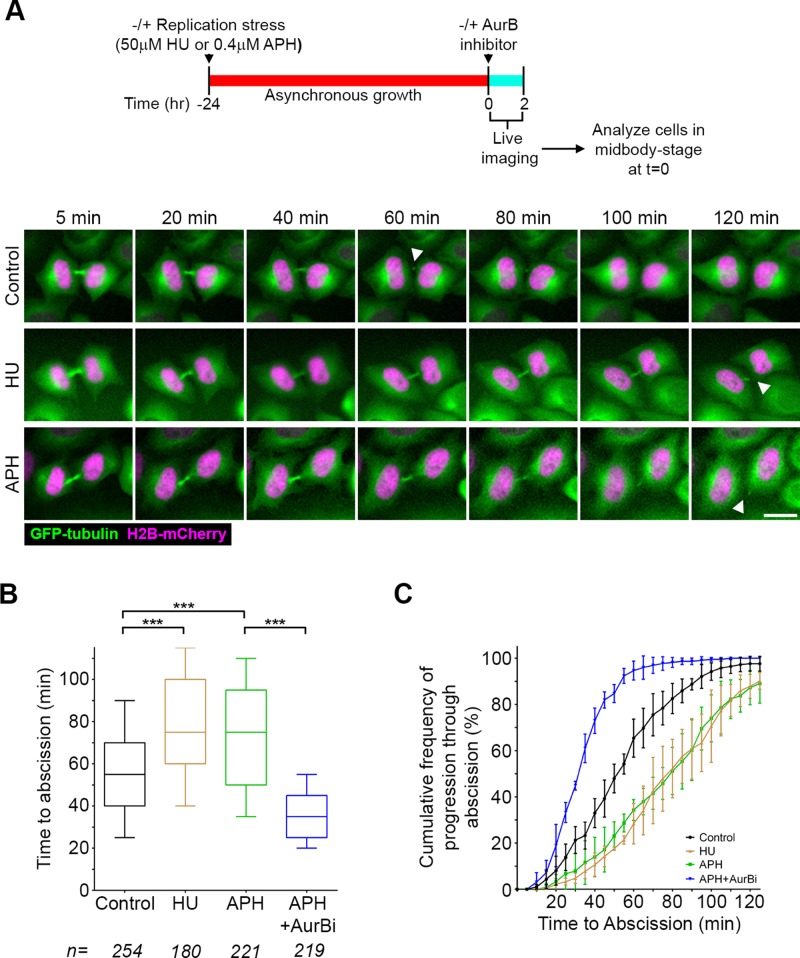
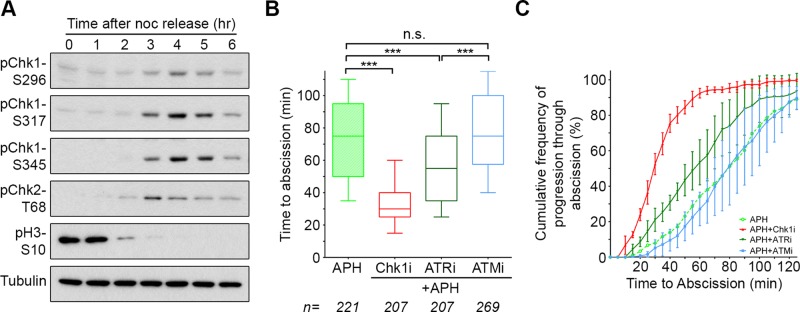
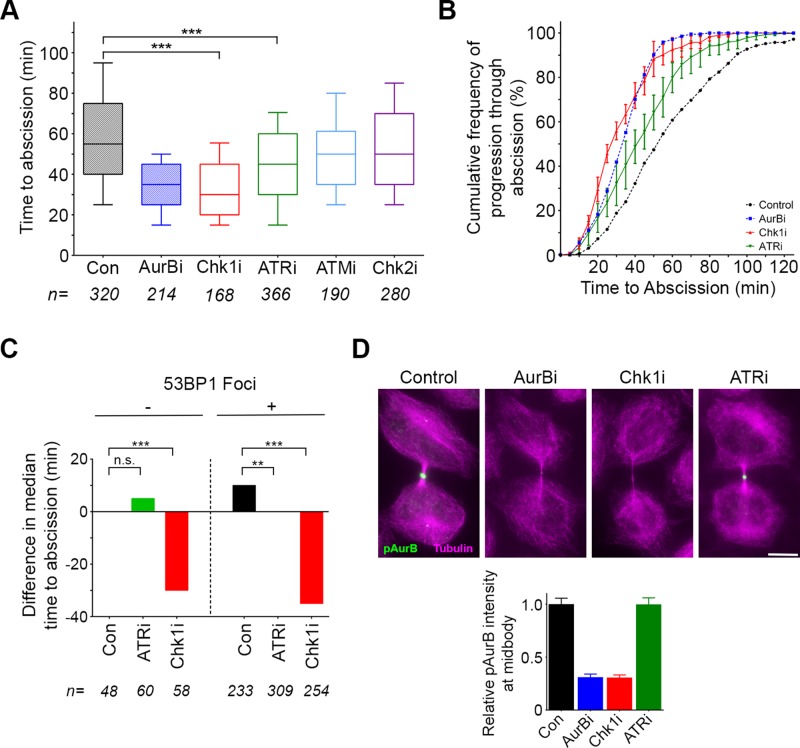
Aurora B regulates cytokinesis timing and plays a central role in the abscission checkpoint. Cellular events monitored by this checkpoint are beginning to be elucidated, yet signaling pathways upstream of Aurora B in this context remain poorly understood. Here we reveal a new connection between postmitotic genome surveillance and cytokinetic abscission. Underreplicated DNA lesions are known to be transmitted through mitosis and protected in newly formed nuclei by recruitment of 53BP1 and other proteins until repair takes place. We find that this genome surveillance initiates before completion of cytokinesis. Elevating replication stress increases this postmitotic process and delays cytokinetic abscission by keeping the abscission checkpoint active. We further find that ATR activity in midbody-stage cells links postmitotic genome surveillance to abscission timing and that Chk1 integrates this and other signals upstream of Aurora B to regulate when the final step in the physical separation of daughter cells occurs.
极光激酶B调节胞质分裂的时间,并在分裂分离检查点中起核心作用。由该检查点监测的细胞事件开始得到阐明,但在这种情况下,极光激酶B上游的信号通路仍知之甚少。在这里,我们揭示了有丝分裂后基因组监测与胞质分裂分离之间的新联系。已知未复制的DNA损伤会通过有丝分裂传递,并通过募集53BP1和其他蛋白质在新形成的细胞核中得到保护,直到修复发生。我们发现这种基因组监测在胞质分裂完成之前就开始了。增加复制应激会增强这种有丝分裂后的过程,并通过保持分裂分离检查点的活性来延迟胞质分裂分离。我们进一步发现,中体期细胞中的ATR活性将有丝分裂后基因组监测与分裂分离时间联系起来,并且Chk1整合了极光激酶B上游的这一信号和其他信号,以调节子细胞物理分离的最后一步何时发生。