Luessing Janna, Okowa Chituru C, Brennan Emer, Voisin Muriel, Lowndes Noel F
Genome Stability Laboratory, Centre for Chromosome Biology, Biochemistry & School of Natural Sciences, National University of Ireland Galway, Galway, Ireland.
iScience. 2022 Jun 6;25(7):104536. doi: 10.1016/j.isci.2022.104536. eCollection 2022 Jul 15.
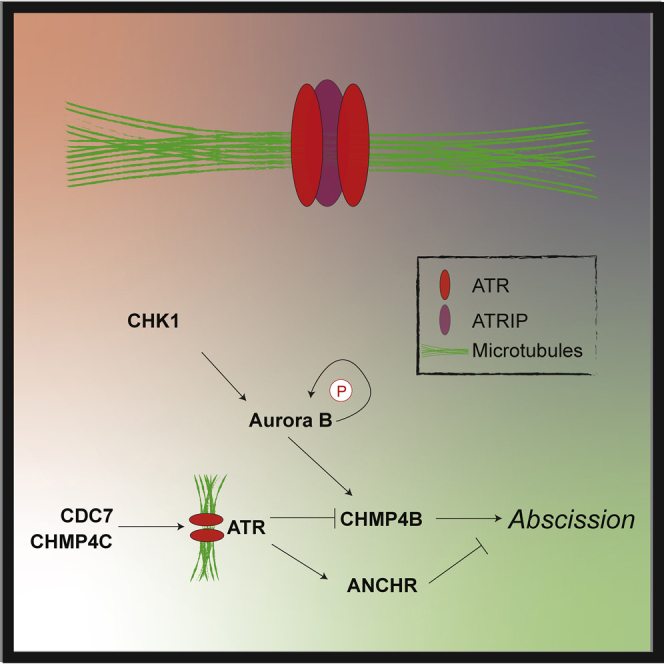
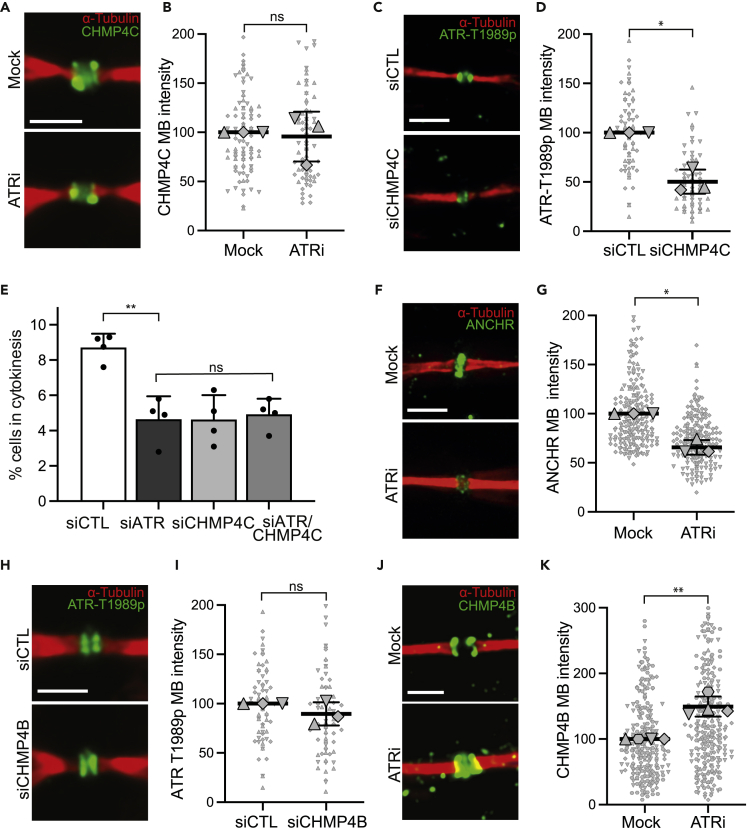
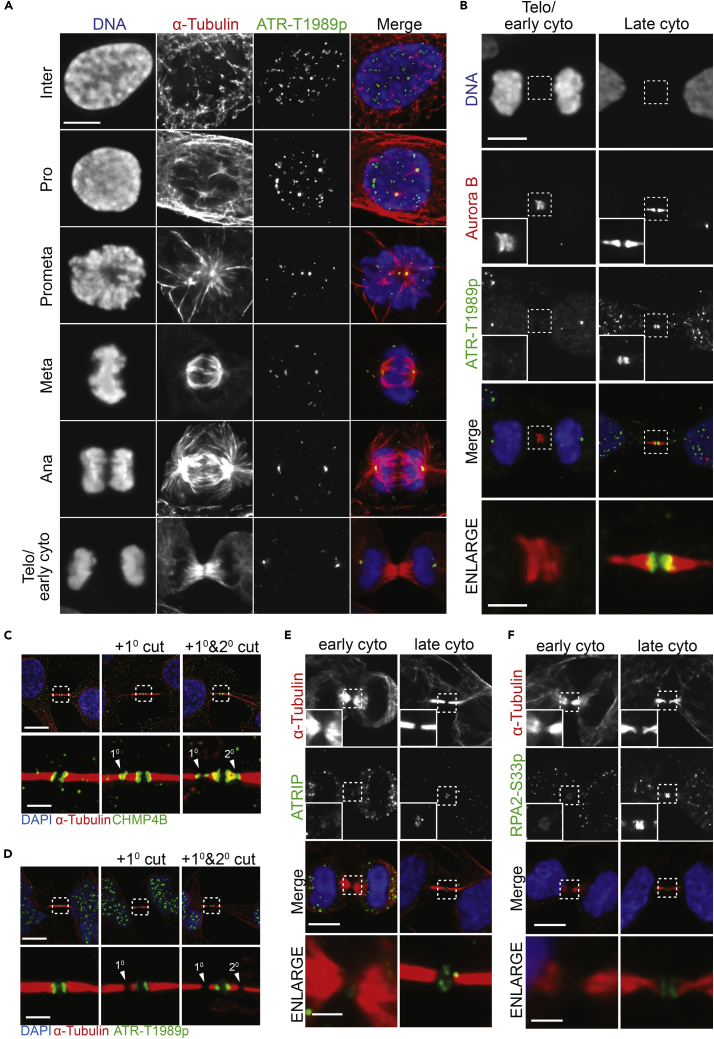
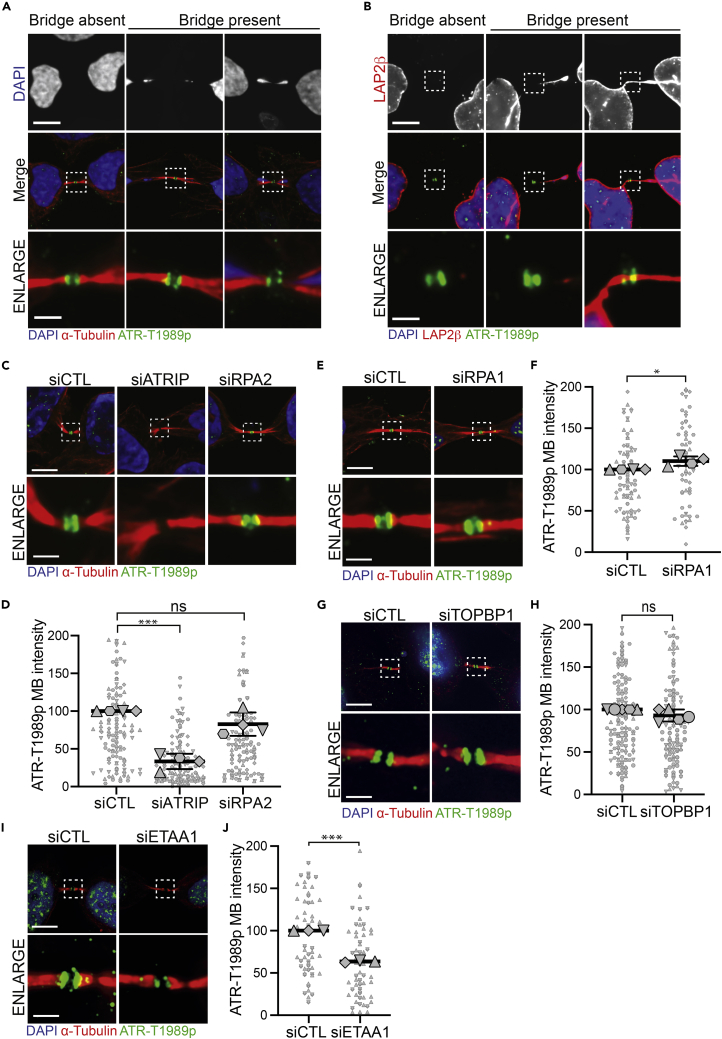
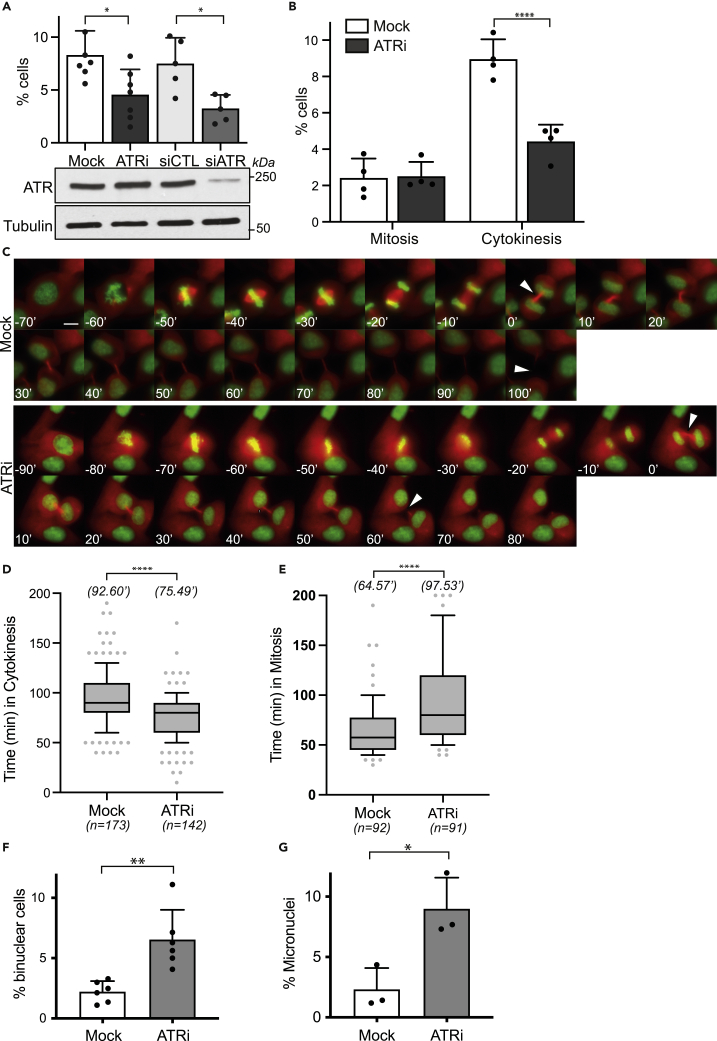
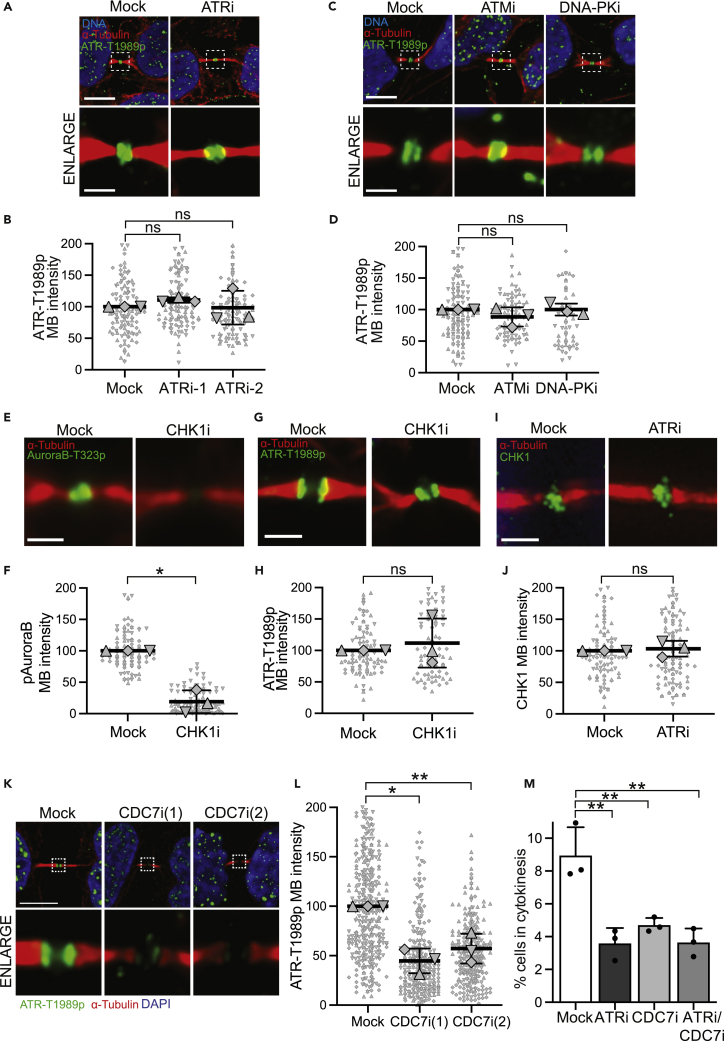
Abscission, the final stage of cytokinesis, occurs when the cytoplasmic canal connecting two emerging daughter cells is severed either side of a large proteinaceous structure, the midbody. Here, we expand the functions of ATR to include a cell-cycle-specific role in abscission, which is required for genome stability. All previously characterized roles for ATR depend upon its recruitment to replication protein A (RPA)-coated single-stranded DNA (ssDNA). However, we establish that in each cell cycle ATR, as well as ATRIP, localize to the midbody specifically during late cytokinesis and independently of RPA or detectable ssDNA. Rather, midbody localization and ATR-dependent regulation of abscission requires the known abscission regulator-charged multivesicular body protein 4C (CHMP4C). Intriguingly, this regulation is also dependent upon the CDC7 kinase and the known ATR activator ETAA1. We propose that in addition to its known RPA-ssDNA-dependent functions, ATR has further functions in preventing premature abscission.
细胞分裂的最后阶段——脱落,发生在连接两个新出现的子细胞的细胞质通道在一个大型蛋白质结构——中间体的两侧被切断时。在这里,我们扩展了ATR的功能,使其在脱落过程中具有细胞周期特异性作用,这对基因组稳定性是必需的。ATR所有先前已被表征的作用都依赖于其被招募到复制蛋白A(RPA)包被的单链DNA(ssDNA)上。然而,我们确定,在每个细胞周期中,ATR以及ATRIP特异性地在胞质分裂后期定位于中间体,且独立于RPA或可检测到的ssDNA。相反,中间体定位和ATR依赖的脱落调节需要已知的脱落调节因子——带电荷的多囊泡体蛋白4C(CHMP4C)。有趣的是,这种调节还依赖于CDC7激酶和已知的ATR激活剂ETAA1。我们提出,除了其已知的依赖RPA-ssDNA的功能外,ATR在防止过早脱落方面还有进一步的功能。