Rybakova Katja N, Bruggeman Frank J, Tomaszewska Aleksandra, Moné Martijn J, Carlberg Carsten, Westerhoff Hans V
Molecular Cell Physiology, VU University Amsterdam, Amsterdam, The Netherlands.
Systems Bioinformatics, VU University Amsterdam, Amsterdam, The Netherlands.
PLoS Comput Biol. 2015 Apr 24;11(4):e1004236. doi: 10.1371/journal.pcbi.1004236. eCollection 2015 Apr.
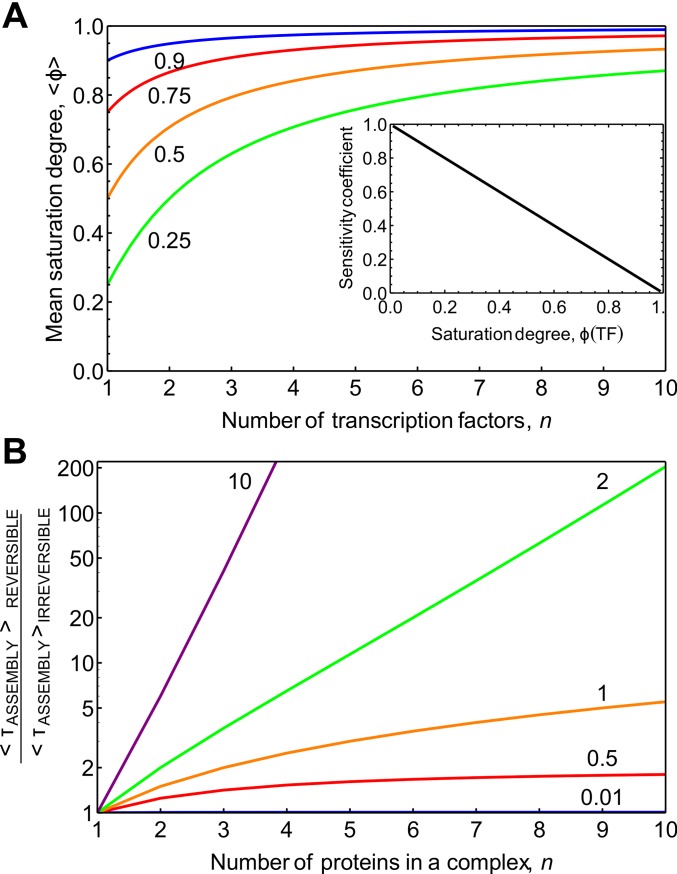
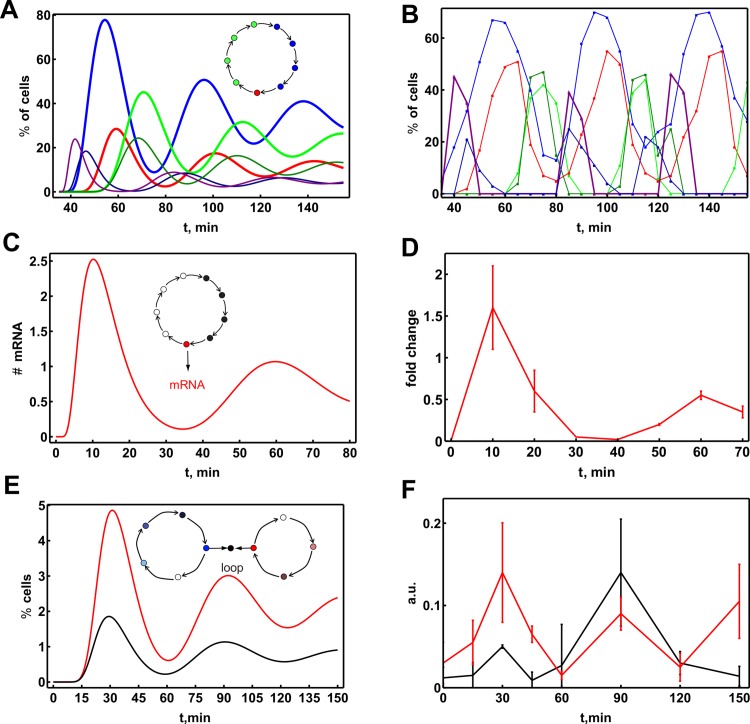
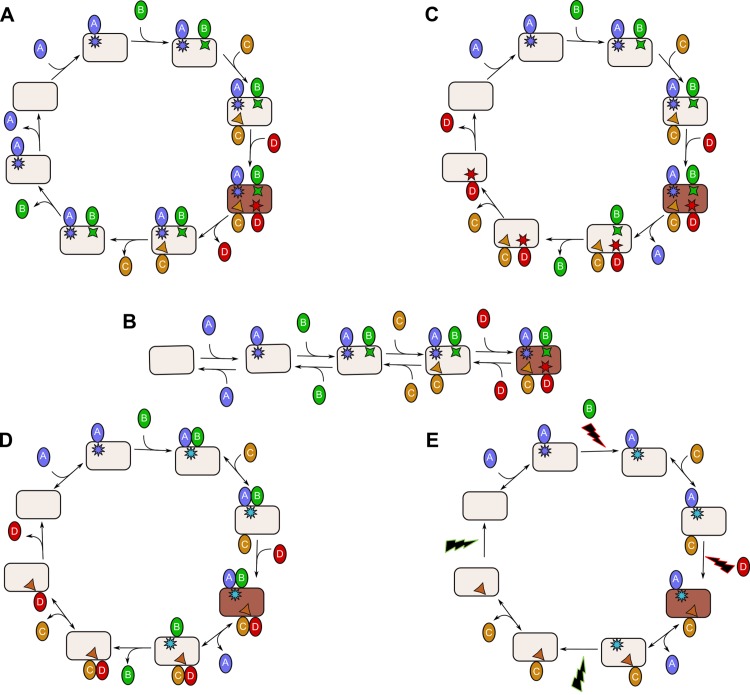
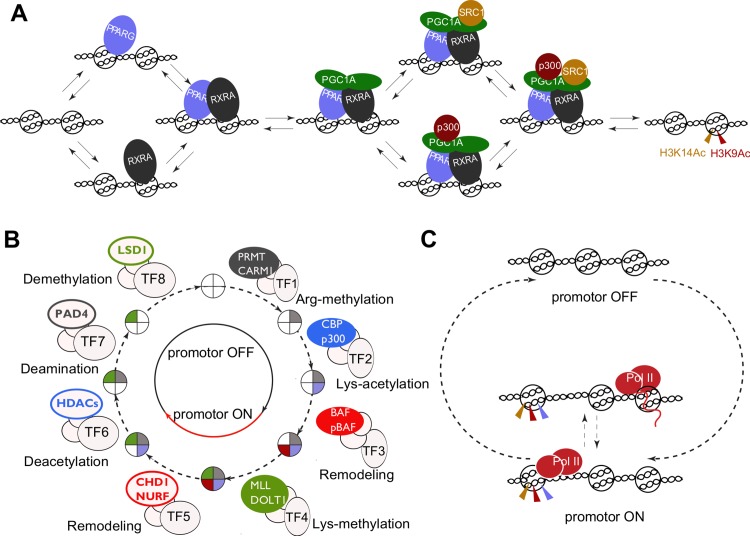
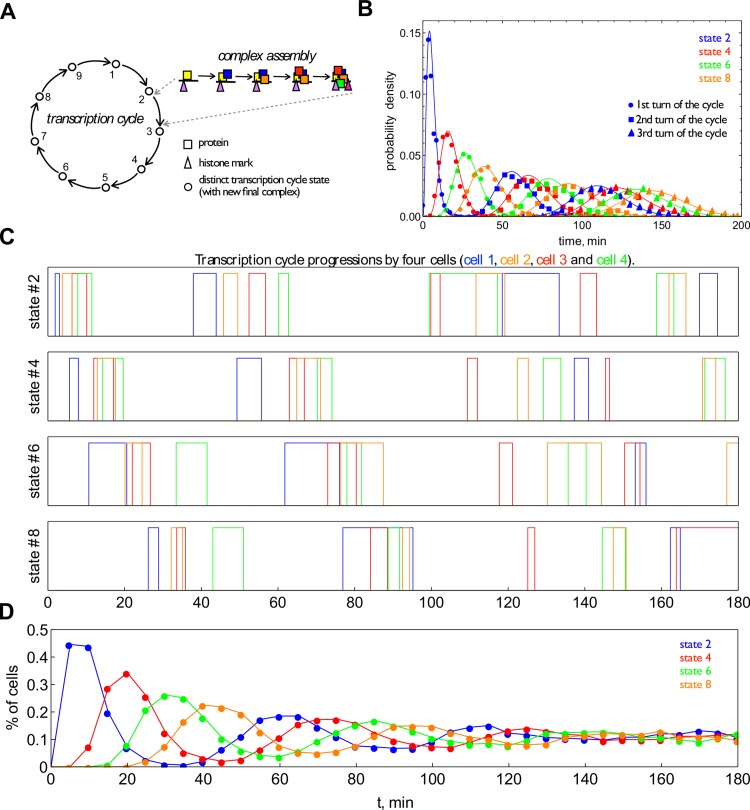
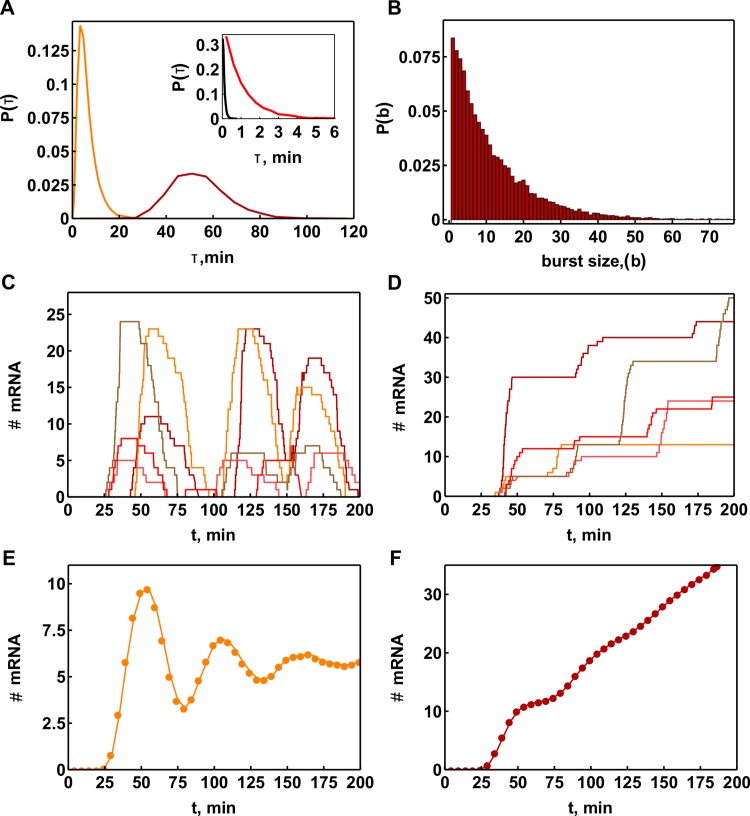
Activation of eukaryotic transcription is an intricate process that relies on a multitude of regulatory proteins forming complexes on chromatin. Chromatin modifications appear to play a guiding role in protein-complex assembly on chromatin. Together, these processes give rise to stochastic, often bursting, transcriptional activity. Here we present a model of eukaryotic transcription that aims to integrate those mechanisms. We use stochastic and ordinary-differential-equation modeling frameworks to examine various possible mechanisms of gene regulation by multiple transcription factors. We find that the assembly of large transcription factor complexes on chromatin via equilibrium-binding mechanisms is highly inefficient and insensitive to concentration changes of single regulatory proteins. An alternative model that lacks these limitations is a cyclic ratchet mechanism. In this mechanism, small protein complexes assemble sequentially on the promoter. Chromatin modifications mark the completion of a protein complex assembly, and sensitize the local chromatin for the assembly of the next protein complex. In this manner, a strict order of protein complex assemblies is attained. Even though the individual assembly steps are highly stochastic in duration, a sequence of them gives rise to a remarkable precision of the transcription cycle duration. This mechanism explains how transcription activation cycles, lasting for tens of minutes, derive from regulatory proteins residing on chromatin for only tens of seconds. Transcriptional bursts are an inherent feature of such transcription activation cycles. Bursting transcription can cause individual cells to remain in synchrony transiently, offering an explanation of transcriptional cycling as observed in cell populations, both on promoter chromatin status and mRNA levels.
真核转录的激活是一个复杂的过程,它依赖于众多调控蛋白在染色质上形成复合物。染色质修饰似乎在染色质上的蛋白复合物组装中起指导作用。这些过程共同导致随机的、通常是爆发式的转录活性。在这里,我们提出了一个真核转录模型,旨在整合这些机制。我们使用随机和常微分方程建模框架来研究多种转录因子调控基因的各种可能机制。我们发现,通过平衡结合机制在染色质上组装大型转录因子复合物效率极低,并且对单个调控蛋白的浓度变化不敏感。一种没有这些局限性的替代模型是循环棘轮机制。在这种机制中,小蛋白复合物在启动子上依次组装。染色质修饰标志着蛋白复合物组装的完成,并使局部染色质对下一个蛋白复合物的组装敏感。通过这种方式,实现了蛋白复合物组装的严格顺序。尽管各个组装步骤的持续时间具有高度随机性,但它们的序列却能产生转录周期持续时间的显著精确性。这种机制解释了持续数十分钟的转录激活周期是如何从仅在染色质上停留数十秒的调控蛋白中产生的。转录爆发是这种转录激活周期的固有特征。爆发式转录可使单个细胞短暂保持同步,这为在细胞群体中观察到的转录循环现象提供了一种解释,无论是在启动子染色质状态还是mRNA水平上。