Rabello Lígia, Conceição Catarina, Ebecken Katia, Lisboa Thiago, Bozza Fernando Augusto, Soares Márcio, Póvoa Pedro, Salluh Jorge Ibrain Figueira
Instituto D'Or de Pesquisa e Ensino, Rio de Janeiro, RJ, Brasil.
Unidade Polivalente de Terapia Intensiva, Hospital de São Francisco Xavier, Centro Hospitalar de Lisboa Ocidental, CEDOC, Faculdade Médica NOVA, Nova Universidade de Lisboa, Lisboa, Portugal.
Rev Bras Ter Intensiva. 2015 Jan-Mar;27(1):57-63. doi: 10.5935/0103-507X.20150010. Epub 2015 Mar 1.
This study aimed to evaluate Brazilian physicians' perceptions regarding the diagnosis, severity assessment, treatment and risk stratification of severe community-acquired pneumonia patients and to compare those perceptions to current guidelines.
We conducted a cross-sectional international anonymous survey among a convenience sample of critical care, pulmonary, emergency and internal medicine physicians from Brazil between October and December 2008. The electronic survey evaluated physicians' attitudes towards the diagnosis, risk assessment and therapeutic interventions for patients with severe community-acquired pneumonia.
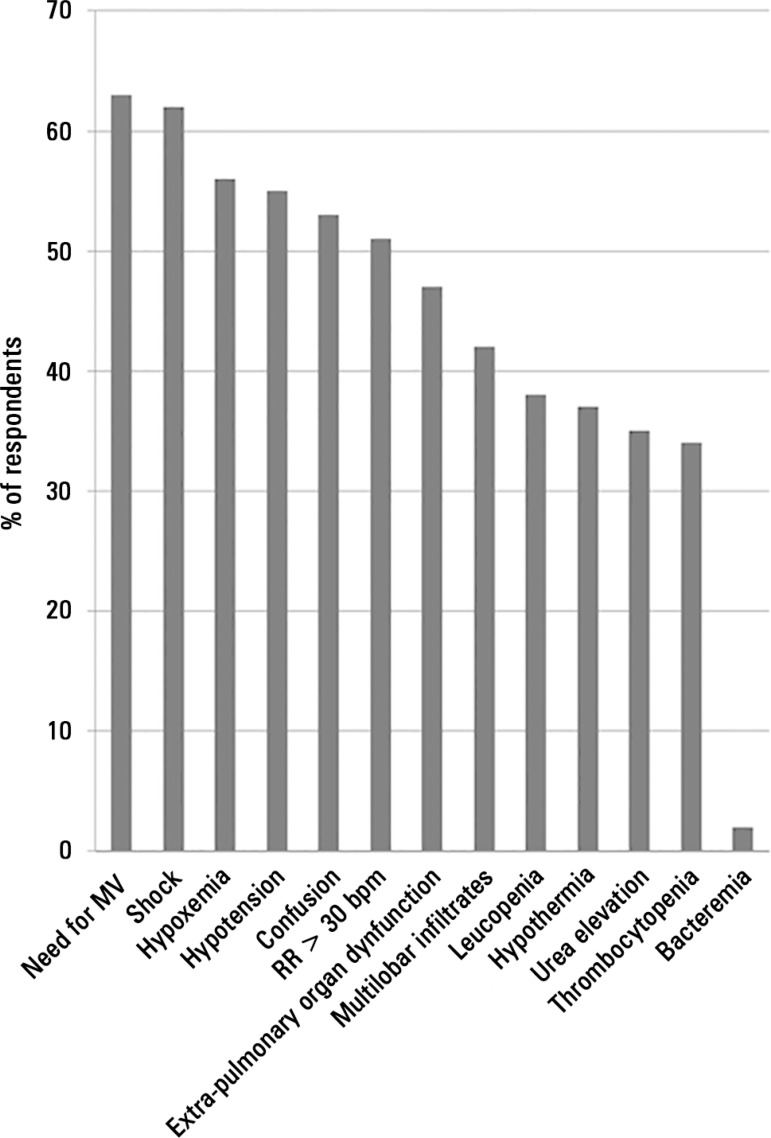
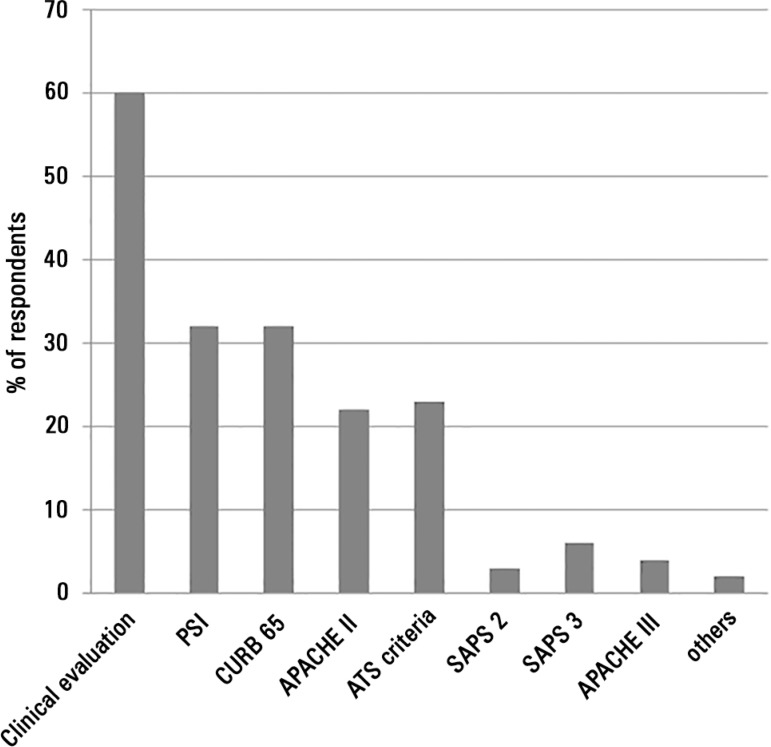
A total of 253 physicians responded to the survey, with 66% from Southeast Brazil. The majority (60%) of the responding physicians had > 10 years of medical experience. The risk assessment of severe community-acquired pneumonia was very heterogeneous, with clinical evaluation as the most frequent approach. Although blood cultures were recognized as exhibiting a poor diagnostic performance, these cultures were performed by 75% of respondents. In contrast, the presence of urinary pneumococcal and Legionella antigens was evaluated by less than 1/3 of physicians. The vast majority of physicians (95%) prescribe antibiotics according to a guideline, with the combination of a 3rd/4th generation cephalosporin plus a macrolide as the most frequent choice.
This Brazilian survey identified an important gap between guidelines and clinical practice and recommends the institution of educational programs that implement evidence-based strategies for the management of severe community-acquired pneumonia.
本研究旨在评估巴西医生对重症社区获得性肺炎患者的诊断、严重程度评估、治疗及风险分层的看法,并将这些看法与现行指南进行比较。
2008年10月至12月,我们对来自巴西的重症监护、肺病、急诊及内科医生的便利样本进行了一项横断面国际匿名调查。电子调查问卷评估了医生对重症社区获得性肺炎患者的诊断、风险评估及治疗干预措施的态度。
共有253名医生回复了调查,其中66%来自巴西东南部。大多数(60%)回复的医生有超过10年的医疗经验。重症社区获得性肺炎的风险评估差异很大,临床评估是最常用的方法。尽管血培养被认为诊断性能较差,但75%的受访者仍进行血培养。相比之下,不到1/3的医生评估了尿肺炎球菌和军团菌抗原的存在情况。绝大多数医生(95%)根据指南开具抗生素,最常用的选择是第三代/第四代头孢菌素联合大环内酯类药物。
这项巴西调查发现指南与临床实践之间存在重要差距,并建议开展教育项目,实施基于证据的重症社区获得性肺炎管理策略。