Wang Qiulan, Xue Yongjie
Clinical College, GanSu University of Chinese Tranditional Medicine, Lanzhou, Gansu, China (mainland).
Department of Pathology, San Ai Tang Hospital, Lanzhou, Gansu, China (mainland).
Med Sci Monit Basic Res. 2015 Apr 27;21:81-5. doi: 10.12659/MSMBR.893945.
To assess the effects of single polycyclic aromatic hydrocarbons (PAHs) on solid tumor initiation, and investigate their roles in immune response regulation.
Mice (100) were randomly divided into 5 groups (n=20) to be intraperitoneally injected with 10 daily doses of DMSO (control), anthracene (50 mg/kg), benzo-(a)-pyrene (10 mg/kg), benzo-(a)-pyrene (20 mg/kg), and benzo-[G, H, I])-perylene (5 mg/kg), respectively. Three months later, serum IL-2 and IL-6 levels were assessed by ELISA; liver, kidney, stomach and lung tissues were subjected to histopathological examinations.
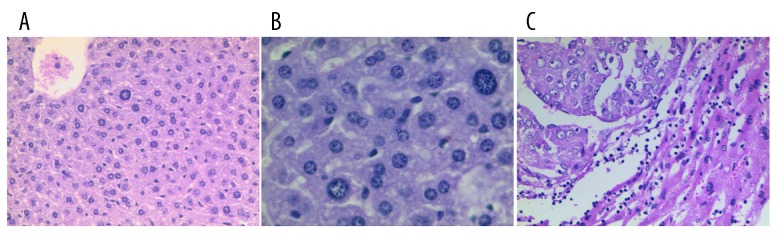
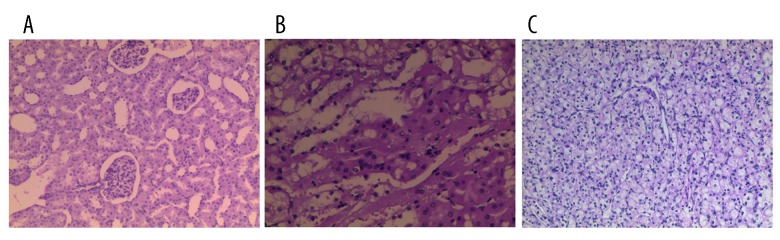
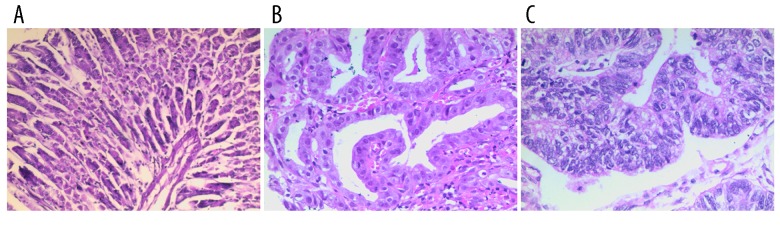
Liver cancer incidences after benzo-[G, H, I]-perylene, benzo-(a)-pyrene (10 mg/kg), benzo-(a)-pyrene (20 mg/kg), and anthracene were 21.1, 26.3, 35.3, and 27.8%, respectively; 21.1, 0, 41.2, and 0% showed stomach cancer, respectively; 0, 0, 11.8 and 0% displayed kidney cancer, respectively. The occurrences of precancerous liver lesions for benzo-[G, H, I]-perylene, benzo-(a)-pyrene (10 mg/kg), benzo-(a)-pyrene (20 mg/kg) and anthracene groups, respectively, were 68.4, 73.7, 64.7, and 55.6%; 78.9, 68.4, 29.4, and 27.8% showed precancerous stomach lesions, while 42.1, 47.4, 58.8, and 33.3% had precancerous kidney lesions; respectively. No obvious lung lesions were found in any group. Serum IL-2 and IL-6 levels in treatment groups were significantly lower compared with control values (P<0.01).
PAHs induce cancer and precancerous lesions in the liver, stomach, and kidney. Benzo (a) pyrene initiates gastric cancer in a dose-dependent manner, but does not induce precancerous lung lesions. Lower IL-2 and IL-6 levels in treatment groups compared with controls suggest that PAHs cause overt immune inhibition.
评估单一多环芳烃(PAHs)对实体瘤起始的影响,并研究它们在免疫反应调节中的作用。
将100只小鼠随机分为5组(每组n = 20),分别腹腔注射10个每日剂量的二甲基亚砜(对照)、蒽(50 mg/kg)、苯并[a]芘(10 mg/kg)、苯并[a]芘(20 mg/kg)和苯并[G, H, I]苝(5 mg/kg)。三个月后,通过酶联免疫吸附测定法评估血清白细胞介素-2(IL-2)和白细胞介素-6(IL-6)水平;对肝脏、肾脏、胃和肺组织进行组织病理学检查。
苯并[G, H, I]苝、苯并[a]芘(10 mg/kg)、苯并[a]芘(20 mg/kg)和蒽处理后肝癌发生率分别为21.1%、26.3%、35.3%和27.8%;胃癌发生率分别为21.1%、0、41.2%和0%;肾癌发生率分别为0、0、11.8%和0%。苯并[G, H, I]苝、苯并[a]芘(10 mg/kg)、苯并[a]芘(20 mg/kg)和蒽组的肝脏癌前病变发生率分别为68.4%、73.7%、64.7%和55.6%;胃癌前病变发生率分别为78.9%、68.4%、29.4%和27.8%;肾癌前病变发生率分别为42.1%、47.4%、58.8%和33.3%。所有组均未发现明显的肺部病变。各治疗组血清IL-2和IL-6水平均显著低于对照值(P<0.01)。
多环芳烃可诱发肝脏、胃和肾脏的癌症及癌前病变。苯并[a]芘以剂量依赖方式引发胃癌,但不诱发肺癌前病变。与对照组相比,各治疗组较低的IL-2和IL-6水平表明多环芳烃可导致明显的免疫抑制。