Gascon Mireia, Triguero-Mas Margarita, Martínez David, Dadvand Payam, Forns Joan, Plasència Antoni, Nieuwenhuijsen Mark J
ISGlobal, Barcelona Ctr. Int. Health Res. (CRESIB), Hospital Clínic-Universitat de Barcelona, Barcelona 08036, Spain.
Parc de Recerca Biomèdica de Barcelona (PRBB), Centre for Research in Environmental Epidemiology (CREAL). Doctor Aiguader, 88, 08003 Barcelona, Catalonia, Spain.
Int J Environ Res Public Health. 2015 Apr 22;12(4):4354-79. doi: 10.3390/ijerph120404354.
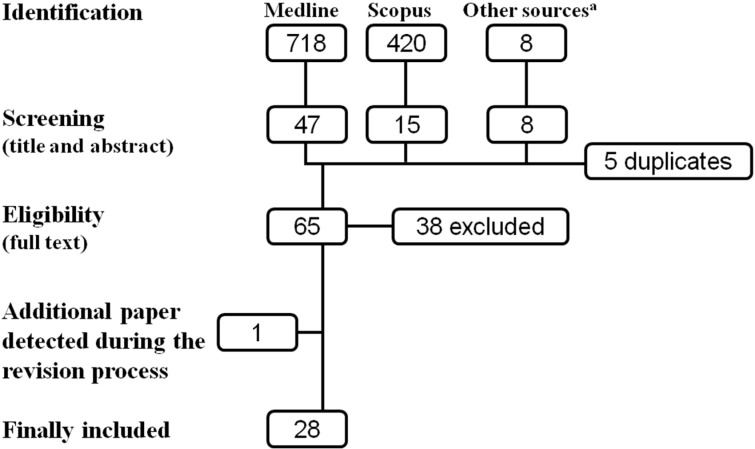
Many studies conducted during the last decade suggest the mental health benefits of green and blue spaces. We aimed to systematically review the available literature on the long-term mental health benefits of residential green and blue spaces by including studies that used standardized tools or objective measures of both the exposures and the outcomes of interest. We followed the PRISMA statement guidelines for reporting systematic reviews and meta-analysis. In total 28 studies were included in the systematic review. We found limited evidence for a causal relationship between surrounding greenness and mental health in adults, whereas the evidence was inadequate in children. The evidence was also inadequate for the other exposures evaluated (access to green spaces, quality of green spaces, and blue spaces) in both adults and children. The main limitation was the limited number of studies, together with the heterogeneity regarding exposure assessment. Given the increase in mental health problems and the current rapid urbanization worldwide, results of the present systematic review should be taken into account in future urban planning. However, further research is needed to provide more consistent evidence and more detailed information on the mechanisms and the characteristics of the green and blue spaces that promote better mental health. We provide recommendations for future studies in order to provide consistent and evidence-based recommendations for policy makers.
过去十年间开展的许多研究表明,绿色和蓝色空间有益于心理健康。我们旨在通过纳入使用标准化工具或对相关暴露因素及感兴趣的结果进行客观测量的研究,系统回顾有关居住环境中的绿色和蓝色空间对长期心理健康有益影响的现有文献。我们遵循PRISMA声明指南来报告系统评价和荟萃分析。该系统评价共纳入了28项研究。我们发现,关于成年人周围绿色环境与心理健康之间的因果关系,证据有限,而在儿童方面,证据不足。对于在成年人和儿童中评估的其他暴露因素(获得绿色空间的机会、绿色空间质量以及蓝色空间),证据也不充分。主要限制在于研究数量有限,以及暴露评估方面的异质性。鉴于全球心理健康问题增多以及当前快速的城市化进程,未来城市规划应考虑本系统评价的结果。然而,需要进一步研究以提供更一致的证据,以及关于促进更好心理健康的绿色和蓝色空间的机制及特征的更详细信息。我们为未来研究提供建议,以便为政策制定者提供一致且基于证据的建议。