Phillips Flip, Natter Michael B, Egan Eric J L
Vision and Haptics Laboratory, Neuroscience and Psychology, Skidmore College Saratoga Springs, NY, USA.
Vision and Haptics Laboratory, Neuroscience and Psychology, Skidmore College Saratoga Springs, NY, USA ; The Vision Laboratory, Department of Psychology, The Ohio State University Columbus, OH, USA.
Front Psychol. 2015 Apr 9;6:371. doi: 10.3389/fpsyg.2015.00371. eCollection 2015.
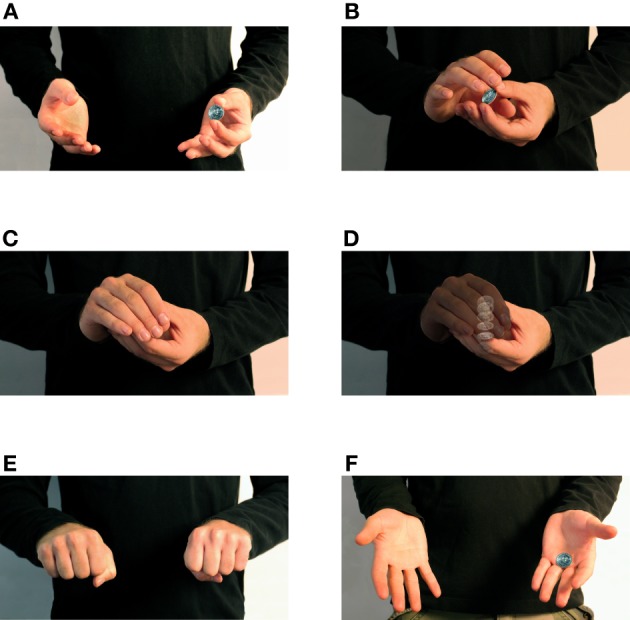
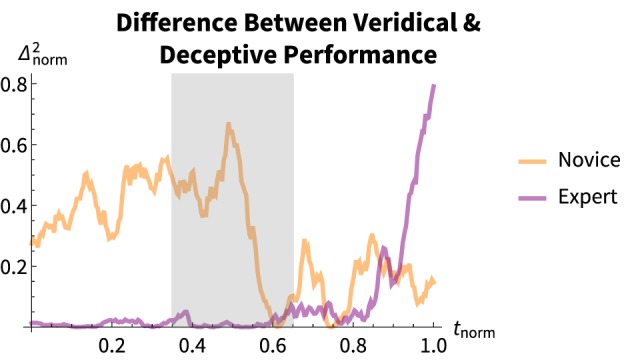
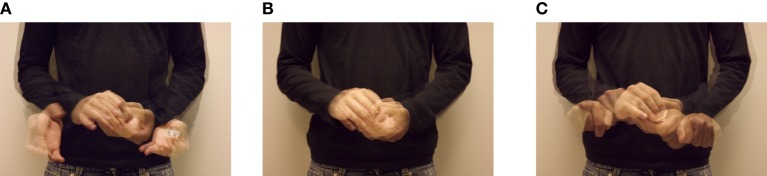
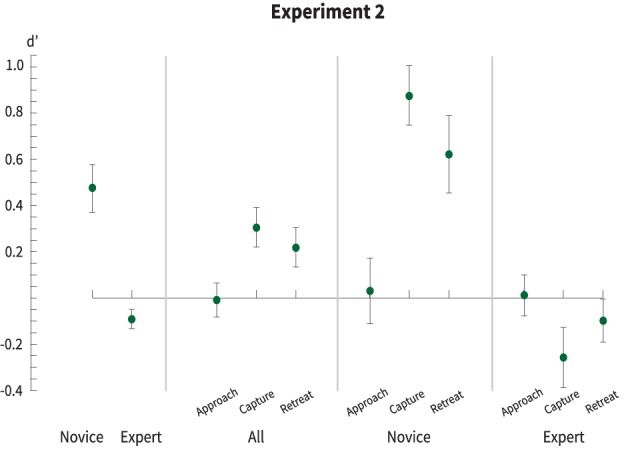
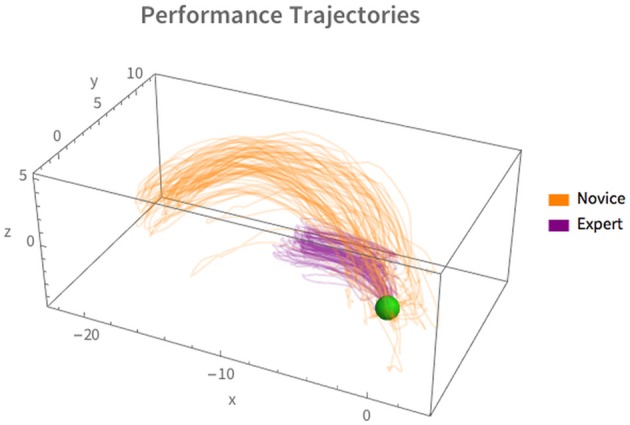
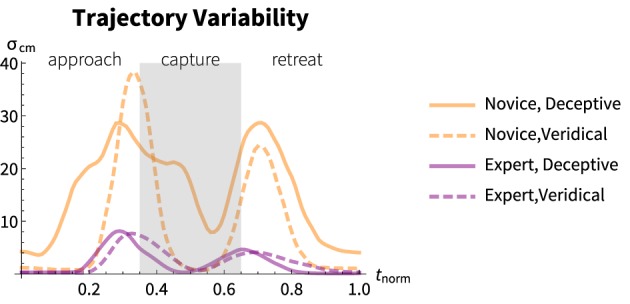
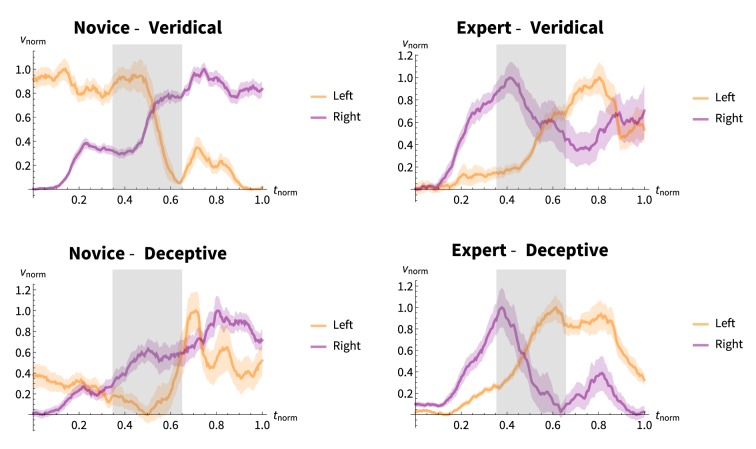
Intentional deception, as is common in the performance of magic tricks, can provide valuable insight into the mechanisms of perception and action. Much of the recent investigations into this form of deception revolve around the attention of the observer. Here, we present experiments designed to investigate the contributions of the performer to the act of deception. An experienced magician and a naïve novice performed a classic sleight known as the French Drop. Video recordings of the performance were used to measure the quality of the deception-e.g., if a non-magician observer could discriminate instances where the sleight was performed (a deceptive performance) from those where it was not (a veridical performace). During the performance we recorded the trajectory of the hands and measured muscle activity via EMG to help understand the biomechanical mechanisms of this deception. We show that expertise plays a major role in the quality of the deception and that there are significant variations in the motion and muscular behaviors between successful and unsuccessful performances. Smooth, minimal movements with an exaggerated faux-transfer of muscular tension were characteristic of better deception. This finding is consistent with anecdotal reports and the magic performance literature.
正如在魔术表演中常见的那样,故意欺骗能够为感知和行动机制提供有价值的见解。最近对这种欺骗形式的许多研究都围绕着观察者的注意力展开。在此,我们展示旨在研究表演者在欺骗行为中所起作用的实验。一位经验丰富的魔术师和一位毫无经验的新手表演了一种名为法式落牌的经典手法。表演的视频记录被用于衡量欺骗的质量——例如,非魔术师观察者能否区分手法被执行的情况(欺骗性表演)和未被执行的情况(真实表演)。在表演过程中,我们记录了手部的轨迹,并通过肌电图测量肌肉活动,以帮助理解这种欺骗的生物力学机制。我们表明,专业技能在欺骗质量中起着主要作用,并且成功和不成功表演之间的动作和肌肉行为存在显著差异。流畅、最小化的动作以及肌肉张力的夸张假转移是更好欺骗的特征。这一发现与轶事报道和魔术表演文献一致。