Trussoni Christy E, Tabibian James H, Splinter Patrick L, O'Hara Steven P
Division of Gastroenterology and Hepatology, and the Mayo Clinic Center for Cell Signaling in Gastroenterology, Mayo Clinic, Rochester, Minnesota, 55905, United States of America.
PLoS One. 2015 Apr 27;10(4):e0125793. doi: 10.1371/journal.pone.0125793. eCollection 2015.
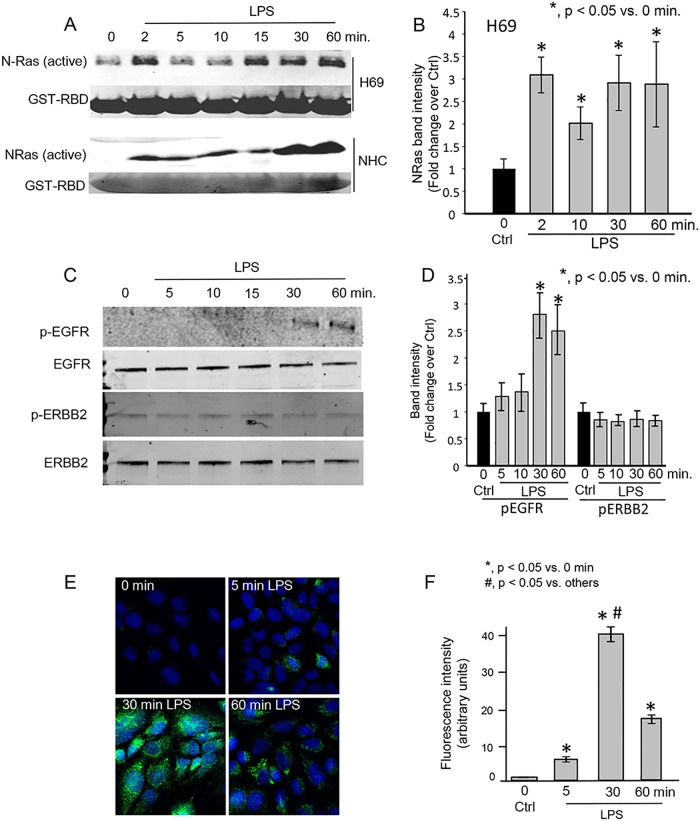
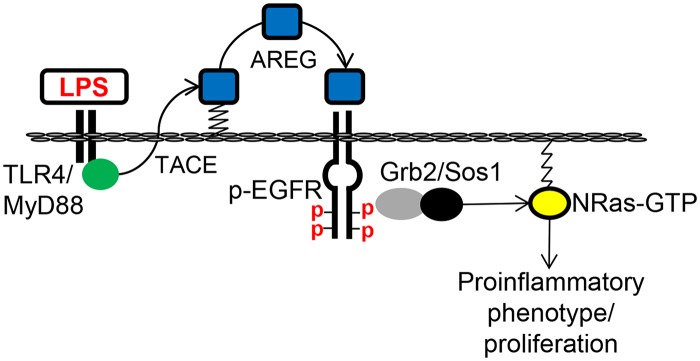
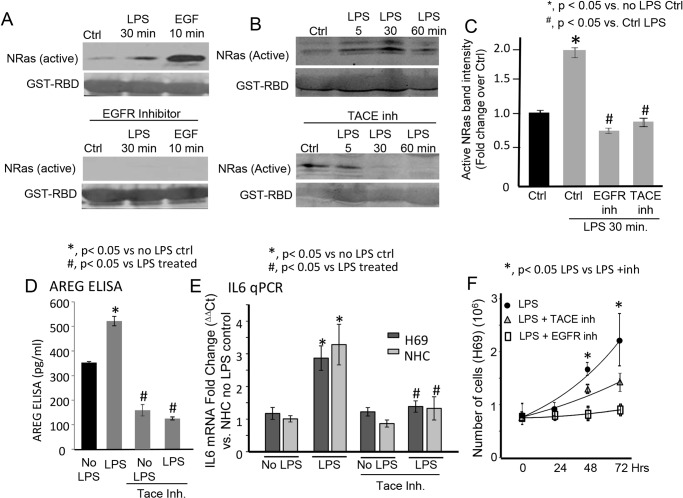
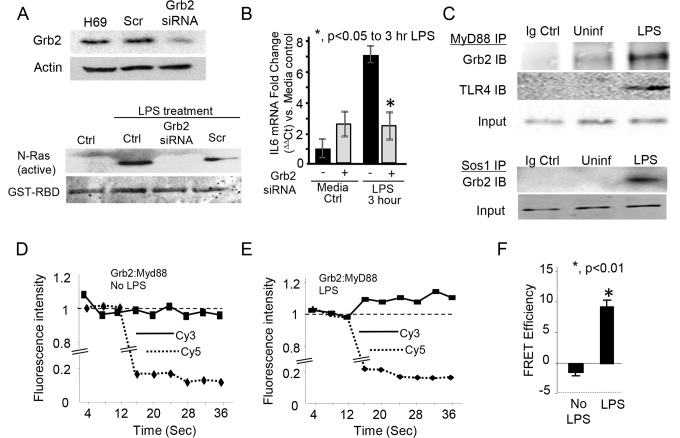
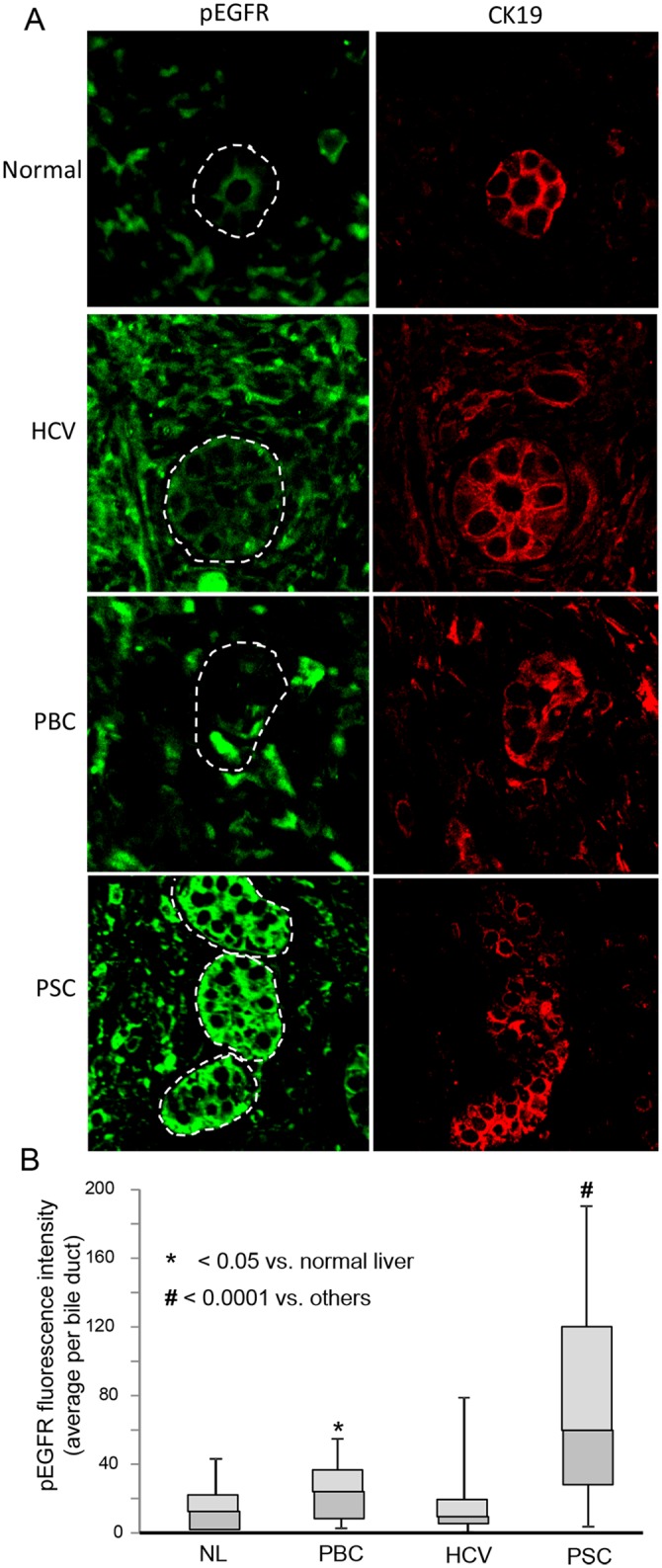
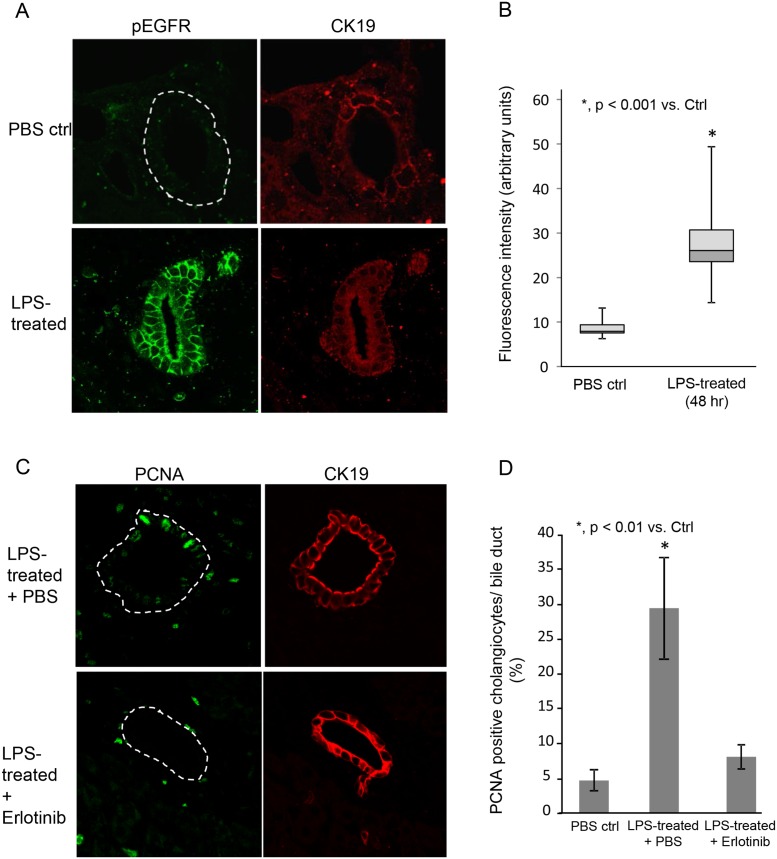
Cholangiocytes (biliary epithelial cells) actively participate in microbe-induced proinflammatory responses in the liver and contribute to inflammatory and infectious cholangiopathies. We previously demonstrated that cholangiocyte TLR-dependent NRas activation contributes to proinflammatory/ proliferative responses. We test the hypothesis that LPS-induced activation of NRas requires the EGFR. SV40-transformed human cholangiocytes (H69 cells), or low passage normal human cholangiocytes (NHC), were treated with LPS in the presence or absence of EGFR or ADAM metallopeptidase domain 17 (TACE) inhibitors. Ras activation assays, quantitative RT-PCR, and proliferation assays were performed in cells cultured with or without inhibitors or an siRNA to Grb2. Immunofluorescence for phospho-EGFR was performed on LPS-treated mouse samples and specimens from patients with primary sclerosing cholangitis, primary biliary cirrhosis, hepatitis C, and normal livers. LPS-treatment induced an association between the TLR/MyD88 and EGFR/Grb2 signaling apparatus, NRas activation, and EGFR phosphorylation. NRas activation was sensitive to EGFR and TACE inhibitors and correlated with EGFR phosphorylation. The TACE inhibitor and Grb2 depletion prevented LPS-induced IL6 expression (p<0.05) and proliferation (p<0.01). Additionally, cholangiocytes from LPS-treated mouse livers and human primary sclerosing cholangitis (PSC) livers exhibited increased phospho-EGFR (p<0.01). Moreover, LPS-induced mouse cholangiocyte proliferation was inhibited by concurrent treatment with the EGFR inhibitor, Erlotinib. Our results suggest that EGFR is essential for LPS-induced, TLR4/MyD88-mediated NRas activation and induction of a robust proinflammatory cholangiocyte response. These findings have implications not only for revealing the signaling potential of TLRs, but also implicate EGFR as an integral component of cholangiocyte TLR-induced proinflammatory processes.
胆管细胞(胆管上皮细胞)积极参与肝脏中微生物诱导的促炎反应,并导致炎症性和感染性胆管病。我们之前证明,胆管细胞中Toll样受体(TLR)依赖的NRAS激活有助于促炎/增殖反应。我们检验了脂多糖(LPS)诱导的NRAS激活需要表皮生长因子受体(EGFR)这一假说。用LPS处理猿猴病毒40(SV40)转化的人胆管细胞(H69细胞)或低传代正常人胆管细胞(NHC),同时加入或不加入EGFR或A Disintegrin And Metalloproteinase domain 17(ADAM17,又称肿瘤坏死因子α转换酶,TACE)抑制剂。在用或不用抑制剂或针对生长因子受体结合蛋白2(Grb2)的小干扰RNA(siRNA)培养的细胞中进行Ras激活分析、定量逆转录聚合酶链反应(qRT-PCR)和增殖分析。对LPS处理的小鼠样本以及原发性硬化性胆管炎、原发性胆汁性肝硬化、丙型肝炎患者和正常肝脏的标本进行磷酸化EGFR的免疫荧光检测。LPS处理诱导了TLR/髓样分化因子88(MyD88)与EGFR/Grb2信号传导装置之间的关联、NRAS激活和EGFR磷酸化。NRAS激活对EGFR和TACE抑制剂敏感,且与EGFR磷酸化相关。TACE抑制剂和Grb2缺失可阻止LPS诱导的白细胞介素6(IL6)表达(p<0.05)和增殖(p<0.01)。此外,来自LPS处理的小鼠肝脏和人类原发性硬化性胆管炎(PSC)肝脏的胆管细胞表现出磷酸化EGFR增加(p<0.01)。此外,EGFR抑制剂厄洛替尼同时处理可抑制LPS诱导的小鼠胆管细胞增殖。我们的结果表明,EGFR对于LPS诱导的、TLR4/MyD88介导的NRAS激活以及强烈促炎胆管细胞反应的诱导至关重要。这些发现不仅对于揭示TLR的信号传导潜力具有意义,还表明EGFR是胆管细胞TLR诱导的促炎过程的一个重要组成部分。