Zalata Adel, El-Samanoudy Ayman Z, Shaalan Dalia, El-Baiomy Youssef, Mostafa Taymour
Department of Medical Biochemistry, Faculty of Medicine, Mansoura University, Mansoura, Egypt.
Department of Dermatology and Andrology, Faculty of Medicine, Mansoura University, Mansoura, Egypt.
Int J Fertil Steril. 2015 Apr-Jun;9(1):129-36. doi: 10.22074/ijfs.2015.4217. Epub 2015 Apr 21.
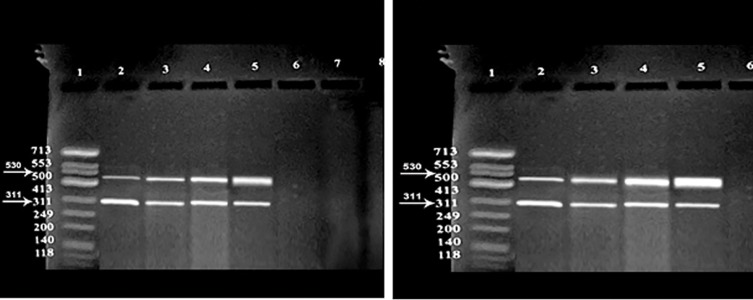
Use of cellular phones emitting radiofrequency electromagnetic field (RF-EMF) has been increased exponentially and become a part of everyday life. This study aimed to investigate the effects of in vitro RF-EMF exposure emitted from cellular phones on sperm motility index, sperm DNA fragmentation and seminal clusterin (CLU) gene expression.
In this prospective study, a total of 124 semen samples were grouped into the following main categories: i. normozoospermia (N, n=26), ii. asthenozoospermia (A, n=32), iii. asthenoteratozoospermia (AT, n=31) and iv. oligoasthenoteratozoospermia (OAT, n=35). The same semen samples were then divided into two portions non-exposed and exposed samples to cell phone radiation for 1 hour. Before and immediately after exposure, both aliquots were subjected to different assessments for sperm motility, acrosin activity, sperm DNA fragmentation and CLU gene expression. Statistical differences were analyzed using paired t student test for comparisons between two sub-groups where p<0.05 was set as significant.
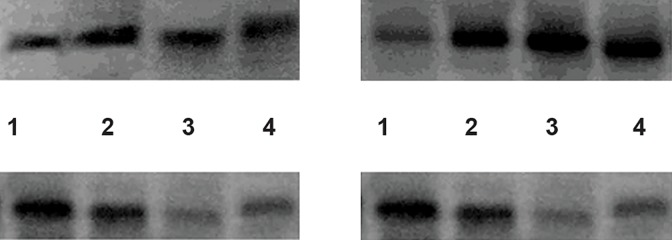
There was a significant decrease in sperm motility, sperm linear velocity, sperm linearity index, and sperm acrosin activity, whereas there was a significant increase in sperm DNA fragmentation percent, CLU gene expression and CLU protein levels in the exposed semen samples to RF-EMF compared with non-exposed samples in OAT>AT>A>N groups, respectively (p<0.05).
Cell phone emissions have a negative impact on exposed sperm motility index, sperm acrosin activity, sperm DNA fragmentation and seminal CLU gene expression, especially in OAT cases.
发射射频电磁场(RF - EMF)的手机使用量呈指数级增长,并已成为日常生活的一部分。本研究旨在调查手机发射的体外RF - EMF暴露对精子活力指数、精子DNA碎片化和精液簇集素(CLU)基因表达的影响。
在这项前瞻性研究中,总共124份精液样本被分为以下主要类别:i. 正常精子症(N,n = 26),ii. 弱精子症(A,n = 32),iii. 弱畸精子症(AT,n = 31)和iv. 少弱畸精子症(OAT,n = 35)。然后将相同的精液样本分成两份,一份为未暴露样本,另一份为暴露于手机辐射1小时的样本。在暴露前和暴露后立即对两份样本进行精子活力、顶体酶活性、精子DNA碎片化和CLU基因表达的不同评估。使用配对t检验分析两个亚组之间的统计差异,将p < 0.05设定为具有显著性。
与未暴露样本相比,在OAT>AT>A>N组中,暴露于RF - EMF的精液样本中精子活力、精子直线速度、精子直线性指数和精子顶体酶活性显著降低,而精子DNA碎片化百分比、CLU基因表达和CLU蛋白水平显著增加(p < 0.05)。
手机辐射对暴露的精子活力指数、精子顶体酶活性、精子DNA碎片化和精液CLU基因表达有负面影响,尤其是在少弱畸精子症病例中。