Li Shihao, Guo Shuyue, Li Fuhua, Xiang Jianhai
Key Laboratory of Experimental Marine Biology, Institute of Oceanology, Chinese Academy of Sciences, 7 Nanhai Road, Qingdao 266071, China.
National & Local Joint Engineering Laboratory of Ecological Mariculture, 7 Nanhai Road, Qingdao 266071, China.
Mar Drugs. 2015 Apr 27;13(5):2602-16. doi: 10.3390/md13052602.
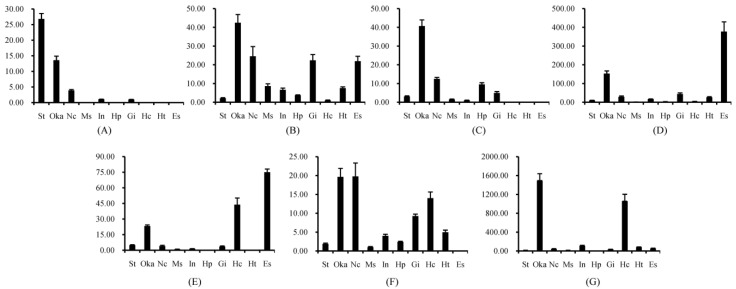
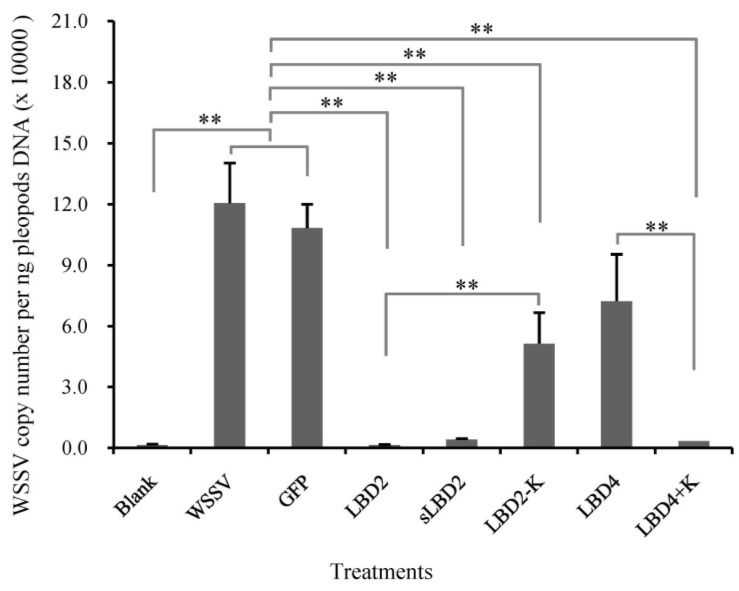
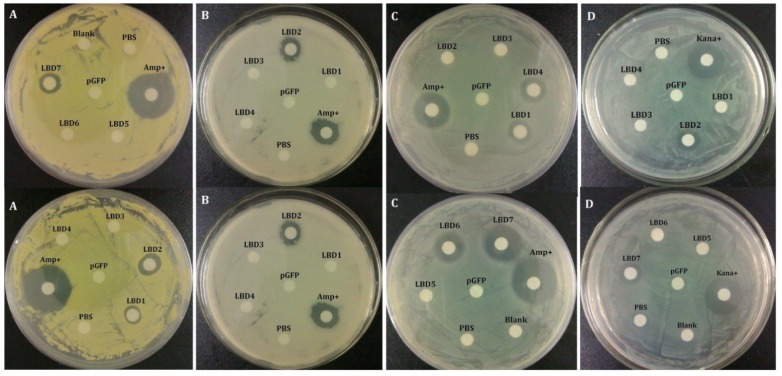
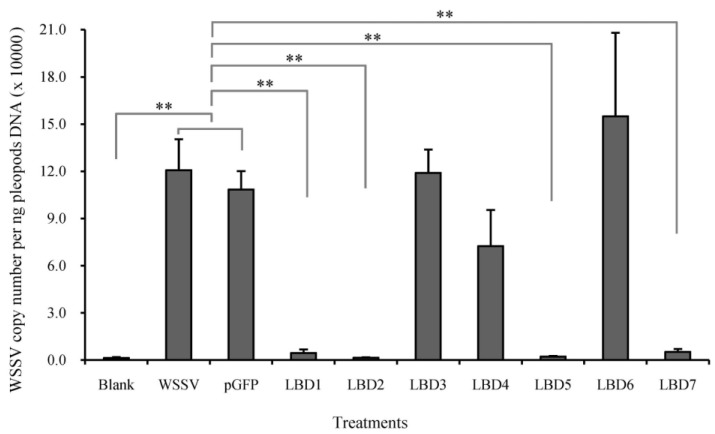
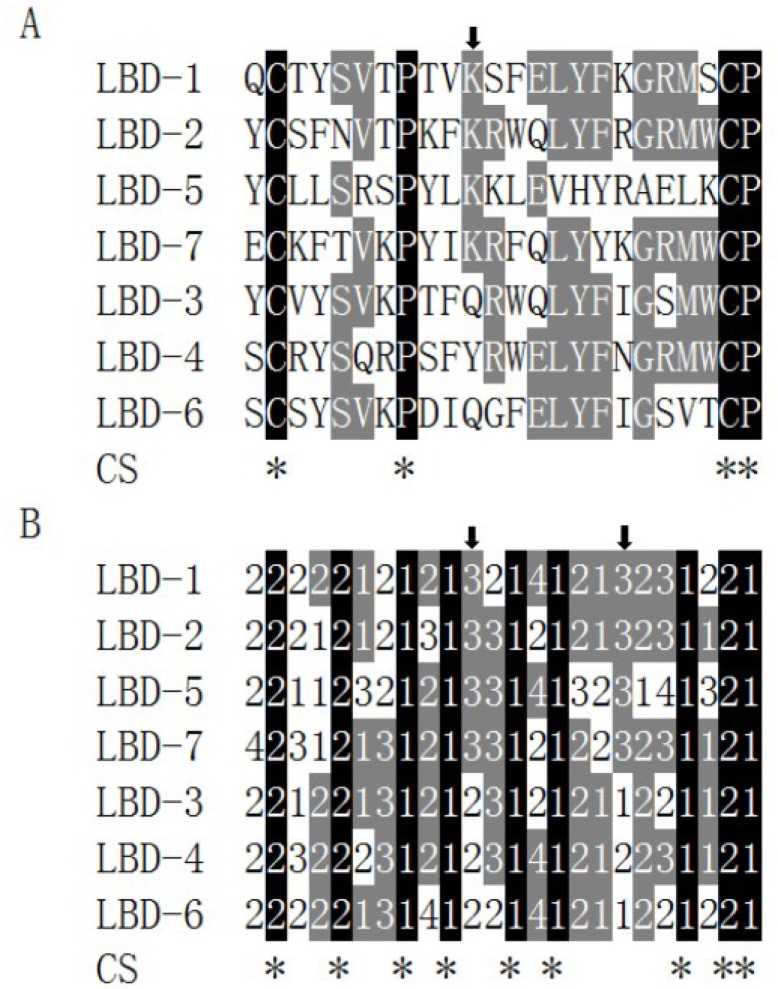
Anti-lipopolysaccharide factor (ALF) is a small protein with broad-spectrum antimicrobial activity, which has potential application in the disease control. Previously, we isolated seven ALF isoforms from the Chinese shrimp Fenneropenaeus chinensis. In the present study, their distributions in tissues of shrimp were analyzed and the data showed that different isoforms had different expression profiles, which suggested that they might have different functions. Then, the functions of different isoforms were studied by analyzing the antibacterial and antiviral activities of the functional domain of ALFs, the LPS-binding domain (LBD), which were synthesized by chemical methods. Different ALFs showed distinct antibacterial and antiviral activities, which were consistent with their diverse tissue distribution patterns. Sequence analysis on the LBD domain of different isoforms revealed that an identical lysine residue site was specifically conserved in peptides with anti-WSSV activity. In order to confirm whether this lysine residue is critical to the antiviral activity of the peptide, new peptides were synthesized by changing residues at this site. Changing the lysine residue at the specific site to other amino acid residue, the antiviral activity of the peptide apparently decreased. While replacing other residue with a lysine residue at this site in LBD peptide without anti-WSSV activity, the peptide will obtain the antiviral activity to WSSV. These results not only showed us a comprehensive understanding on the function of ALFs from F. chinensis, but also provided clues for the development of ALFs as potential therapeutic drugs to WSSV.
抗脂多糖因子(ALF)是一种具有广谱抗菌活性的小蛋白,在疾病控制方面具有潜在应用价值。此前,我们从中国对虾凡纳滨对虾中分离出了7种ALF亚型。在本研究中,我们分析了它们在对虾组织中的分布情况,数据显示不同亚型具有不同的表达谱,这表明它们可能具有不同的功能。然后,通过分析化学合成的ALF功能结构域——脂多糖结合结构域(LBD)的抗菌和抗病毒活性,研究了不同亚型的功能。不同的ALF显示出不同的抗菌和抗病毒活性,这与它们不同的组织分布模式一致。对不同亚型LBD结构域的序列分析表明,具有抗白斑综合征病毒(WSSV)活性的肽段中一个相同的赖氨酸残基位点是特异性保守的。为了确定该赖氨酸残基对肽段抗病毒活性是否关键,通过改变该位点的残基合成了新的肽段。将特定位点的赖氨酸残基替换为其他氨基酸残基,肽段的抗病毒活性明显降低。而在没有抗WSSV活性的LBD肽段中将该位点的其他残基替换为赖氨酸残基时,该肽段将获得对WSSV的抗病毒活性。这些结果不仅让我们全面了解了凡纳滨对虾ALF的功能,也为将ALF开发为抗WSSV的潜在治疗药物提供了线索。