Sahlmann Christian, Gu Jinni, Kortner Trond M, Lein Ingrid, Krogdahl Åshild, Bakke Anne Marie
Department of Basic Sciences and Aquatic Medicine, Faculty of Veterinary Medicine and Biosciences, Norwegian University of Life Sciences, Oslo, Norway.
Nofima AS, Sunndalsøra, Norway.
PLoS One. 2015 Apr 29;10(4):e0124179. doi: 10.1371/journal.pone.0124179. eCollection 2015.
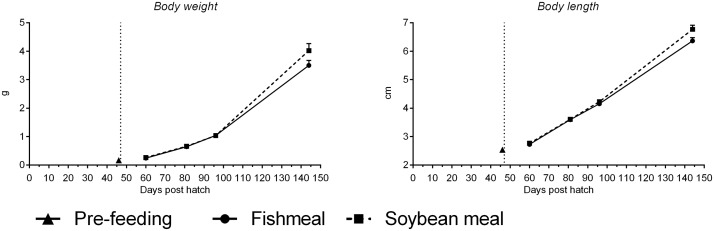
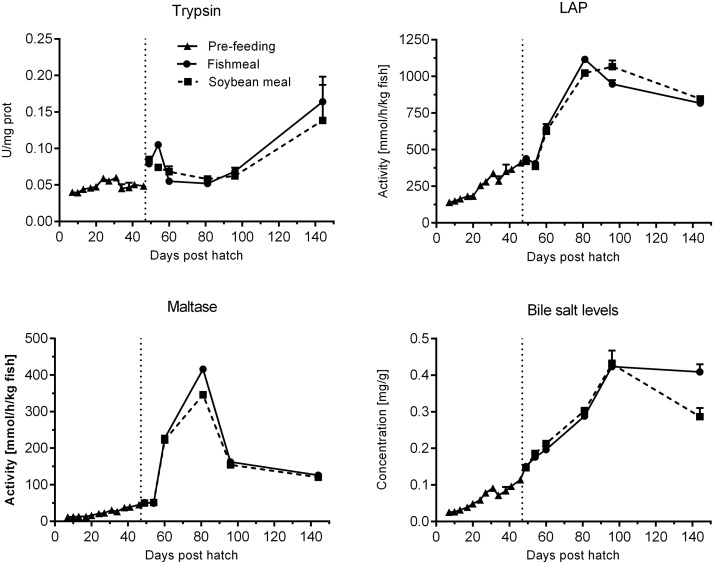
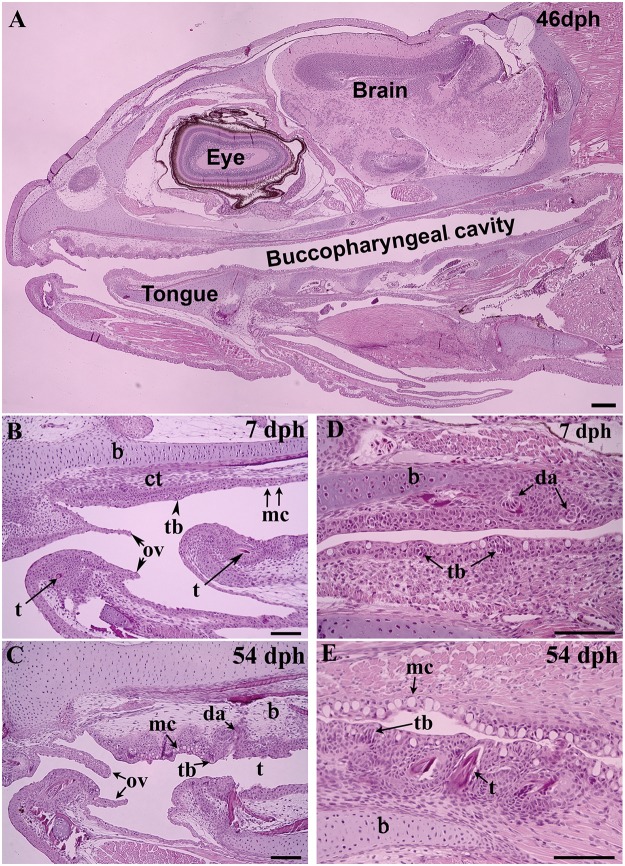
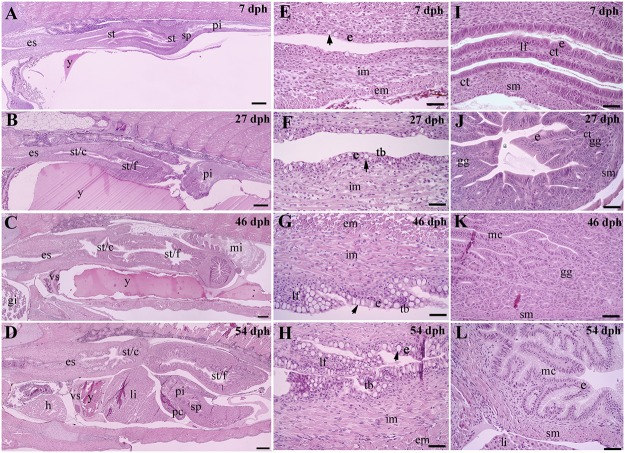
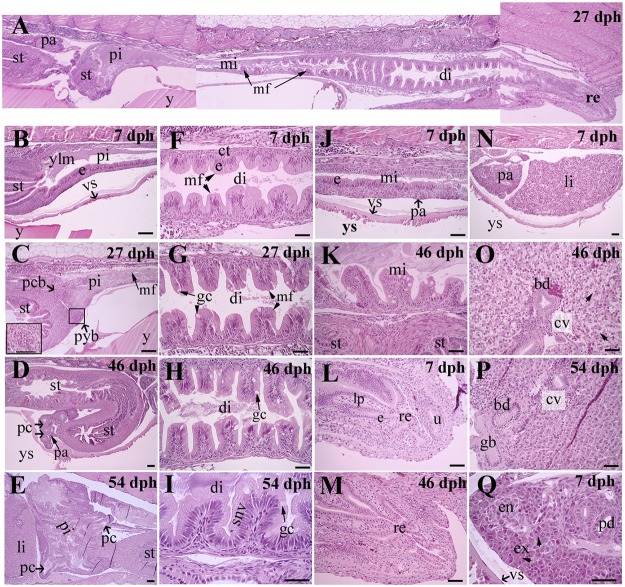
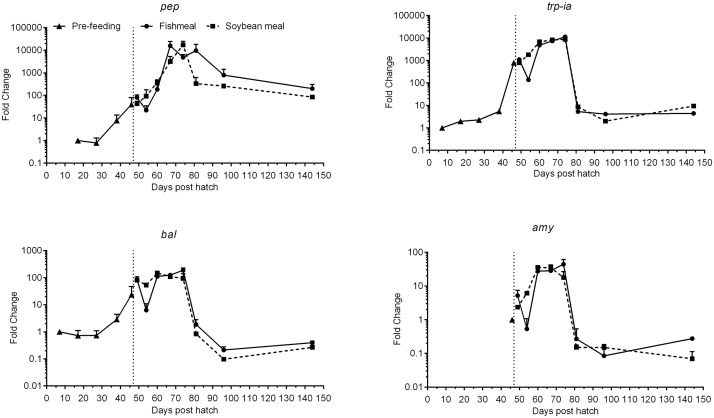
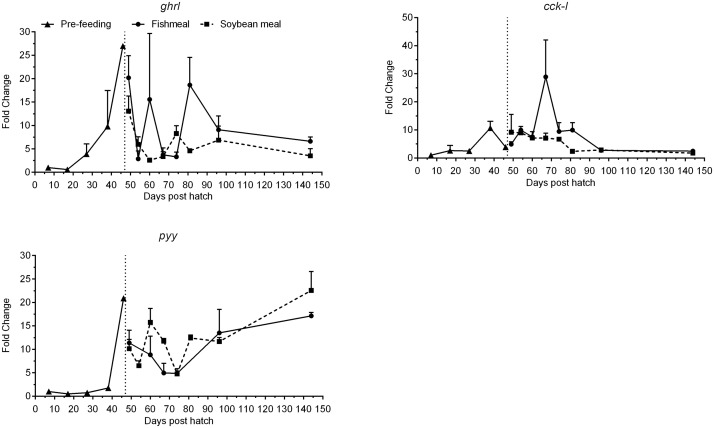
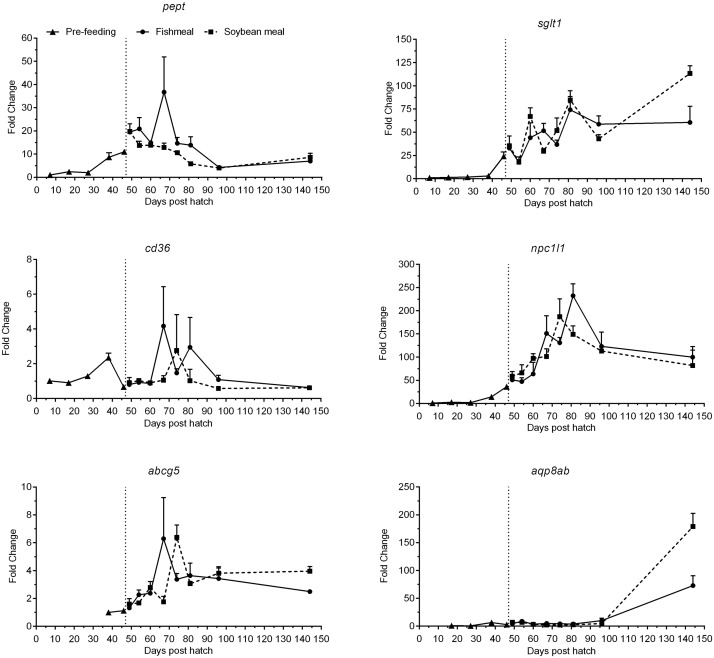
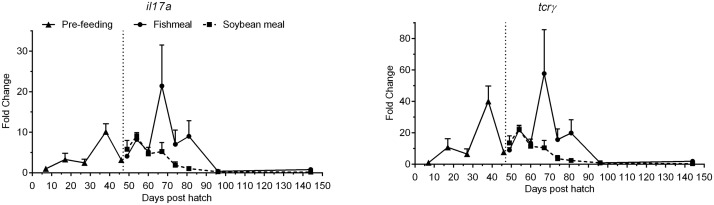
Despite a long history of rearing Atlantic salmon in hatcheries in Norway, knowledge of molecular and physiological aspects of juvenile development is still limited. To facilitate introduction of alternative feed ingredients and feed additives during early phases, increased knowledge regarding the ontogeny of the digestive apparatus in salmon is needed. In this study, we characterized the development of the gastrointestinal tract and accessory digestive organs for five months following hatch by using histological, biochemical and molecular methods. Furthermore, the effects of a diet containing 16.7% soybean meal (SBM) introduced at start-feeding were investigated, as compared to a fishmeal based control diet. Salmon yolk sac alevins and fry were sampled at 18 time points from hatch until 144 days post hatch (dph). Histomorphological development was investigated at 7, 27, 46, 54 and 144 dph. Ontogenetic expression patterns of genes encoding key digestive enzymes, nutrient transporters, gastrointestinal peptide hormones and T-cell markers were analyzed from 13 time points by qPCR. At 7 dph, the digestive system of Atlantic salmon alevins was morphologically distinct with an early stomach, liver, pancreas, anterior and posterior intestine. About one week before the yolk sac was internalized and exogenous feeding was started, gastric glands and developing pyloric caeca were observed, which coincided with an increase in gene expression of gastric and pancreatic enzymes and nutrient transporters. Thus, the observed organs seemed ready to digest external feed well before the yolk sac was absorbed into the abdominal cavity. In contrast to post-smolt Atlantic salmon, inclusion of SBM did not induce intestinal inflammation in the juveniles. This indicates that SBM can be used in compound feeds for salmon fry from start-feeding to at least 144 dph and/or 4-5 g body weight.
尽管挪威在孵化场养殖大西洋鲑已有很长历史,但对幼鱼发育的分子和生理方面的了解仍然有限。为了在早期阶段便于引入替代饲料成分和饲料添加剂,需要增加对鲑鱼消化器官个体发育的了解。在本研究中,我们通过组织学、生化和分子方法,对孵化后五个月内胃肠道和附属消化器官的发育进行了表征。此外,与以鱼粉为基础的对照饲料相比,研究了开始投喂时引入的含16.7%豆粕(SBM)的饲料的效果。从孵化到孵化后144天(dph)的18个时间点采集鲑鱼卵黄囊仔鱼和鱼苗样本。在7、27、46、54和144 dph时研究组织形态学发育。通过qPCR从13个时间点分析了编码关键消化酶、营养转运蛋白、胃肠肽激素和T细胞标志物的基因的个体发育表达模式。在7 dph时,大西洋鲑仔鱼的消化系统在形态上明显不同,有早期的胃、肝脏、胰腺、前肠和后肠。在卵黄囊内化和开始外源投喂前约一周,观察到胃腺和发育中的幽门盲囊,这与胃和胰腺酶以及营养转运蛋白的基因表达增加相一致。因此,在卵黄囊被吸收到腹腔之前,观察到的器官似乎已准备好消化外部饲料。与后洄游期大西洋鲑不同,添加SBM并未在幼鱼中诱发肠道炎症。这表明SBM可用于从开始投喂到至少144 dph和/或体重4 - 5 g的鲑鱼苗复合饲料中。