Taylor Anne W, Shi Zumin, Montgomerie Alicia, Dal Grande Eleonora, Campostrini Stefano
Population Research & Outcome Studies, Discipline of Medicine, The University of Adelaide, South Australia, Australia; Ca' Foscari University, Venice, Italy.
Population Research & Outcome Studies, Discipline of Medicine, The University of Adelaide, South Australia, Australia.
PLoS One. 2015 Apr 29;10(4):e0125233. doi: 10.1371/journal.pone.0125233. eCollection 2015.
Age, period and cohort (APC) analyses, using representative, population-based descriptive data, provide additional understanding behind increased prevalence rates.
Data on obesity and diabetes from the South Australian (SA) monthly chronic disease and risk factor surveillance system from July 2002 to December 2013 (n = 59,025) were used. Age was the self-reported age of the respondent at the time of the interview. Period was the year of the interview and cohort was age subtracted from the survey year. Cohort years were 1905 to 1995. All variables were treated as continuous. The age-sex standardised prevalence for obesity and diabetes was calculated using the Australia 2011 census. The APC models were constructed with ''apcfit'' in Stata.
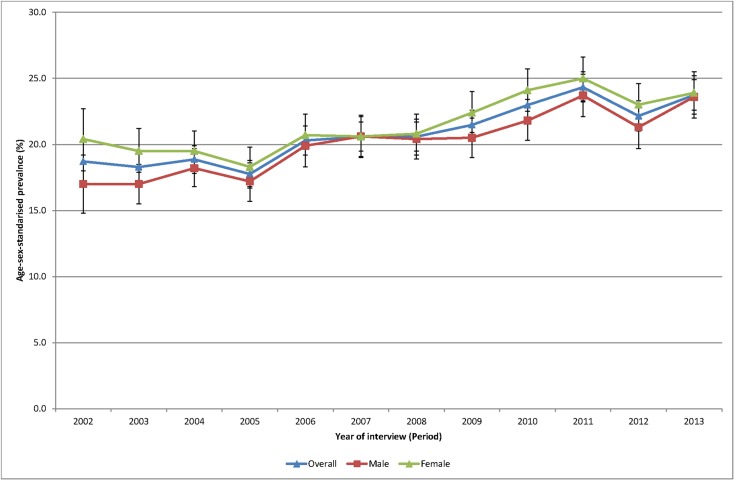
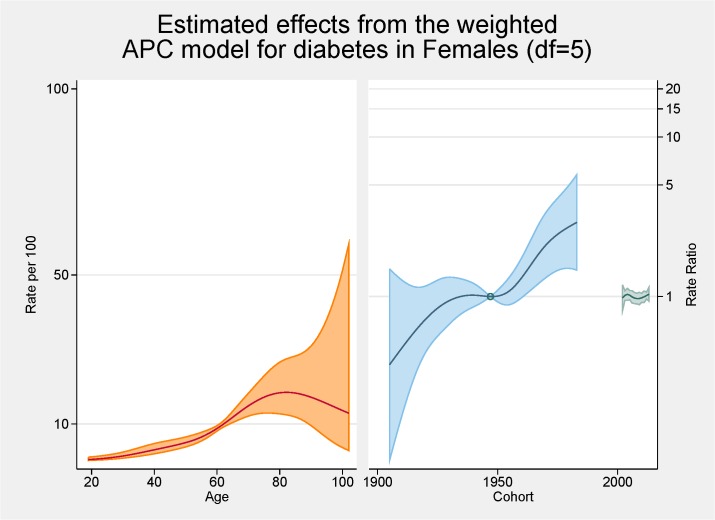
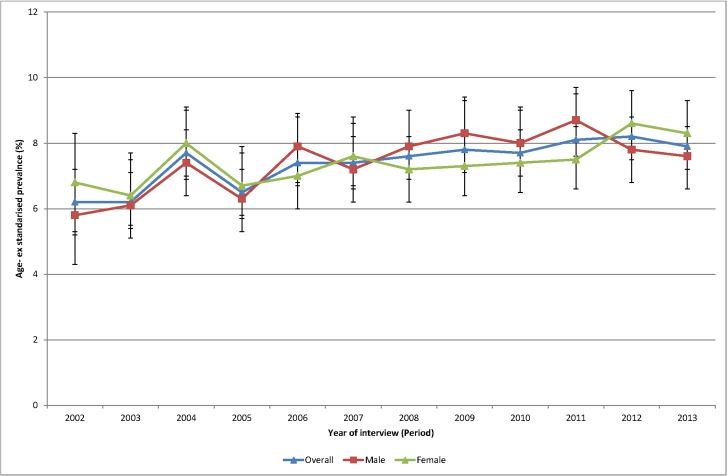
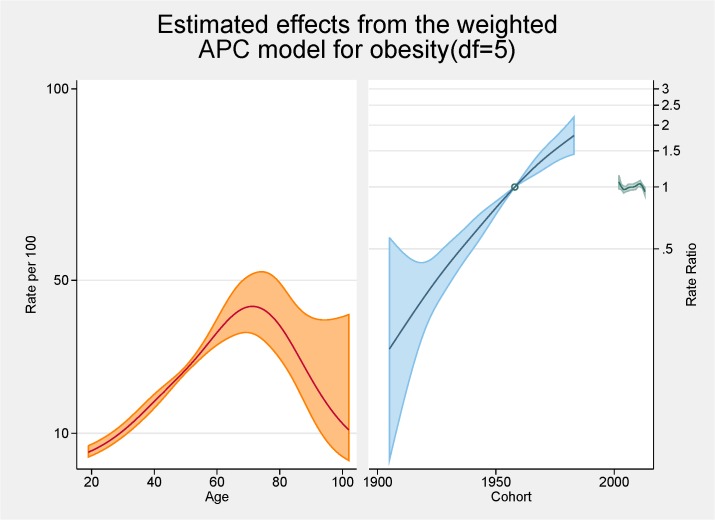
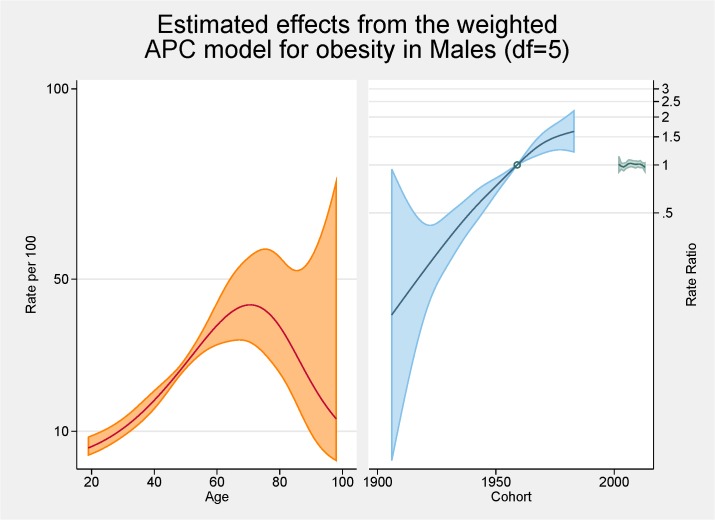
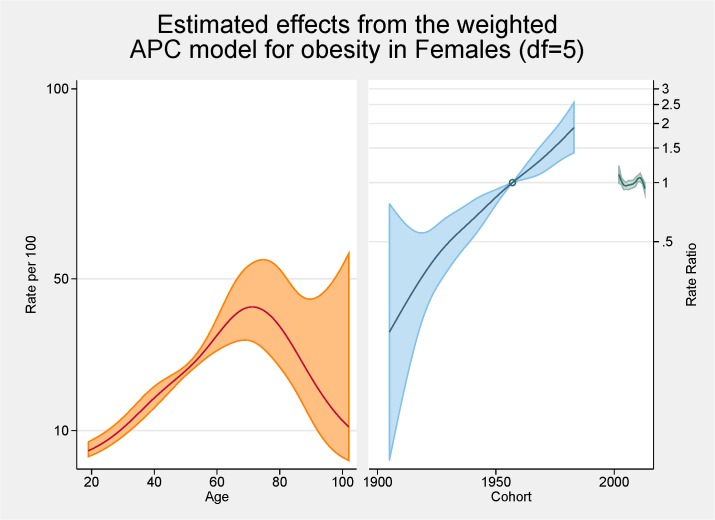
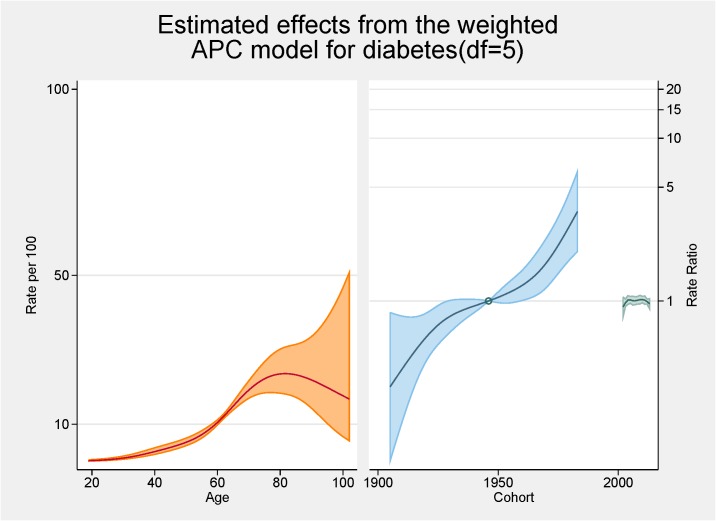
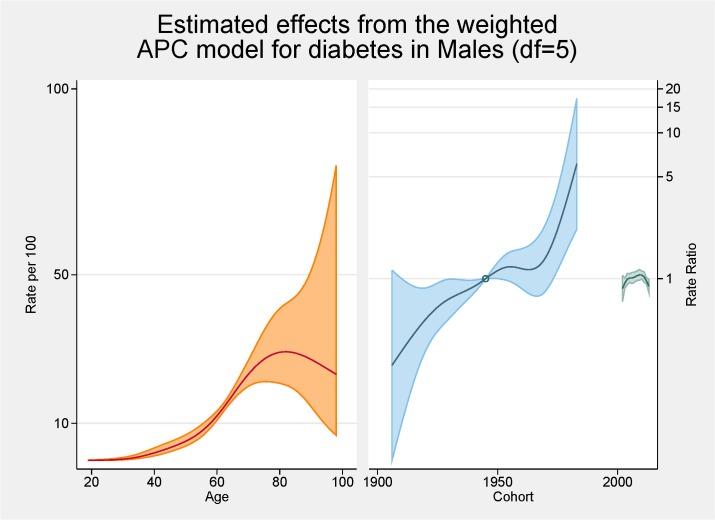
The age-sex standardised prevalence of obesity and diabetes increased in 2002-2013 from 18.6% to 24.1% and from 6.2% to 7.9%. The peak age for obesity was approximately 70 years with a steady increasing rate from 20 to 70 years of age. The peak age for diabetes was approximately 80 years. There were strong cohort effects and no period effects for both obesity and diabetes. The magnitude of the cohort effect is much more pronounced for obesity than for diabetes.
The APC analyses showed a higher than expected peak age for both obesity and diabetes, strong cohort effects with an acceleration of risk after 1960s for obesity and after 1940s for diabetes, and no period effects. By simultaneously considering the effects of age, period and cohort we have provided additional evidence for effective public health interventions.
年龄、时期和队列(APC)分析利用具有代表性的基于人群的描述性数据,能让我们对患病率上升背后的原因有更深入的了解。
使用了南澳大利亚州(SA)2002年7月至2013年12月每月慢性病和风险因素监测系统中关于肥胖和糖尿病的数据(n = 59,025)。年龄为受访者在访谈时自我报告的年龄。时期为访谈年份,队列是用调查年份减去年龄。队列年份为1905年至1995年。所有变量均视为连续变量。肥胖和糖尿病的年龄 - 性别标准化患病率采用澳大利亚2011年人口普查数据计算。APC模型在Stata中用“apcfit”构建。
2002 - 2013年,肥胖和糖尿病的年龄 - 性别标准化患病率分别从18.6%升至24.1%,从6.2%升至7.9%。肥胖的峰值年龄约为70岁,20岁至70岁患病率稳步上升。糖尿病的峰值年龄约为80岁。肥胖和糖尿病均存在强烈的队列效应,且无时期效应。肥胖的队列效应幅度比糖尿病更为明显。
APC分析显示,肥胖和糖尿病的峰值年龄均高于预期,存在强烈的队列效应,肥胖在20世纪60年代后风险加速,糖尿病在20世纪40年代后风险加速,且无时期效应。通过同时考虑年龄、时期和队列的影响,我们为有效的公共卫生干预提供了更多证据。