Cardoso Filipa L, Herz Jasmin, Fernandes Adelaide, Rocha João, Sepodes Bruno, Brito Maria A, McGavern Dorian B, Brites Dora
Research Institute for Medicines (iMed.ULisboa), Faculdade de Farmácia, Universidade de Lisboa, Avenida Professor Gama Pinto, 1649-003, Lisbon, Portugal.
National Institute of Neurological Disorders and Stroke, National Institutes of Health, 10 Center Drive, Bethesda, MD, 20892-1430, USA.
J Neuroinflammation. 2015 Apr 29;12:82. doi: 10.1186/s12974-015-0299-3.
The inflammatory mediator lipopolysaccharide (LPS) has been shown to induce acute gliosis in neonatal mice. However, the progressive effects on the murine neurodevelopmental program over the week that follows systemic inflammation are not known. Thus, we investigated the effects of repeated LPS administration in the first postnatal week in mice, a condition mimicking sepsis in late preterm infants, on the developing central nervous system (CNS).
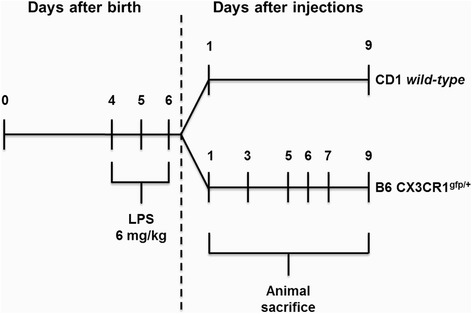
Systemic inflammation was induced by daily intraperitoneal administration (i.p.) of LPS (6 mg/kg) in newborn mice from postnatal day (PND) 4 to PND6. The effects on neurodevelopment were examined by staining the white matter and neurons with Luxol Fast Blue and Cresyl Violet, respectively. The inflammatory response was assessed by quantifying the expression/activity of matrix metalloproteinases (MMP), toll-like receptor (TLR)-4, high mobility group box (HMGB)-1, and autotaxin (ATX). In addition, B6 CX3CR1(gfp/+) mice combined with cryo-immunofluorescence were used to determine the acute, delayed, and lasting effects on myelination, microglia, and astrocytes.
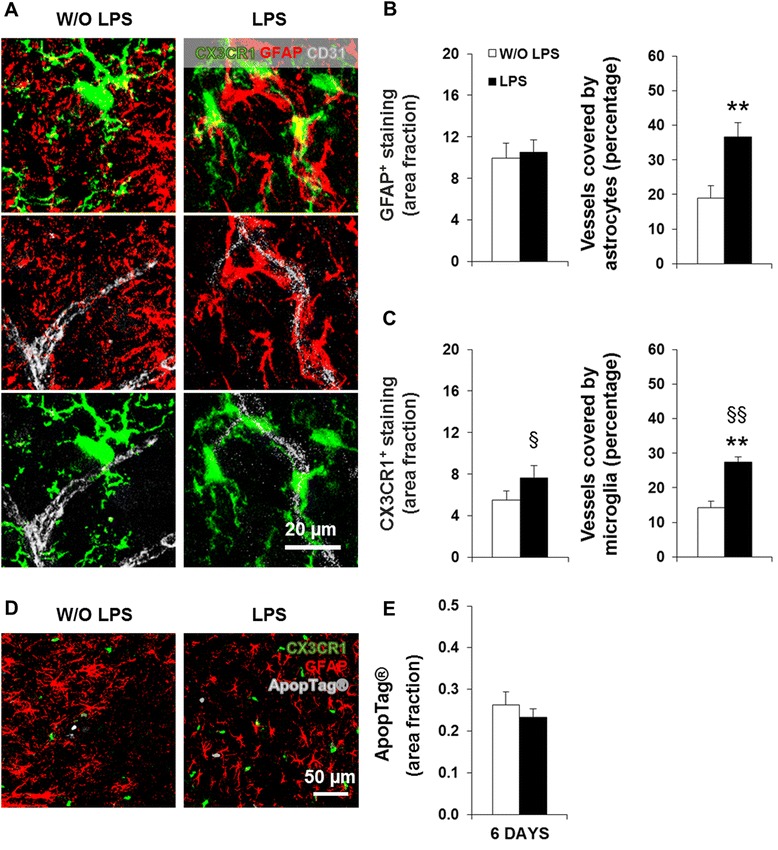
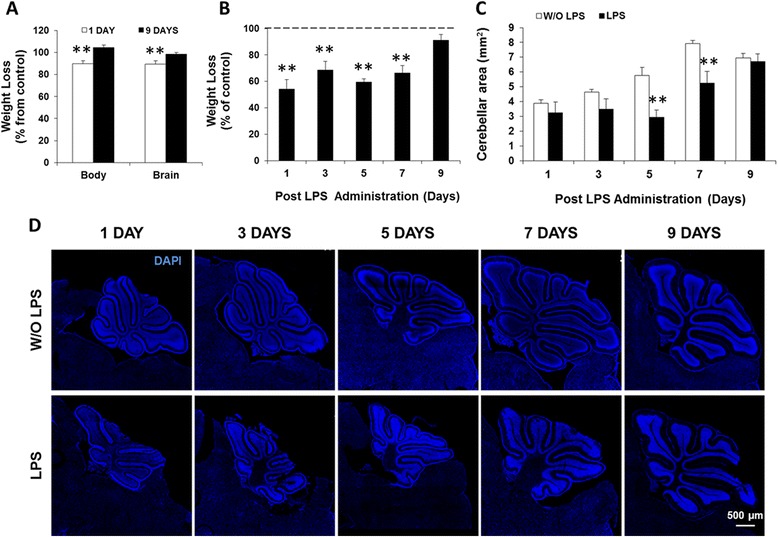
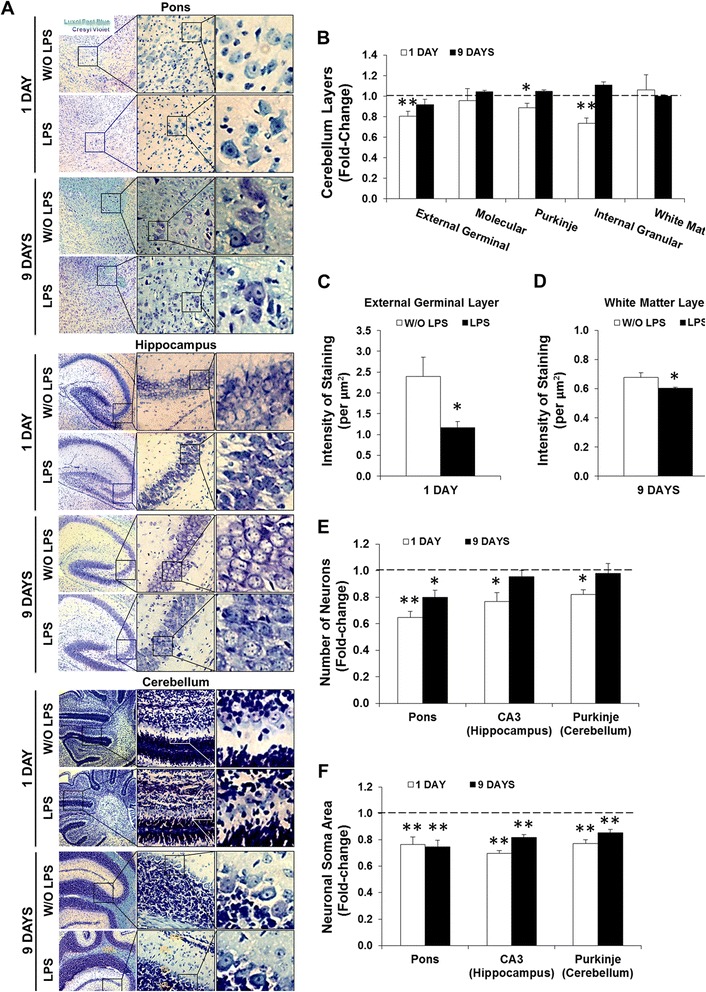
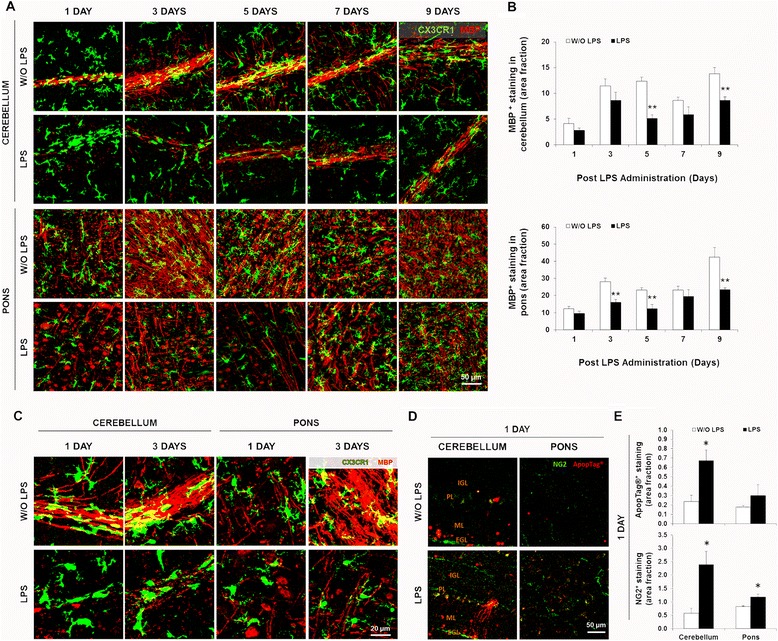
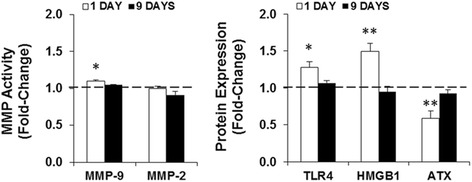
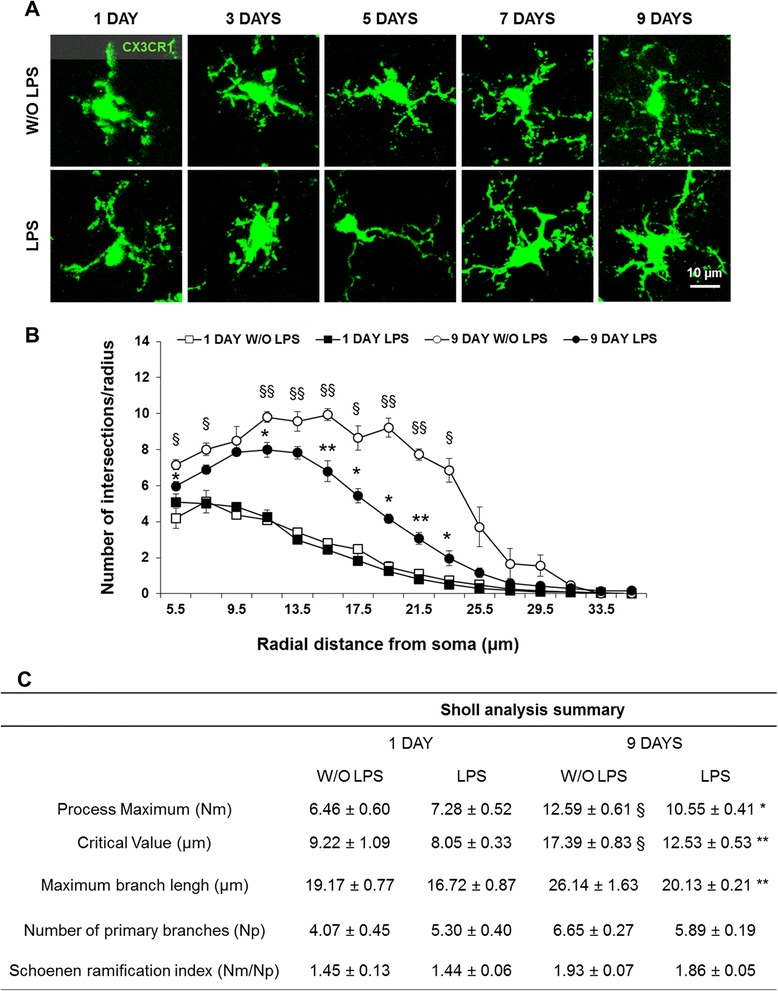
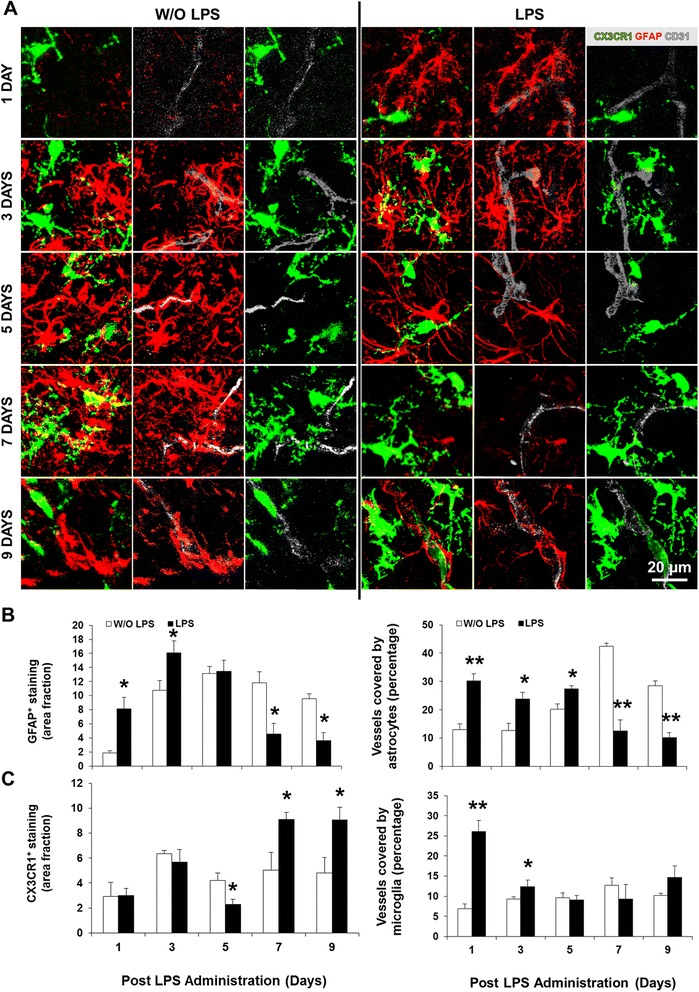
LPS administration led to acute body and brain weight loss as well as overt structural changes in the brain such as cerebellar hypoplasia, neuronal loss/shrinkage, and delayed myelination. The impaired myelination was associated with alterations in the proliferation and differentiation of NG2 progenitor cells early after LPS administration, rather than with excessive phagocytosis by CNS myeloid cells. In addition to disruptions in brain architecture, a robust inflammatory response to LPS was observed. Quantification of inflammatory biomarkers revealed decreased expression of ATX with concurrent increases in HMGB1, TLR-4, and MMP-9 expression levels. Acute astrogliosis (GFAP(+) cells) in the brain parenchyma and at the microvasculature interface together with parenchymal microgliosis (CX3CR1(+) cells) were also observed. These changes preceded the migration/proliferation of CX3CR1(+) cells around the vessels at later time points and the subsequent loss of GFAP(+) astrocytes.
Collectively, our study has uncovered a complex innate inflammatory reaction and associated structural changes in the brains of neonatal mice challenged peripherally with LPS. These findings may explain some of the neurobehavioral abnormalities that develop following neonatal sepsis.
炎症介质脂多糖(LPS)已被证明可在新生小鼠中诱导急性胶质增生。然而,在全身炎症后的一周内,其对小鼠神经发育程序的渐进性影响尚不清楚。因此,我们研究了在出生后第一周对小鼠重复给予LPS(模拟晚期早产儿败血症的情况)对发育中的中枢神经系统(CNS)的影响。
从出生后第4天(PND)至PND6,每天对新生小鼠腹腔注射(i.p.)LPS(6mg/kg)以诱导全身炎症。分别用Luxol Fast Blue和甲酚紫对白质和神经元进行染色,以检查对神经发育的影响。通过量化基质金属蛋白酶(MMP)、Toll样受体(TLR)-4、高迁移率族蛋白盒(HMGB)-1和自分泌运动因子(ATX)的表达/活性来评估炎症反应。此外,使用B6 CX3CR1(gfp/+)小鼠结合冷冻免疫荧光来确定对髓鞘形成、小胶质细胞和星形胶质细胞的急性、延迟和持久影响。
给予LPS导致急性体重和脑重减轻以及大脑明显的结构变化,如小脑发育不全、神经元丢失/萎缩和髓鞘形成延迟。髓鞘形成受损与LPS给药后早期NG2祖细胞的增殖和分化改变有关,而不是与CNS髓样细胞的过度吞噬有关。除了脑结构破坏外,还观察到对LPS的强烈炎症反应。炎症生物标志物的量化显示ATX表达降低,同时HMGB1、TLR-4和MMP-9表达水平增加。还观察到脑实质和微血管界面处的急性星形胶质细胞增生(GFAP(+)细胞)以及实质小胶质细胞增生(CX3CR1(+)细胞)。这些变化先于后期CX3CR1(+)细胞在血管周围的迁移/增殖以及随后GFAP(+)星形胶质细胞的丢失。
总体而言,我们的研究揭示了在受到外周LPS攻击的新生小鼠大脑中存在复杂的先天性炎症反应和相关的结构变化。这些发现可能解释了新生儿败血症后出现的一些神经行为异常。