Liu Fuli, Wu Bingjing, Du Yongjun, Wu Yiquan, Chen Hongfei, Xia Fangfang, Jin Zhousheng, Xu Xuzhong
Department of Anesthesiology, the First Affiliated Hospital of Wenzhou Medical University, 2 Fuxue Road, 325000, Zhejiang, China.
Environment and health institute, Wenzhou Medical University, Zhejiang, China.
BMC Anesthesiol. 2015 Apr 30;15:66. doi: 10.1186/s12871-015-0049-1.
Epinephrine is a first-line drug for cardiopulmonary resuscitation, but its efficacy in the treatment of bupivacaine-induced cardiac toxicity is still in question. We hypothesized that epinephrine can reverse cardiac inhibition of bupivacaine by modulating ion flows through the ventricular myocyte membrane channels of rats. The aim of this study was to observe and report the effects of epinephrine on high-concentration bupivacaine-induced inhibition of sodium (INa), L-type calcium (ICa-L), and transient outward potassium (Ito) currents in the ventricular myocytes of rats.
The ventricular myocytes were isolated from Sprague-Dawley rats (250-300 g) by acute enzymatic dissociation. The whole-cell patch clamp technique was used to record the ion channel currents in single ventricular myocytes both before and after administration of medications.
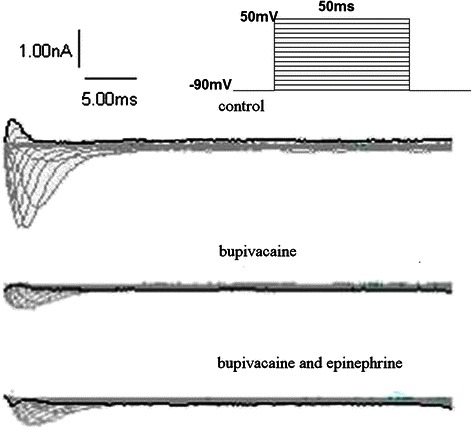
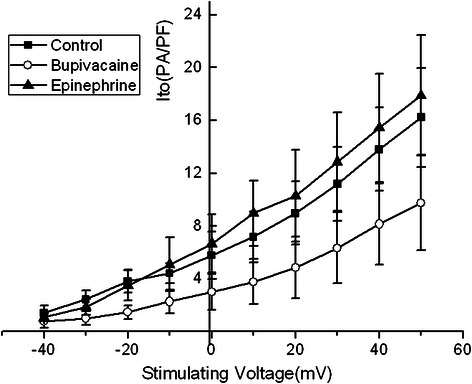
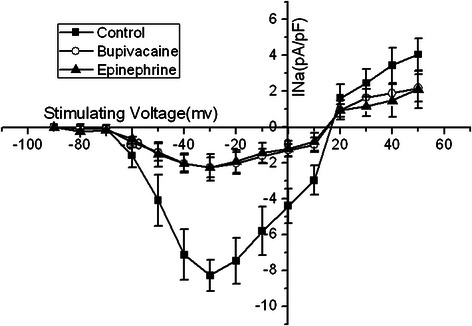
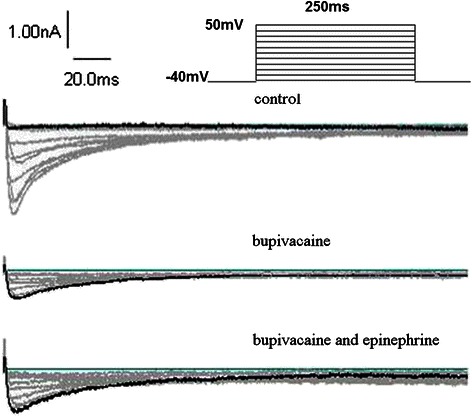
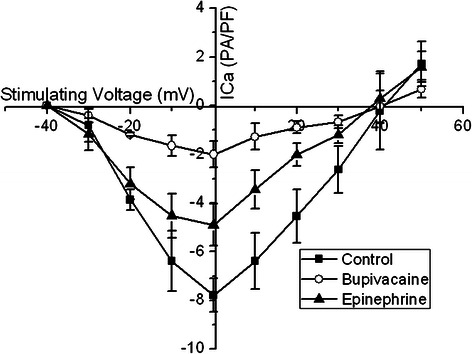
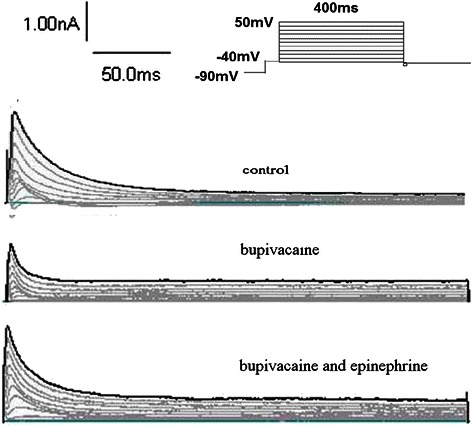
Administration of bupivacaine 100 μmol/L significantly reduced INa, (P < 0.05). However, administration of bupivacaine 100 μmol/L in conjunction with epinephrine 0.15 μg/ml had no effect in restoring INa to its previous state. Similarly, a sharp decline of ICa-L and Ito was observed after administration of bupivacaine 100 μmol/L (P < 0.05). In contrast to INa, ICa-L and Ito were significantly improved after the administration of the aforementioned combination of bupivacaine and epinephrine (P < 0.05).
Epinephrine can reverse high-concentration bupivacaine induced inhibition of ICa-L and Ito, but not INa. Thus, epinephrine's effectiveness in reversal of bupivacaine-induced cardiac toxicity secondary to sodium channel inhibition may be limited.
肾上腺素是心肺复苏的一线药物,但其治疗布比卡因所致心脏毒性的疗效仍存在疑问。我们推测肾上腺素可通过调节大鼠心室肌细胞膜通道的离子流来逆转布比卡因对心脏的抑制作用。本研究的目的是观察并报告肾上腺素对高浓度布比卡因诱导的大鼠心室肌细胞钠电流(INa)、L型钙电流(ICa-L)和瞬时外向钾电流(Ito)抑制作用的影响。
通过急性酶解离法从体重250 - 300 g的Sprague-Dawley大鼠分离心室肌细胞。采用全细胞膜片钳技术记录给药前后单个心室肌细胞的离子通道电流。
给予100 μmol/L布比卡因可显著降低INa(P < 0.05)。然而,给予100 μmol/L布比卡因并联合0.15 μg/ml肾上腺素对将INa恢复至先前状态无作用。同样,给予100 μmol/L布比卡因后观察到ICa-L和Ito急剧下降(P < 0.05)。与INa不同,给予上述布比卡因和肾上腺素联合用药后ICa-L和Ito显著改善(P < 0.05)。
肾上腺素可逆转高浓度布比卡因诱导的ICa-L和Ito抑制,但不能逆转INa抑制。因此,肾上腺素逆转布比卡因所致继发于钠通道抑制的心脏毒性的有效性可能有限。