Dai Wei, Cheung Arthur Kwok Leung, Ko Josephine Mun Yee, Cheng Yue, Zheng Hong, Ngan Roger Kai Cheong, Ng Wai Tong, Lee Anne Wing Mui, Yau Chun Chung, Lee Victor Ho Fu, Lung Maria Li
Department of Clinical Oncology, University of Hong Kong, Hong Kong (SAR), China.
Center for Nasopharyngeal Carcinoma Research, University of Hong Kong, Hong Kong (SAR), China.
Cancer Med. 2015 Jul;4(7):1079-90. doi: 10.1002/cam4.451. Epub 2015 Apr 29.
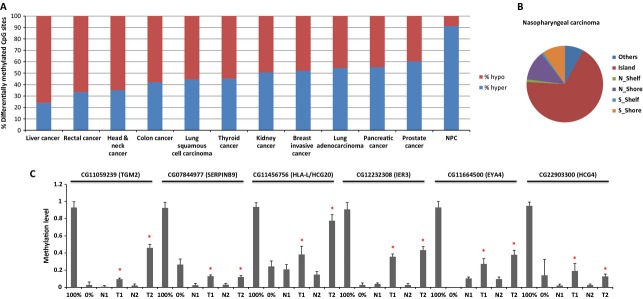
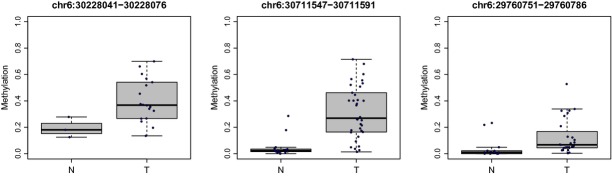
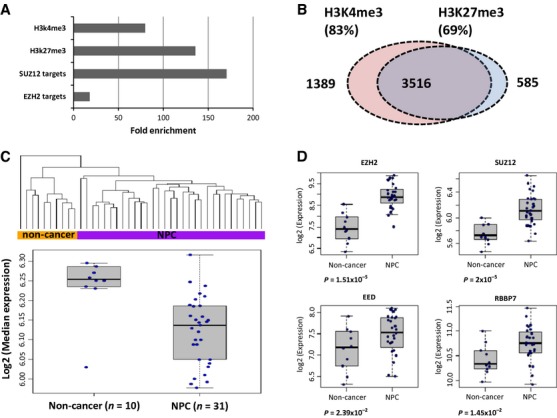
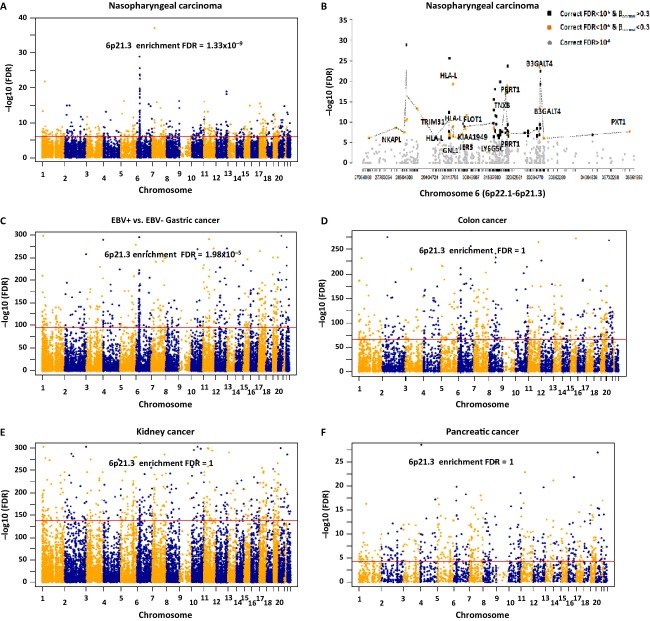
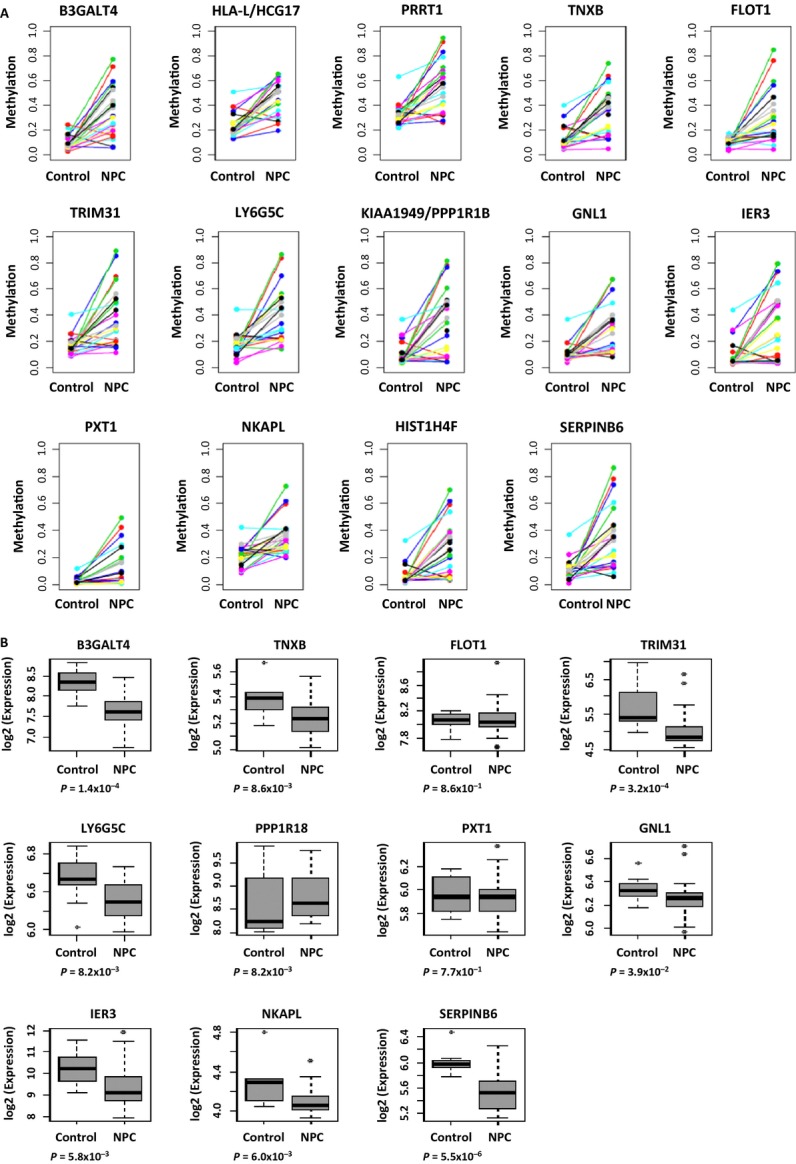
Altered patterns of DNA methylation are key features of cancer. Nasopharyngeal carcinoma (NPC) has the highest incidence in Southern China. Aberrant methylation at the promoter region of tumor suppressors is frequently reported in NPC; however, genome-wide methylation changes have not been comprehensively investigated. Therefore, we systematically analyzed methylome data in 25 primary NPC tumors and nontumor counterparts using a high-throughput approach with the Illumina HumanMethylation450 BeadChip. Comparatively, we examined the methylome data of 11 types of solid tumors collected by The Cancer Genome Atlas (TCGA). In NPC, the hypermethylation pattern was more dominant than hypomethylation and the majority of de novo methylated loci were within or close to CpG islands in tumors. The comparative methylome analysis reveals hypermethylation at chromosome 6p21.3 frequently occurred in NPC (false discovery rate; FDR=1.33 × 10(-9) ), but was less obvious in other types of solid tumors except for prostate and Epstein-Barr virus (EBV)-positive gastric cancer (FDR<10(-3) ). Bisulfite pyrosequencing results further confirmed the aberrant methylation at 6p in an additional patient cohort. Evident enrichment of the repressive mark H3K27me3 and active mark H3K4me3 derived from human embryonic stem cells were found at these regions, indicating both DNA methylation and histone modification function together, leading to epigenetic deregulation in NPC. Our study highlights the importance of epigenetic deregulation in NPC. Polycomb Complex 2 (PRC2), responsible for H3K27 trimethylation, is a promising therapeutic target. A key genomic region on 6p with aberrant methylation was identified. This region contains several important genes having potential use as biomarkers for NPC detection.
DNA甲基化模式的改变是癌症的关键特征。鼻咽癌(NPC)在中国南方发病率最高。肿瘤抑制因子启动子区域的异常甲基化在鼻咽癌中经常被报道;然而,全基因组甲基化变化尚未得到全面研究。因此,我们使用Illumina HumanMethylation450 BeadChip高通量方法,系统分析了25例原发性鼻咽癌肿瘤及其非肿瘤对应组织的甲基化组数据。相比之下,我们检查了癌症基因组图谱(TCGA)收集的11种实体瘤的甲基化组数据。在鼻咽癌中,高甲基化模式比低甲基化更占主导地位,大多数新生甲基化位点位于肿瘤中的CpG岛内部或附近。比较甲基化组分析显示,6号染色体p21.3区域的高甲基化在鼻咽癌中频繁出现(错误发现率;FDR = 1.33×10^(-9)),但在除前列腺癌和爱泼斯坦 - 巴尔病毒(EBV)阳性胃癌外的其他类型实体瘤中不太明显(FDR < 10^(-3))。亚硫酸氢盐焦磷酸测序结果进一步证实了另一组患者队列中6p的异常甲基化。在这些区域发现了源自人类胚胎干细胞的抑制性标记H3K27me3和活性标记H3K4me3的明显富集,表明DNA甲基化和组蛋白修饰共同发挥作用,导致鼻咽癌中的表观遗传失调。我们的研究强调了表观遗传失调在鼻咽癌中的重要性。负责H3K27三甲基化的多梳蛋白复合体2(PRC2)是一个有前景的治疗靶点。确定了一个6p上具有异常甲基化的关键基因组区域。该区域包含几个重要基因,有可能用作鼻咽癌检测的生物标志物。