Bilge Onur, Doral Mahmut Nedim, Yel Mustafa, Karalezli Nazim, Miniaci Anthony
Department of Orthopaedics and Traumatology, Konya Necmettin Erbakan University, Meram Faculty of Medicine, Meram, 42080, Konya, Turkey.
Department of Orthopaedics and Traumatology, Hacettepe University, Faculty of Medicine, 06230, Ankara, Turkey.
J Orthop Surg Res. 2015 Apr 28;10:56. doi: 10.1186/s13018-015-0199-3.
The optimal treatment of osteonecrosis of the femoral head has not been established yet. The aim of this study was to report preliminary clinical results of focal anatomic-resurfacing implantation for the treatment of osteonecrosis of the femoral head.
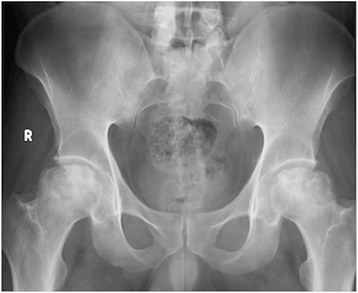
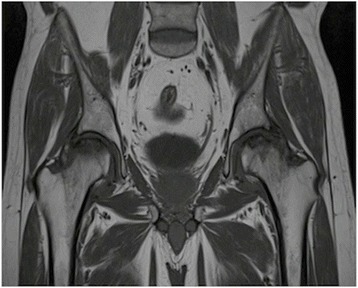
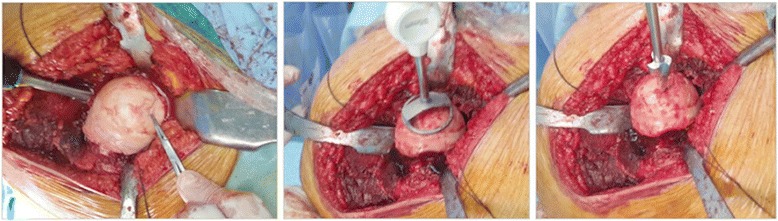
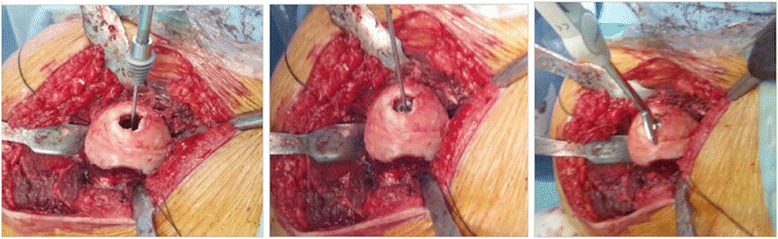
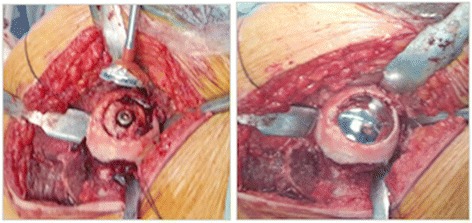
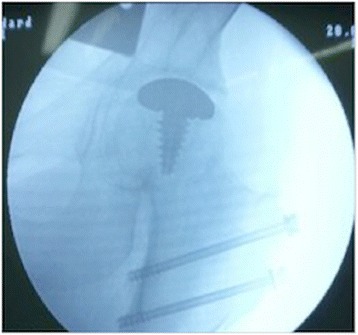
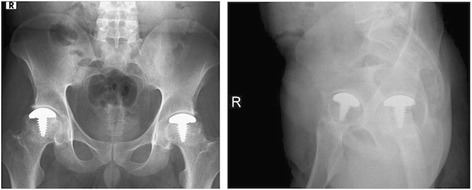
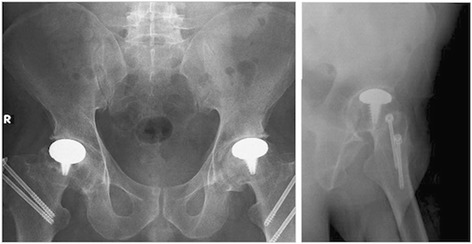
Five patients (four male, one female) with seven surgical procedures, ages between 37 and 52 with an average age of 45.2 (+/- 7.2), diagnosed as femoral head avascular necrosis and who were unresponsive to conservative management or had failed previous surgical treatments were treated with a focal anatomic femoral head resurfacing between the years 2011-2012 and were retrospectively reviewed. Five patients with at least two years of follow-up, one left hip, two right hips, and two patients with bilateral hip surgery were included in this review. After safe surgical dislocation of the hip, full exposure of the femoral head was established. A focal-resurfacing implant matching patient anatomy and femoral head curvature was performed accordingly. Neither intraoperative or postoperative complications nor revision ensued. Visual analogue scores and Harris Hip Scores were recorded both preoperatively and at postoperative 2 years for all seven surgeries.
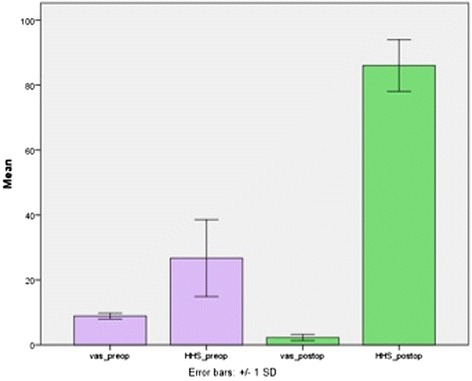
The mean follow-up period was 26.6 +/- 3.8 months, with a range between 24-33 months. The mean visual analogue scores were 8.9 +/- 0.9 preoperatively and 2.3 +/- 1.0 postoperatively at year two (p = 0.017). Harris Hip Scores at postoperative follow-up were found to improve significantly from good to excellent scores (86.0 +/- 7.9), compared with preoperative poor scores (26.7 +/- 11.8) (p = 0.018). The clinical improvements in visual analogue scores (VAS) and Harris Hip Scores were also found to correlate with each other (p < 0.05).
In the present study, the alternative technique of focal anatomic hip resurfacing with HemiCAP® yielded preliminary successful results for the treatment of osteonecrosis of the femoral head. To the best of our knowledge, this is the first case series in the literature, reporting functional clinical results with the use of a focal anatomic-resurfacing implant for the treatment of focal femoral head osteonecrosis.
股骨头坏死的最佳治疗方法尚未确定。本研究的目的是报告局部解剖型表面置换植入术治疗股骨头坏死的初步临床结果。
对2011年至2012年间接受局部解剖型股骨头表面置换术治疗的5例患者(4例男性,1例女性)进行回顾性研究,共进行了7次手术,年龄在37至52岁之间,平均年龄45.2岁(±7.2岁),诊断为股骨头缺血性坏死,对保守治疗无反应或先前手术治疗失败。本回顾纳入了5例至少随访两年的患者,其中1例左髋,2例右髋,2例双侧髋关节手术患者。在髋关节安全手术脱位后,充分暴露股骨头。相应地进行了与患者解剖结构和股骨头曲率匹配的局部表面置换植入术。术中及术后均未出现并发症或翻修情况。记录了所有7例手术术前及术后2年的视觉模拟评分和Harris髋关节评分。
平均随访期为26.6±3.8个月,范围在24至33个月之间。平均视觉模拟评分术前为8.9±0.9,术后第二年为2.3±1.0(p = 0.017)。术后随访时Harris髋关节评分从术前的较差评分(26.7±11.8)显著提高到良好至优秀评分(86.0±7.9)(p = 0.018)。还发现视觉模拟评分(VAS)和Harris髋关节评分的临床改善相互相关(p < 0.05)。
在本研究中,使用HemiCAP®进行局部解剖型髋关节表面置换的替代技术在治疗股骨头坏死方面取得了初步成功结果。据我们所知,这是文献中首个报道使用局部解剖型表面置换植入物治疗局灶性股骨头坏死的功能临床结果的病例系列。