Miyazaki Takuro, Yamasaki Naoya, Tsuchiya Tomoshi, Matsumoto Keitaro, Takagi Katsunori, Izumino Hiroo, Nagayasu Takeshi
Department of Surgical Oncology, Nagasaki University Graduate School of Biomedical Sciences, Nagasaki, Japan.
Am J Case Rep. 2015 Apr 30;16:255-8. doi: 10.12659/AJCR.893026.
Reactive oxygen species function as key metabolites that can impair biological processes. In lung transplantation, severe oxidative stress is expected when ischemia/reperfusion injury, acute allograft rejection, and various infections occur.
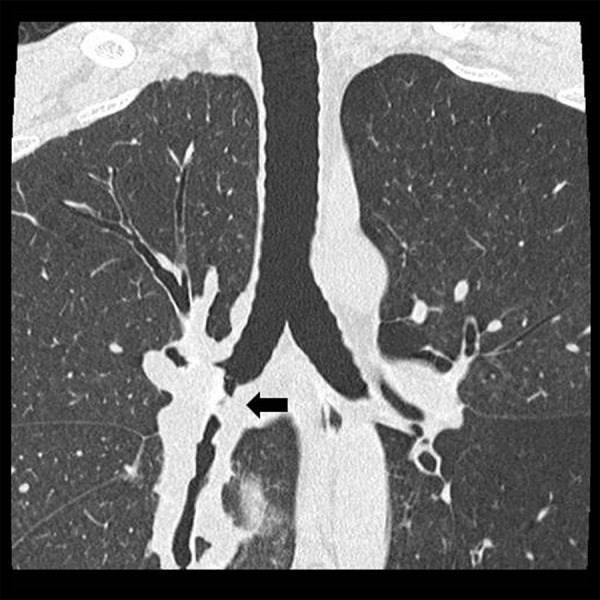
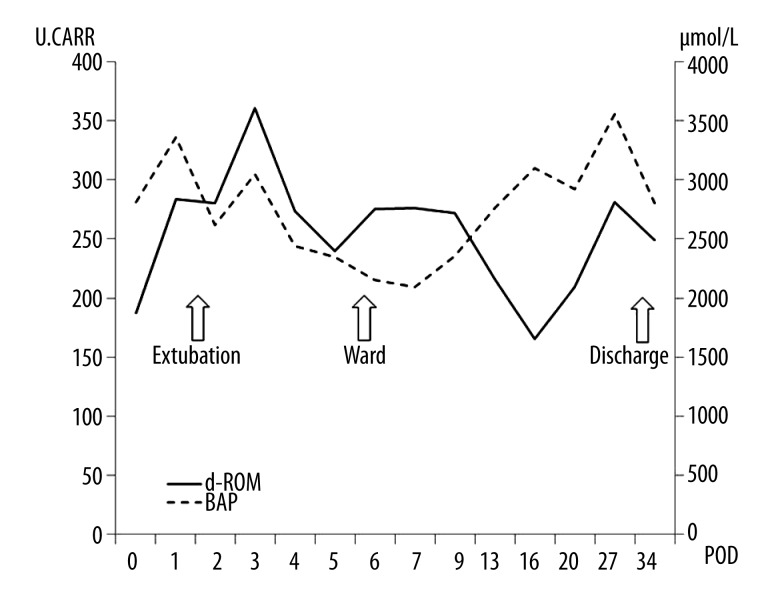
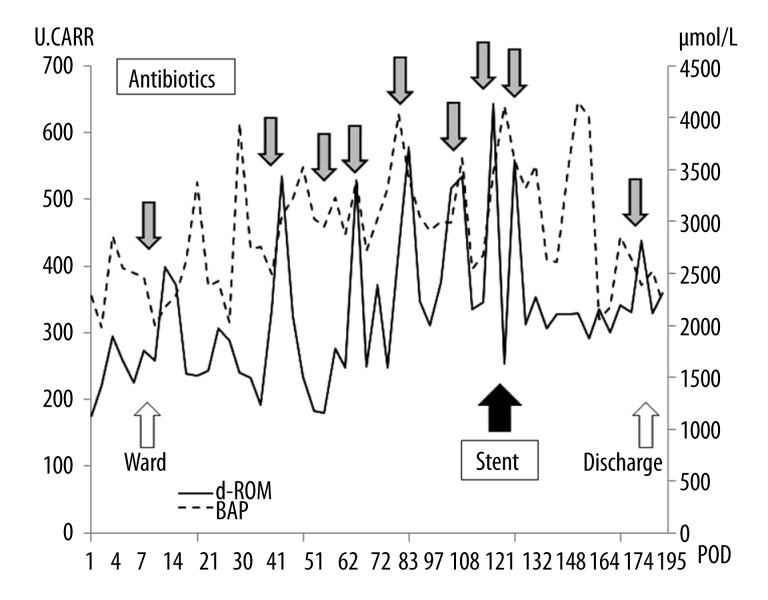
Two clinical cases in which serial measurements of the oxidative stress response (levels of diacron-reactive oxygen metabolites) were taken during hospitalization using a Free Radical Elective Evaluator are reported. In the first case, a 30-year-old man underwent right single lung transplantation for juvenile pulmonary emphysema. Immunosuppression was maintained using tacrolimus, mycophenolate mofetil, and steroid. The oxidative stress response fluctuated significantly (p<0.01) during the infections caused by bronchial stenosis compared to the stable condition. No acute rejection was seen during hospitalization. In the second case, a 44-year-old woman underwent right single lung transplantation for lymphangioleiomyomatosis. Immunosuppression was maintained by the same regimen as in case 1. The patient's postoperative course was uneventful, and there was no allograft rejection or infection. The oxidative stress response remained at the non-stress level.
The oxidative stress response was measured by the levels of diacron-reactive oxygen metabolites in lung transplantation. High oxidative stress responses were seen during exposure to infections. This might become a non-invasive marker of complications after transplantation.
活性氧作为关键代谢产物可损害生物过程。在肺移植中,当发生缺血/再灌注损伤、急性移植物排斥反应和各种感染时,预计会出现严重的氧化应激。
报告了两例临床病例,在住院期间使用自由基选择性评估仪对氧化应激反应(二吖啶反应性氧代谢产物水平)进行了连续测量。第一例中,一名30岁男性因青少年肺气肿接受了右单肺移植。使用他克莫司、霉酚酸酯和类固醇维持免疫抑制。与稳定状态相比,在支气管狭窄引起的感染期间,氧化应激反应有显著波动(p<0.01)。住院期间未观察到急性排斥反应。第二例中,一名44岁女性因淋巴管平滑肌瘤病接受了右单肺移植。免疫抑制维持方案与病例1相同。患者术后病程平稳,未发生移植物排斥反应或感染。氧化应激反应维持在非应激水平。
在肺移植中,通过二吖啶反应性氧代谢产物水平测量氧化应激反应。在感染期间观察到高氧化应激反应。这可能成为移植后并发症的一种非侵入性标志物。