Zhao Kai, Rong Guangyu, Guo Chen, Luo Xiaomei, Kang Hong, Sun Yanwei, Dai Chunxiao, Wang Xiaohua, Wang Xin, Jin Zheng, Cui Shangjin, Sun Qingshen
Key Laboratory of Microbiology, School of Life Science, Heilongjiang University, Harbin, People's Republic of China.
Key Laboratory of Microbiology, School of Life Science, Heilongjiang University, Harbin, People's Republic of China ; Department of Avian Infectious Disease, Shanghai Veterinary Research Institute of Chinese Academy of Agricultural Sciences, Shanghai, People's Republic of China.
Int J Nanomedicine. 2015 Apr 13;10:2895-911. doi: 10.2147/IJN.S76312. eCollection 2015.
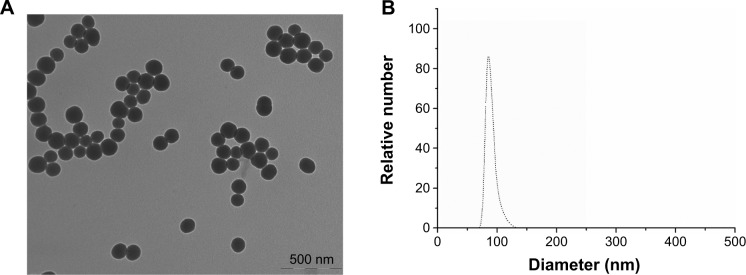
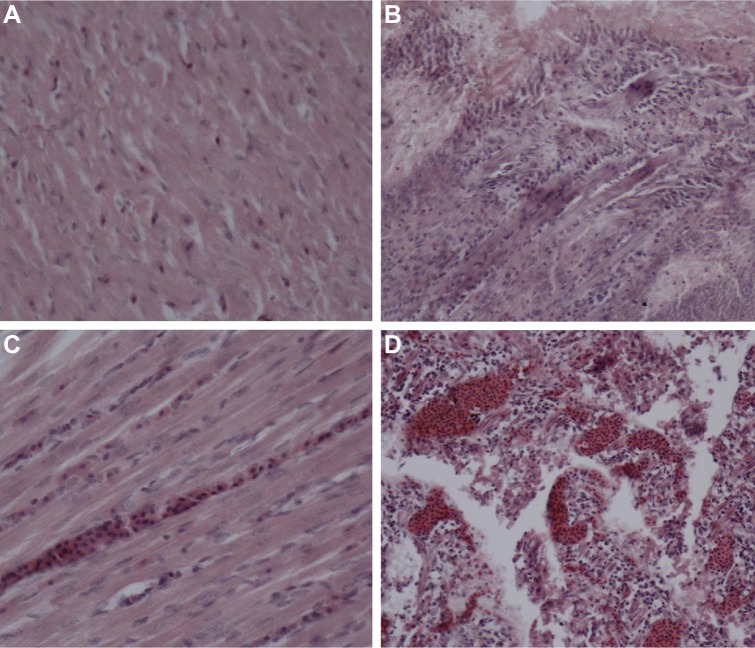
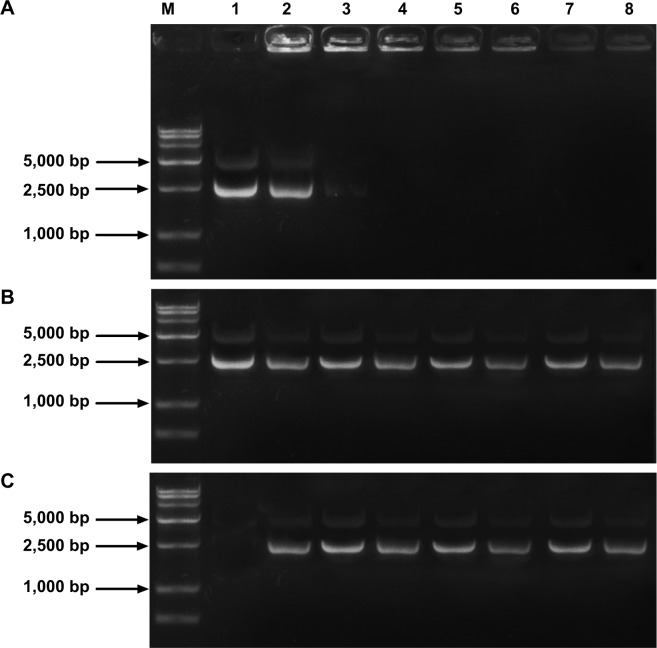
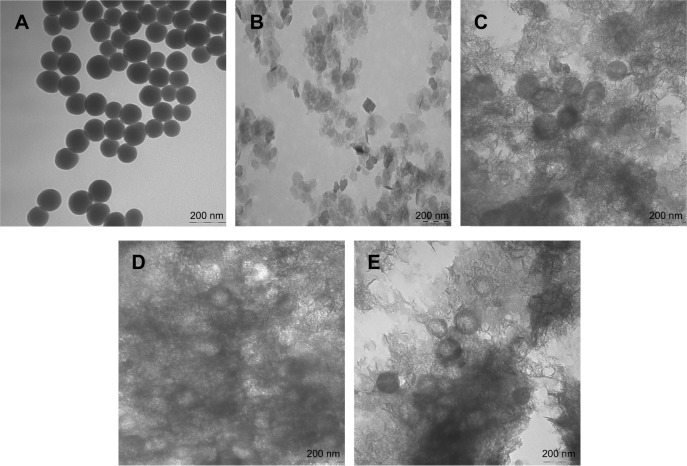
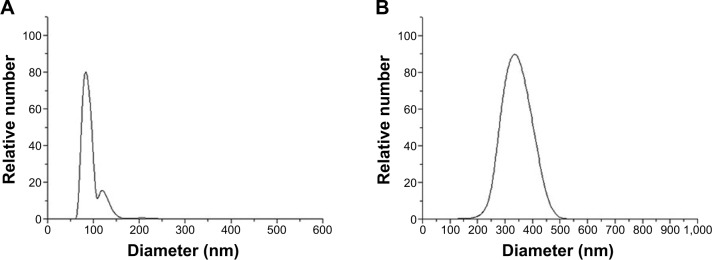
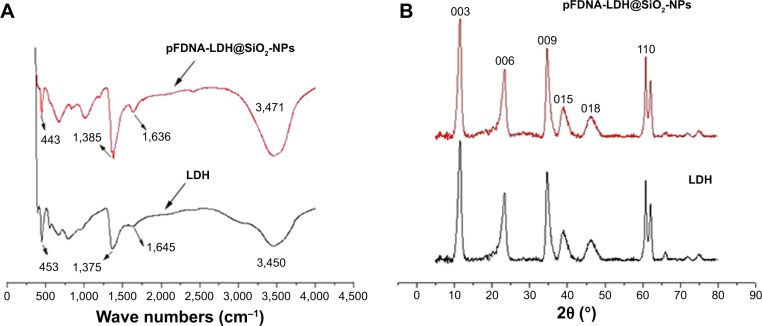
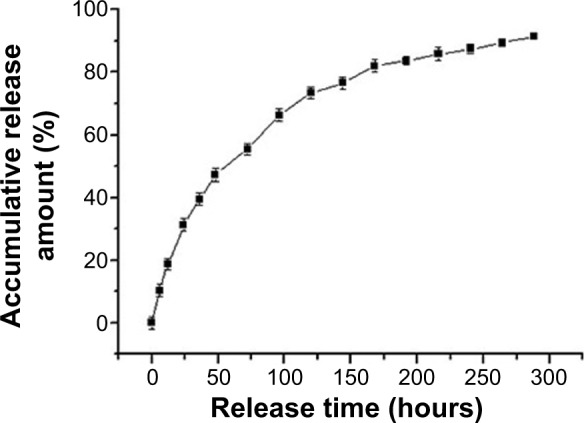
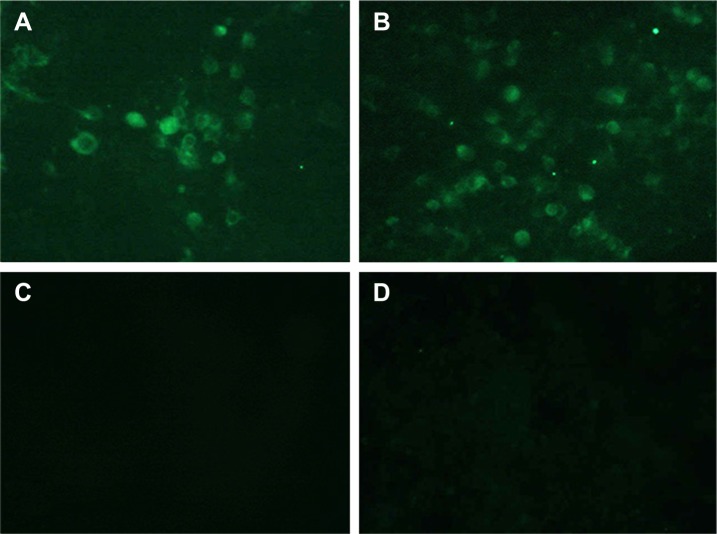
Layered double hydroxide (LDH)@SiO2 nanoparticles were developed as a delivery carrier for the plasmid DNA expressing the Newcastle disease virus F gene. The LDH was hydrotalcite-like materials. The plasmid DNA encapsulated in the LDH@SiO2 nanoparticles (pFDNA-LDH@SiO2-NPs) was prepared by the coprecipitation method, and the properties of pFDNA-LDH@SiO2-NPs were characterized by transmission electron microscopy, zeta potential analyzer, Fourier transform infrared spectroscopy, and X-ray diffraction analysis. The results demonstrated that the pFDNA-LDH@SiO2-NPs had a regular morphology and high stability with a mean diameter of 371.93 nm, loading capacity of 39.66%±0.45%, and a zeta potential of +31.63 mV. A release assay in vitro showed that up to 91.36% of the total plasmid DNA could be sustainably released from the pFDNA-LDH@SiO2-NPs within 288 hours. The LDH@SiO2 nanoparticles had very low toxicity. Additionally, their high transfection efficiency in vitro was detected by fluorescent microscopy. Intranasal immunization of specific pathogen-free chickens with pFDNA-LDH@SiO2-NPs induced stronger cellular, humoral, and mucosal immune responses and achieved a greater sustained release effect than intramuscular naked plasmid DNA, and the protective efficacy after challenge with the strain F48E9 with highly virulent (mean death time of chicken embryos ≤60 hours, intracerebral pathogenicity index in 1 -day-old chickens >1.6) was 100%. Based on the results, LDH@SiO2 nanoparticles can be used as a delivery carrier for mucosal immunity of Newcastle disease DNA vaccine, and have great application potential in the future.
层状双氢氧化物(LDH)@SiO₂纳米颗粒被开发为表达新城疫病毒F基因的质粒DNA的递送载体。LDH是类水滑石材料。通过共沉淀法制备了包裹在LDH@SiO₂纳米颗粒中的质粒DNA(pFDNA-LDH@SiO₂-NPs),并通过透射电子显微镜、zeta电位分析仪、傅里叶变换红外光谱和X射线衍射分析对pFDNA-LDH@SiO₂-NPs的性质进行了表征。结果表明,pFDNA-LDH@SiO₂-NPs具有规则的形态和高稳定性,平均直径为371.93 nm,负载量为39.66%±0.45%,zeta电位为+31.63 mV。体外释放试验表明,在288小时内,高达91.36%的总质粒DNA可从pFDNA-LDH@SiO₂-NPs中持续释放。LDH@SiO₂纳米颗粒具有极低的毒性。此外,通过荧光显微镜检测了它们在体外的高转染效率。用pFDNA-LDH@SiO₂-NPs对无特定病原体鸡进行鼻内免疫诱导了更强的细胞、体液和黏膜免疫反应,并且比肌肉注射裸质粒DNA实现了更大的持续释放效果,在用高毒力F48E9株(鸡胚平均死亡时间≤60小时,1日龄鸡脑内致病指数>1.6)攻毒后的保护效力为100%。基于这些结果,LDH@SiO₂纳米颗粒可作为新城疫DNA疫苗黏膜免疫的递送载体,在未来具有巨大的应用潜力。