Gee J Michael, Gibbons Meredith B, Taheri Marsa, Palumbos Sierra, Morris S Craig, Smeal Roy M, Flynn Katherine F, Economo Michael N, Cizek Christian G, Capecchi Mario R, Tvrdik Petr, Wilcox Karen S, White John A
Neuronal Dynamics Laboratory, Department of Bioengineering, University of Utah Salt Lake City, UT, USA ; MD-PhD Program, University of Utah Salt Lake City, UT, USA.
Glial-Neuronal Interactions in Epilepsy Laboratory, Department of Pharmacology and Toxicology, University of Utah Salt Lake City, UT, USA ; Interdepartmental Program in Neuroscience, University of Utah Salt Lake City, UT, USA.
Front Mol Neurosci. 2015 Apr 15;8:10. doi: 10.3389/fnmol.2015.00010. eCollection 2015.
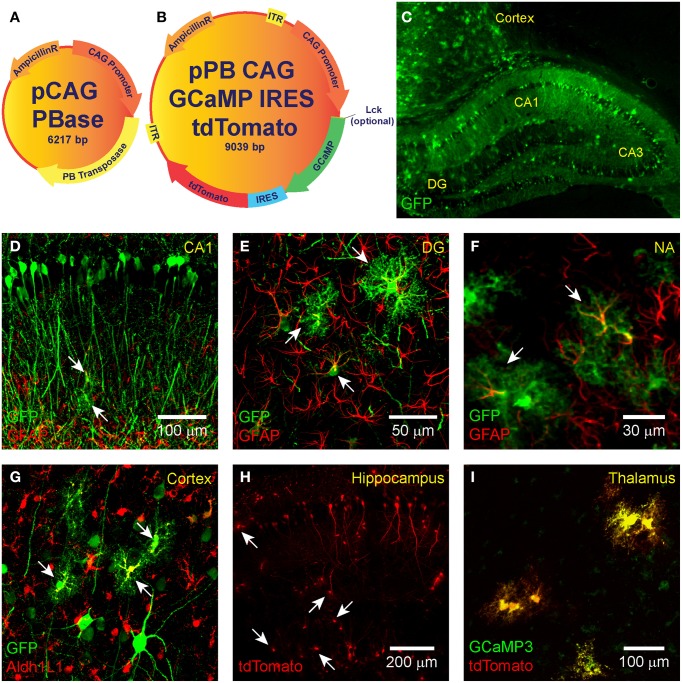
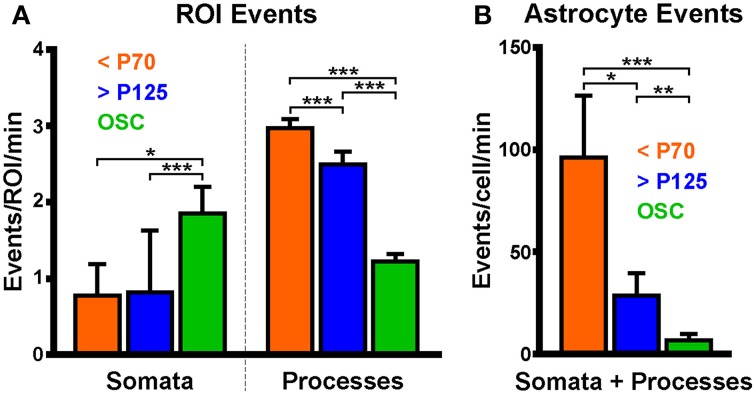
Complex interactions between networks of astrocytes and neurons are beginning to be appreciated, but remain poorly understood. Transgenic mice expressing fluorescent protein reporters of cellular activity, such as the GCaMP family of genetically encoded calcium indicators (GECIs), have been used to explore network behavior. However, in some cases, it may be desirable to use long-established rat models that closely mimic particular aspects of human conditions such as Parkinson's disease and the development of epilepsy following status epilepticus. Methods for expressing reporter proteins in the rat brain are relatively limited. Transgenic rat technologies exist but are fairly immature. Viral-mediated expression is robust but unstable, requires invasive injections, and only works well for fairly small genes (<5 kb). In utero electroporation (IUE) offers a valuable alternative. IUE is a proven method for transfecting populations of astrocytes and neurons in the rat brain without the strict limitations on transgene size. We built a toolset of IUE plasmids carrying GCaMP variants 3, 6s, or 6f driven by CAG and targeted to the cytosol or the plasma membrane. Because low baseline fluorescence of GCaMP can hinder identification of transfected cells, we included the option of co-expressing a cytosolic tdTomato protein. A binary system consisting of a plasmid carrying a piggyBac inverted terminal repeat (ITR)-flanked CAG-GCaMP-IRES-tdTomato cassette and a separate plasmid encoding for expression of piggyBac transposase was employed to stably express GCaMP and tdTomato. The plasmids were co-electroporated on embryonic days 13.5-14.5 and astrocytic and neuronal activity was subsequently imaged in acute or cultured brain slices prepared from the cortex or hippocampus. Large spontaneous transients were detected in slices obtained from rats of varying ages up to 127 days. In this report, we demonstrate the utility of this toolset for interrogating astrocytic and neuronal activity in the rat brain.
星形胶质细胞网络与神经元之间复杂的相互作用开始受到关注,但仍了解甚少。表达细胞活性荧光蛋白报告基因的转基因小鼠,如基因编码钙指示剂(GECIs)的GCaMP家族,已被用于探索网络行为。然而,在某些情况下,可能希望使用长期建立的大鼠模型,这些模型能紧密模拟人类疾病的特定方面,如帕金森病和癫痫持续状态后癫痫的发展。在大鼠脑中表达报告蛋白的方法相对有限。转基因大鼠技术虽然存在,但相当不成熟。病毒介导的表达虽强大但不稳定,需要进行侵入性注射,且仅对相当小的基因(<5 kb)效果良好。子宫内电穿孔(IUE)提供了一种有价值的替代方法。IUE是一种已被证实的在大鼠脑中转染星形胶质细胞和神经元群体的方法,对转基因大小没有严格限制。我们构建了一套IUE质粒工具集,其携带由CAG驱动并靶向胞质溶胶或质膜的GCaMP变体3、6s或6f。由于GCaMP的低基线荧光可能会妨碍对转染细胞的识别,我们还提供了共表达胞质tdTomato蛋白的选项。采用由携带猪尾巴倒转末端重复序列(ITR)侧翼的CAG-GCaMP-IRES-tdTomato盒的质粒和编码猪尾巴转座酶表达的单独质粒组成的二元系统来稳定表达GCaMP和tdTomato。这些质粒在胚胎第13.5 - 14.5天进行共电穿孔,随后在从皮质或海马制备的急性或培养脑片中对星形胶质细胞和神经元的活性进行成像。在年龄高达127天的不同年龄大鼠获得的脑片中检测到大量自发瞬变信号。在本报告中,我们展示了该工具集在研究大鼠脑中星形胶质细胞和神经元活性方面的实用性。