Rogovaya O S, Fayzulin A K, Vasiliev A V, Kononov A V, Terskikh V V
N.K. Koltsov Institute of Developmental Biology, Russian Academy of Sciences, Vavilova Str., 26, Moscow, 119334, Russia ; N.I. Pirogov Russian National Research Medical University, Ministry of Healthcare of the Russian Federation, Ostrovityanova Str., 1, Moscow, 117997, Russia.
Morozov Children's Clinical Hospital, Moscow Department of Health Care, 4th Dobryninsky Per., 1, Moscow, 119049, Russia.
Acta Naturae. 2015 Jan-Mar;7(1):70-7.
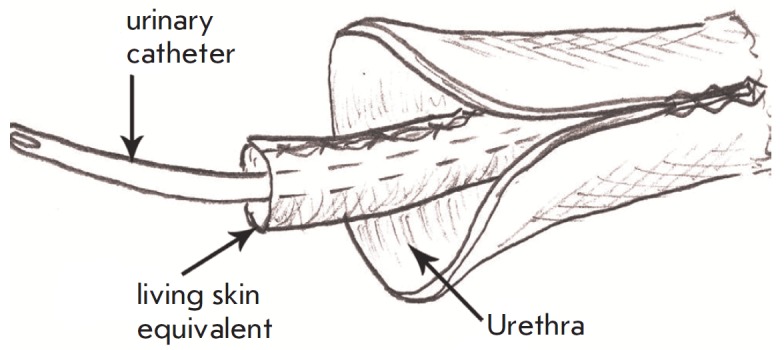
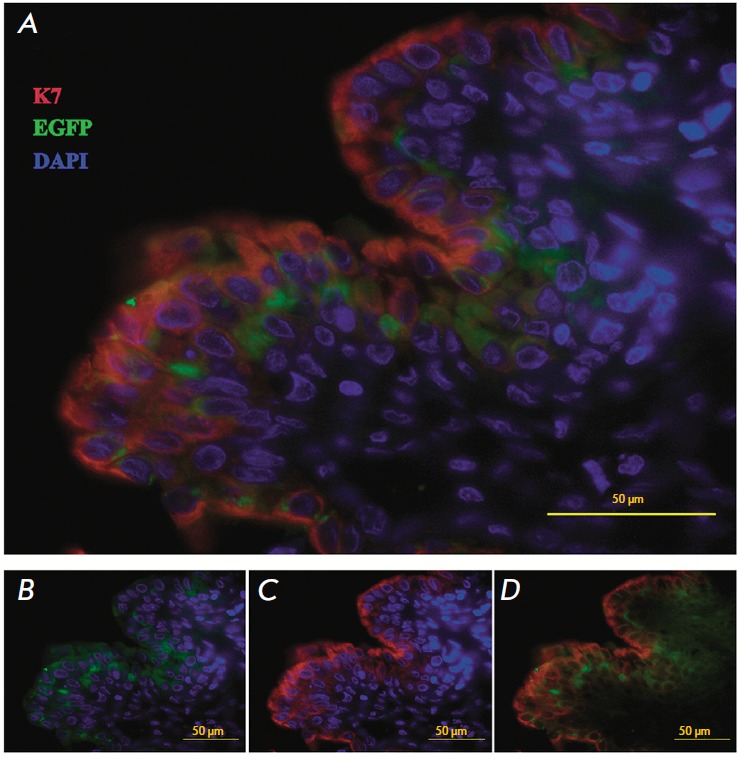
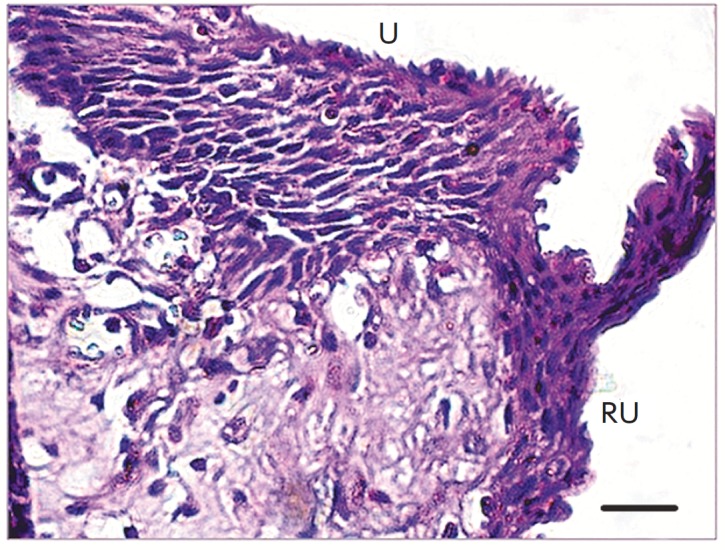
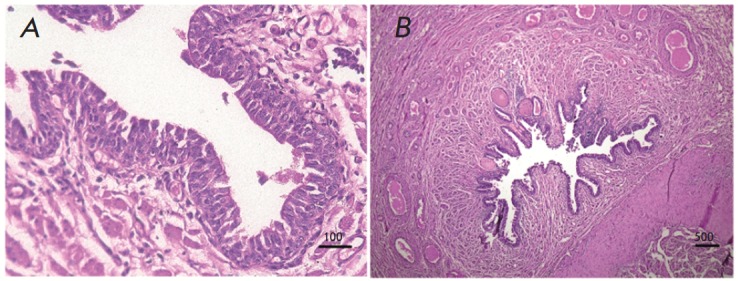
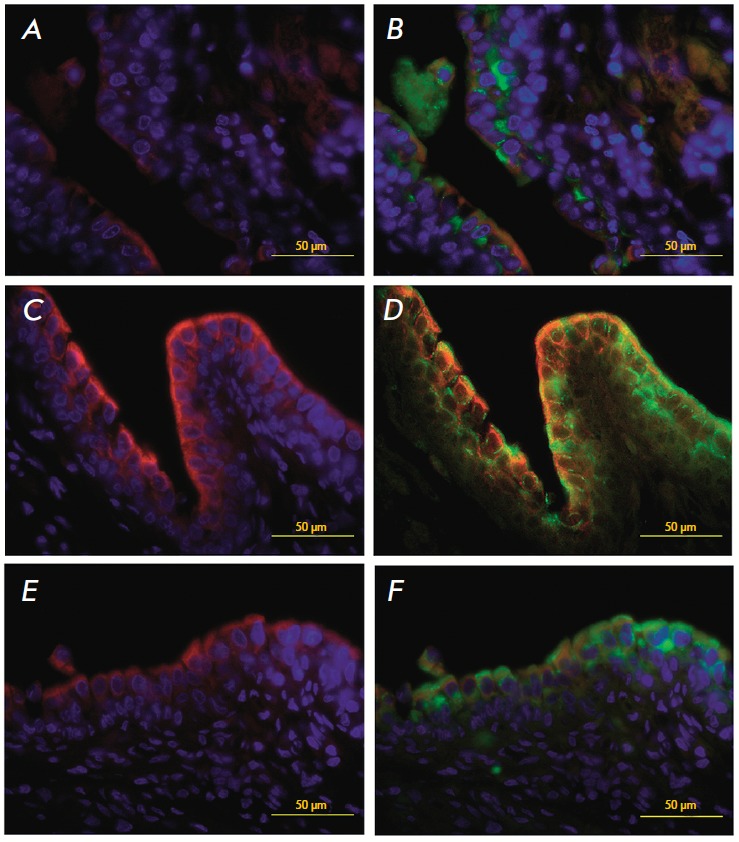
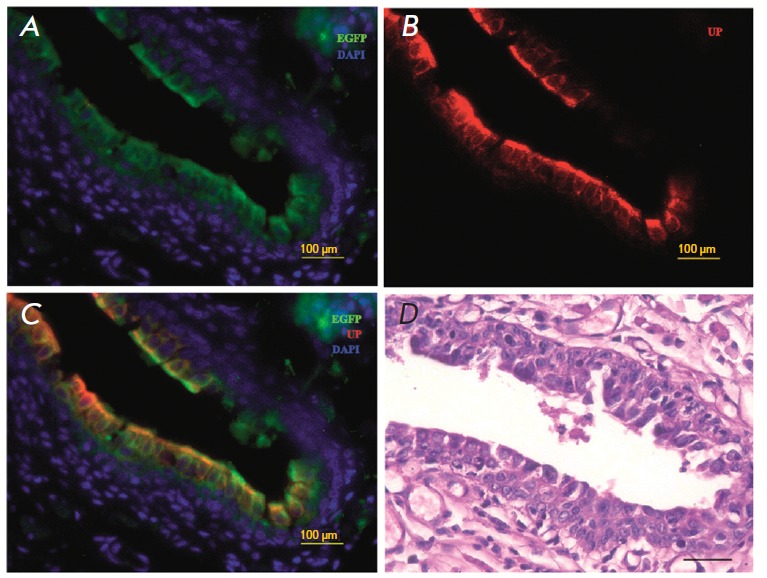
We have investigated the living skin equivalent (LSE) as an alternative source of plastic material for closing full-thickness epithelial-stromal urethral injuries. The possibility of transdifferentiation of epidermal keratinocytes, a component of 3D tissue constructs, was investigated in vivo in a model of the recovery of urethral injuries in laboratory rabbits. Autologous grafting of LSE in de-epithelialized urethra showed that skin keratinocytes placed in a specific in vivo microenvironment can be incorporated into the damaged area and function as urothelium. The use of EGFP transfected keratinocytes allowed us to identify transplanted cells. The reconstructed urethral tubes did not develop strictures or fistulas at the site of the grafted LSE. Immunohistochemical studies of neo-urothelium revealed EGFP-positive cells expressing the urothelial markers K7 and UP3.
我们研究了活性皮肤替代物(LSE)作为一种用于闭合全层上皮-基质尿道损伤的替代塑料材料来源。在实验室兔尿道损伤修复模型中,对三维组织构建体的一个组成部分——表皮角质形成细胞的转分化可能性进行了体内研究。将LSE自体移植到去上皮化的尿道中表明,置于特定体内微环境中的皮肤角质形成细胞可被纳入受损区域并发挥尿路上皮的功能。使用EGFP转染的角质形成细胞使我们能够识别移植细胞。重建的尿道管在移植LSE的部位未出现狭窄或瘘管。对新形成的尿路上皮进行免疫组织化学研究发现,EGFP阳性细胞表达尿路上皮标志物K7和UP3。