Bakhtavar Muhammad Amir, Afzal Irfan, Basra Shahzad Maqsood Ahmed, Ahmad Azraf-Ul-Haq, Noor Mehmood Ali
Department of Crop Physiology, University of Agriculture, Faisalabad-38040, Pakistan.
Department of Agronomy, University of Agriculture, Faisalabad-38040, Pakistan.
PLoS One. 2015 Apr 30;10(4):e0124441. doi: 10.1371/journal.pone.0124441. eCollection 2015.
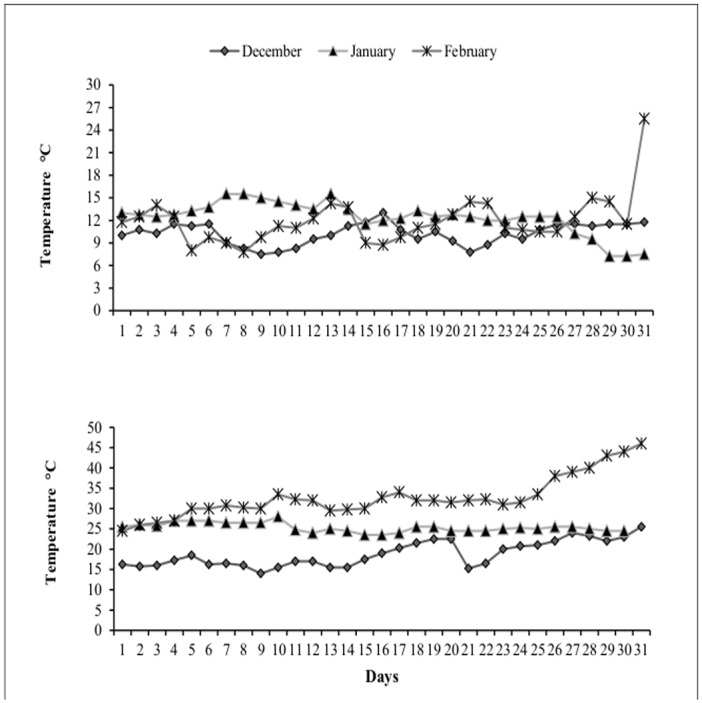
Low temperature at stand establishment and high temperature at reproductive stage are involved in reduction of grain yield of spring maize. A field study was therefore conducted to evaluate different physiological strategies for improving performance of spring maize under temperature extremes. Seed priming and foliar spray with 3% moringa leaf extract (MLE) and 100 mg L-1 kinetin solution alone or in all possible combinations with each other at three growth stages (knee height, tasseling and grain filling stage) and hydropriming was compared with control. Seed priming plus foliar spray of MLE and kinetin significantly improved stand establishment especially under early sown crop as indicated by reduced mean emergence time (MET), improved emergence index (EI) and final emergence percentage (FEP). Similarly increased chlorophyll contents, crop growth rate, leaf area index, photosynthetic rate, transpiration rate, relative water content and decreased membrane permeability were recorded in both early and optimum sowing conditions in MLE priming plus foliar spray treatment. All these improvements were harvested in the form of increased yield and harvest index compared with control treatment. Overall crop sown at optimum time performed best but exogenous application of MLE through seed priming and foliar spray maximally improved the performance of early sown maize crop which is attributed more likely due to improved stand establishment, chlorophyll and phenolic contents, increased leaf area duration and grain filling period. It can be concluded that seed priming with MLE along with its foliar spray could increase production of maize under temperature extremes.
春玉米苗期低温和生殖期高温会导致产量降低。因此,开展了一项田间研究,以评估在极端温度条件下提高春玉米性能的不同生理策略。将种子引发、在三个生长阶段(拔节期、抽雄期和灌浆期)单独或相互组合喷施3%辣木叶提取物(MLE)和100 mg L-1激动素溶液以及水引发与对照进行比较。种子引发加喷施MLE和激动素显著改善了植株的建立,特别是在早播作物中,表现为平均出苗时间(MET)缩短、出苗指数(EI)提高和最终出苗率(FEP)提高。同样,在早播和适播条件下,MLE引发加喷施处理均记录到叶绿素含量增加、作物生长速率加快、叶面积指数增大、光合速率提高、蒸腾速率提高、相对含水量增加以及膜透性降低。与对照处理相比,所有这些改善都以产量和收获指数增加的形式体现出来。总体而言,适期播种的作物表现最佳,但通过种子引发和喷施外源MLE最大程度地提高了早播玉米作物的性能,这很可能归因于植株建立改善、叶绿素和酚类物质含量增加、叶面积持续时间和灌浆期延长。可以得出结论,MLE种子引发及其叶面喷施可以提高极端温度条件下玉米的产量。