Bennet Mathieu, Bertinetti Luca, Neely Robert K, Schertel Andreas, Körnig André, Flors Cristina, Müller Frank D, Schüler Dirk, Klumpp Stefan, Faivre Damien
Department of Biomaterials, Max Planck Institute of Colloids and Interfaces, Science Park Golm, 14424 Potsdam, Germany.
Faraday Discuss. 2015;181(1):71-83. doi: 10.1039/c4fd00240g.
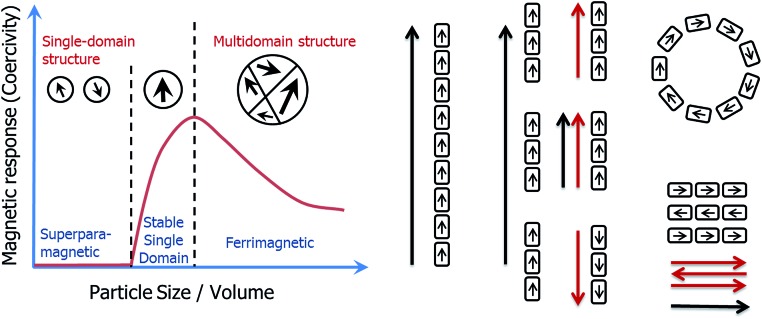
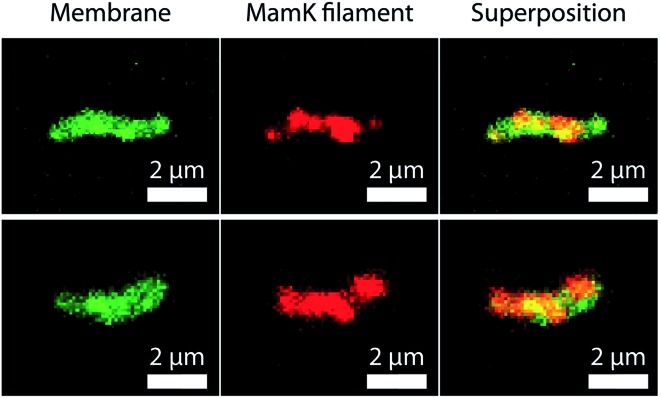
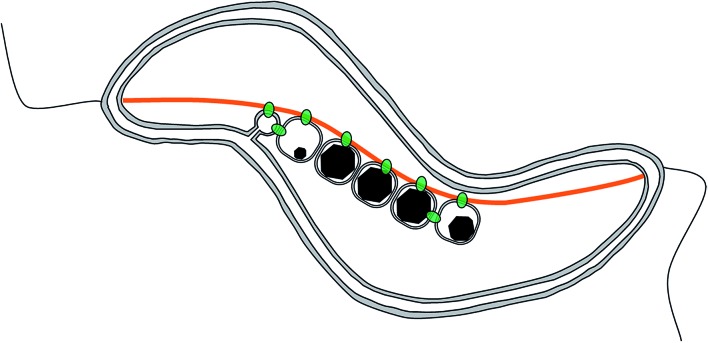
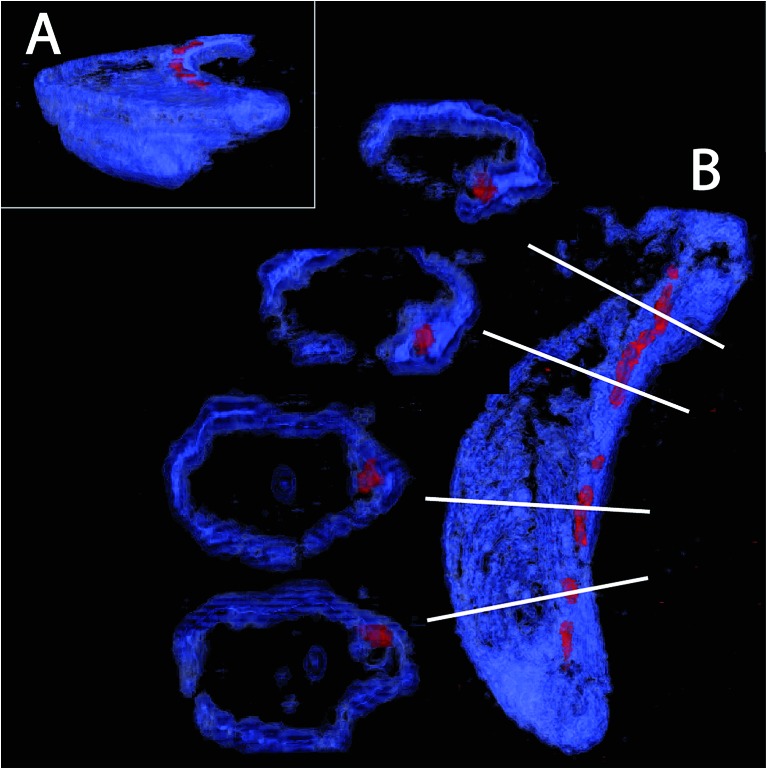
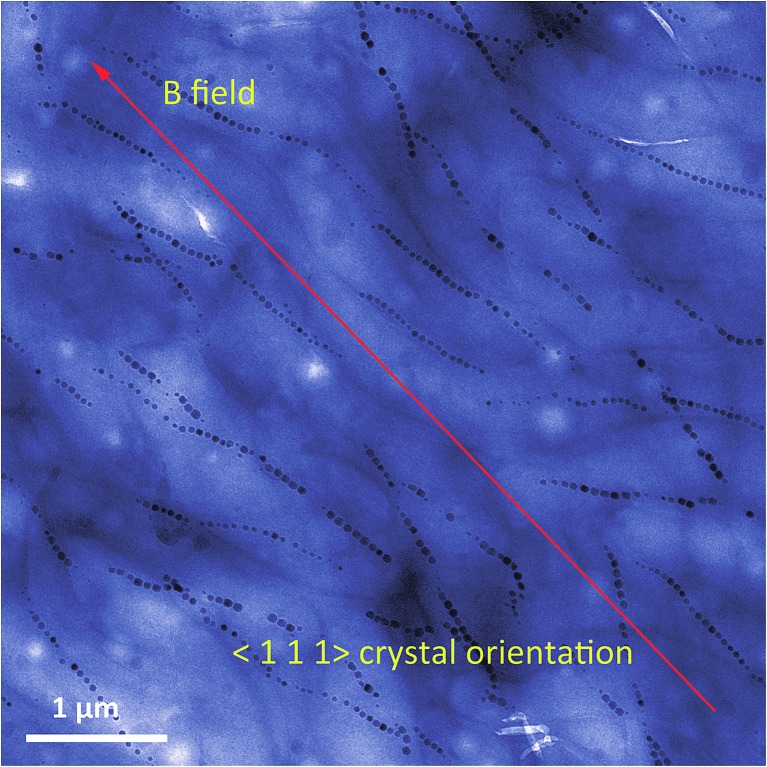
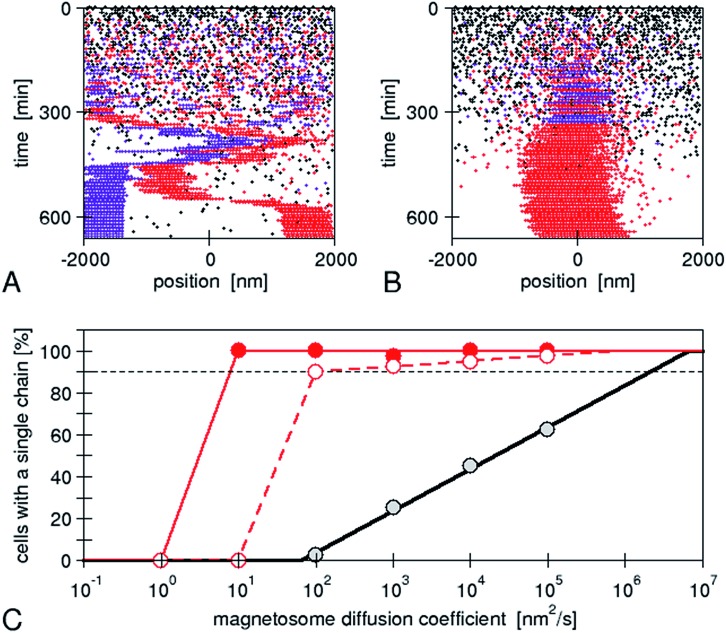
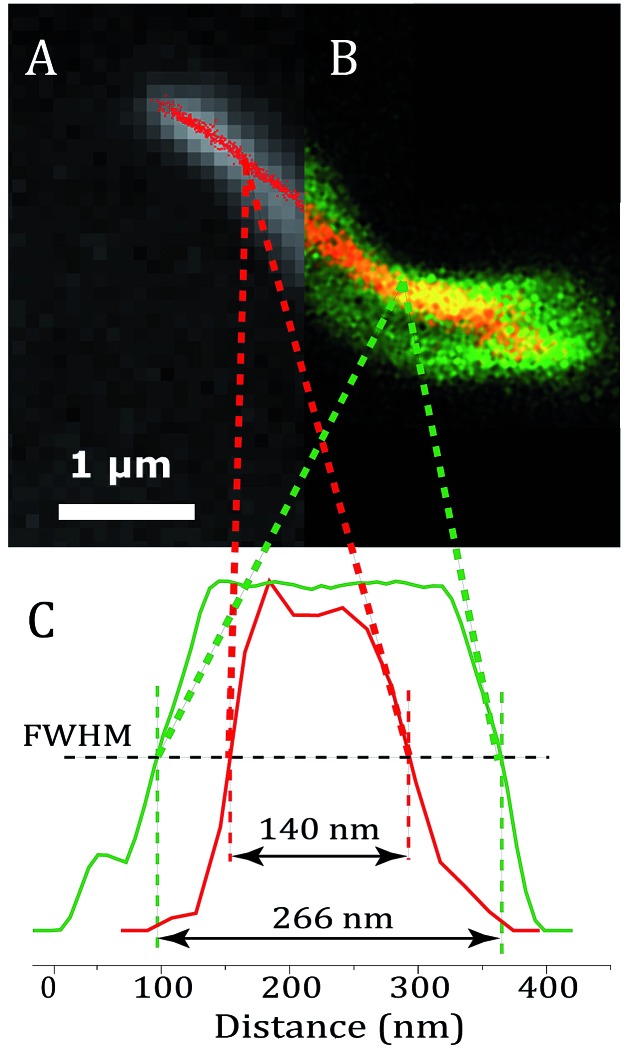
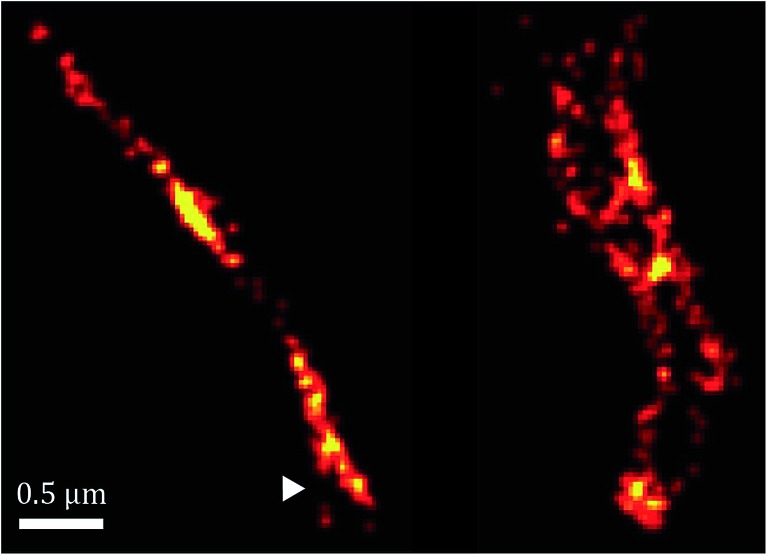
Magnetite nanoparticles have size- and shape-dependent magnetic properties. In addition, assemblies of magnetite nanoparticles forming one-dimensional nanostructures have magnetic properties distinct from zero-dimensional or non-organized materials due to strong uniaxial shape anisotropy. However, assemblies of free-standing magnetic nanoparticles tend to collapse and form closed-ring structures rather than chains in order to minimize their energy. Magnetotactic bacteria, ubiquitous microorganisms, have the capability to mineralize magnetite nanoparticles, the so-called magnetosomes, and to direct their assembly in stable chains via biological macromolecules. In this contribution, the synthesis and assembly of biological magnetite to obtain functional magnetic dipoles in magnetotactic bacteria are presented, with a focus on the assembly. We present tomographic reconstructions based on cryo-FIB sectioning and SEM imaging of a magnetotactic bacterium to exemplify that the magnetosome chain is indeed a paradigm of a 1D magnetic nanostructure, based on the assembly of several individual particles. We show that the biological forces are a major player in the formation of the magnetosome chain. Finally, we demonstrate by super resolution fluorescence microscopy that MamK, a protein of the actin family necessary to form the chain backbone in the bacteria, forms a bundle of filaments that are not only found in the vicinity of the magnetosome chain but are widespread within the cytoplasm, illustrating the dynamic localization of the protein within the cells. These very simple microorganisms have thus much to teach us with regards to controlling the design of functional 1D magnetic nanoassembly.
磁铁矿纳米颗粒具有尺寸和形状依赖性的磁性。此外,形成一维纳米结构的磁铁矿纳米颗粒聚集体由于强烈的单轴形状各向异性,其磁性与零维或无组织材料不同。然而,独立的磁性纳米颗粒聚集体倾向于坍塌并形成闭环结构而非链状结构,以使其能量最小化。趋磁细菌是普遍存在的微生物,具有使磁铁矿纳米颗粒矿化的能力,即所谓的磁小体,并能通过生物大分子将其组装成稳定的链状结构。在本论文中,我们介绍了趋磁细菌中生物磁铁矿的合成与组装,以获得功能性磁偶极子,重点是组装过程。我们基于对趋磁细菌的低温聚焦离子束切片和扫描电子显微镜成像,展示了断层扫描重建结果,以例证磁小体链确实是基于多个单个颗粒组装而成的一维磁性纳米结构的范例。我们表明生物作用力在磁小体链的形成中起主要作用。最后,我们通过超分辨率荧光显微镜证明,MamK是细菌中形成链状骨架所必需的肌动蛋白家族蛋白,它形成了一束细丝,不仅存在于磁小体链附近,而且在细胞质中广泛分布,这说明了该蛋白在细胞内的动态定位。因此,这些非常简单的微生物在控制功能性一维磁性纳米组装体的设计方面有很多值得我们学习的地方。