Gordon Jason P, McEwan Phil C, Maguire Andy, Sugrue Daniel M, Puelles Jorge
aHealth Economics and Outcomes Research Ltd, Monmouth bSwansea Centre for Health Economics, Swansea University, Wales cOxon Epidemiology dTakeda Pharmaceuticals, Takeda Development Centre, London, UK eUniversity of Adelaide, Department of Public Health, Adelaide, Australia.
Eur J Gastroenterol Hepatol. 2015 Jul;27(7):804-12. doi: 10.1097/MEG.0000000000000378.
Comparative outcomes of patients with ulcerative colitis (UC) and Crohn's disease (CD) prescribed a biologic therapy are inconclusive. The aim of this research was to characterize the degree of unmet medical need in patients with UC or CD and to identify the potential role for new therapies.
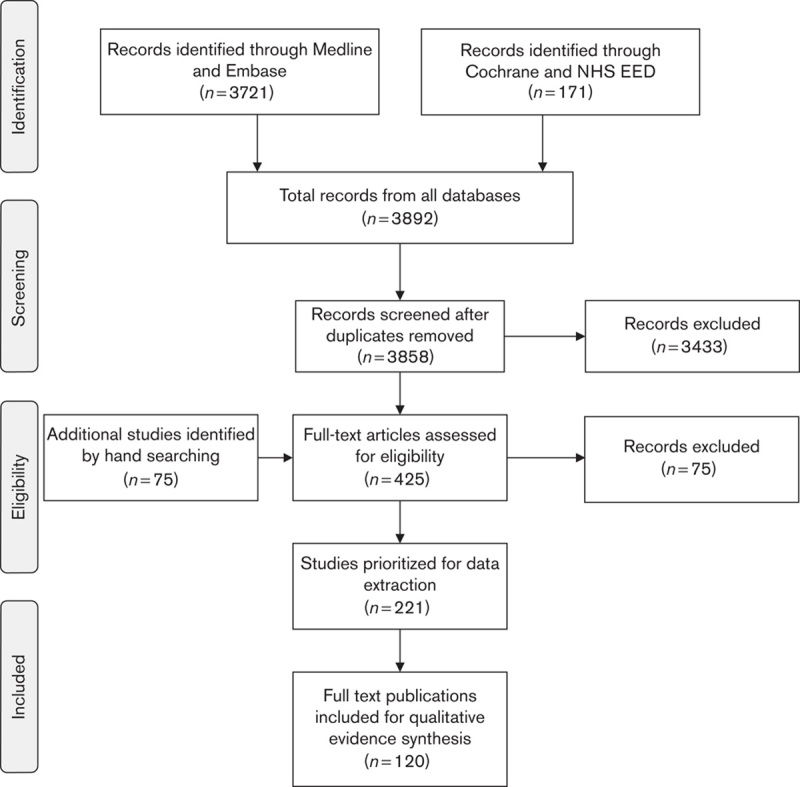
A systematic literature review was undertaken of studies reporting outcomes associated with the use of existing biologic therapies in patients with UC or CD, focusing on the nature and rate of treatment failure. To complement the systematic review, contemporaneous data were obtained from a survey of practising gastroenterologists in the UK and France. Data were qualitatively combined in a narrative framework to evaluate the degree of unmet medical need among patients with UC or CD.
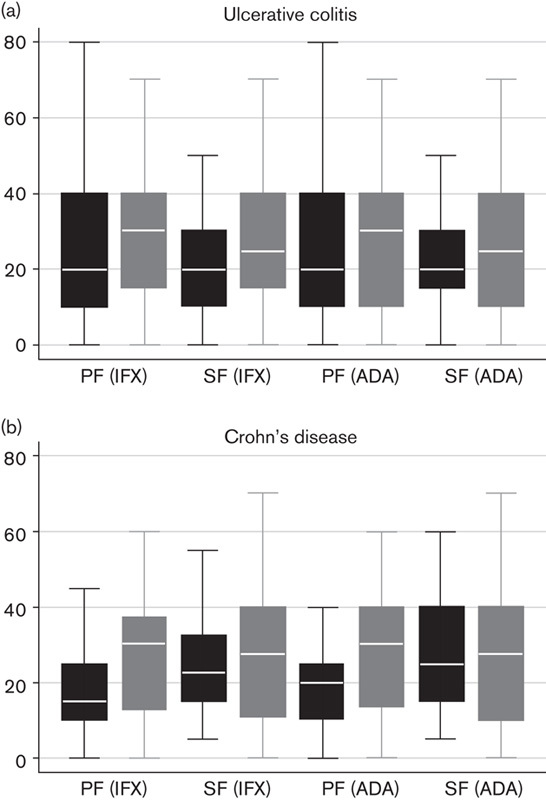
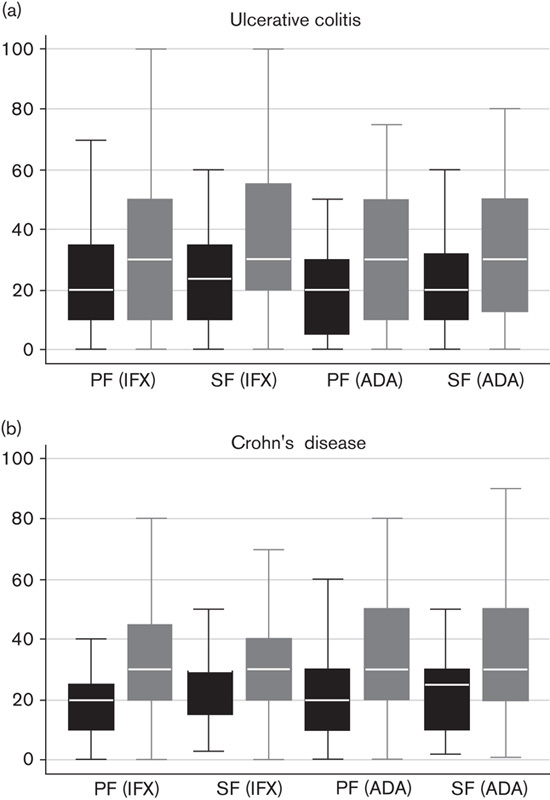
Studies identified in the systematic review (n = 120) were heterogeneous, particularly with respect to the definitions of treatment failure; estimates of treatment failure were high but uncertain. On the basis of standardized definitions, estimates of treatment failure provided by clinicians (n = 102) were high, and they were higher for second-line treatment failure (primary: ≤ 37%; secondary: ≤ 41%) compared with first-line treatment failure (primary: ≤ 26%; secondary: ≤ 28%). The majority of the systematic review and survey data were reflective of outcomes with infliximab and adalimumab.
High treatment failure rates associated with existing biologics, identified by the review and clinician surveys, indicate a need for other biologic treatment options to improve the management and outcomes for people with UC and CD. Outcomes associated with existing and new biologic treatments should be investigated in head-to-head randomized trials in the context of their likely uses in clinical practice.
溃疡性结肠炎(UC)和克罗恩病(CD)患者接受生物治疗的比较结果尚无定论。本研究的目的是描述UC或CD患者未满足的医疗需求程度,并确定新疗法的潜在作用。
对报告UC或CD患者使用现有生物治疗相关结果的研究进行系统文献综述,重点关注治疗失败的性质和发生率。为补充系统综述,同时从英国和法国执业胃肠病学家的调查中获取数据。将数据在叙述框架中进行定性合并,以评估UC或CD患者未满足的医疗需求程度。
系统综述中确定的研究(n = 120)具有异质性,特别是在治疗失败的定义方面;治疗失败的估计值较高但不确定。根据标准化定义,临床医生提供的治疗失败估计值(n = 102)较高,二线治疗失败的估计值(一线:≤ 37%;二线:≤ 41%)高于一线治疗失败的估计值(一线:≤ 26%;二线:≤ 28%)。系统综述和调查数据的大部分反映了英夫利昔单抗和阿达木单抗的治疗结果。
综述和临床医生调查确定,现有生物制剂的治疗失败率较高,这表明需要其他生物治疗选择来改善UC和CD患者的管理和治疗结果。应在临床实践中可能的使用背景下,通过头对头随机试验研究现有和新生物治疗的相关结果。