Todd Daniel A, Gulledge Travis V, Britton Emily R, Oberhofer Martina, Leyte-Lugo Martha, Moody Ashley N, Shymanovich Tatsiana, Grubbs Laura F, Juzumaite Monika, Graf Tyler N, Oberlies Nicholas H, Faeth Stanley H, Laster Scott M, Cech Nadja B
Department of Chemistry and Biochemistry, University of North Carolina at Greensboro, Greensboro, North Carolina, United States of America.
Department of Biological Sciences, North Carolina State University, Raleigh, North Carolina, United States of America.
PLoS One. 2015 May 1;10(5):e0124276. doi: 10.1371/journal.pone.0124276. eCollection 2015.
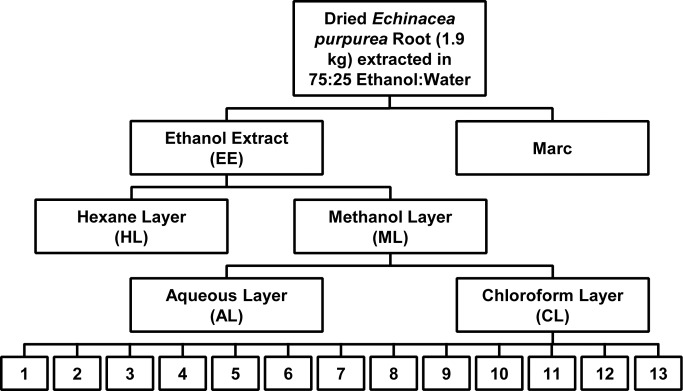
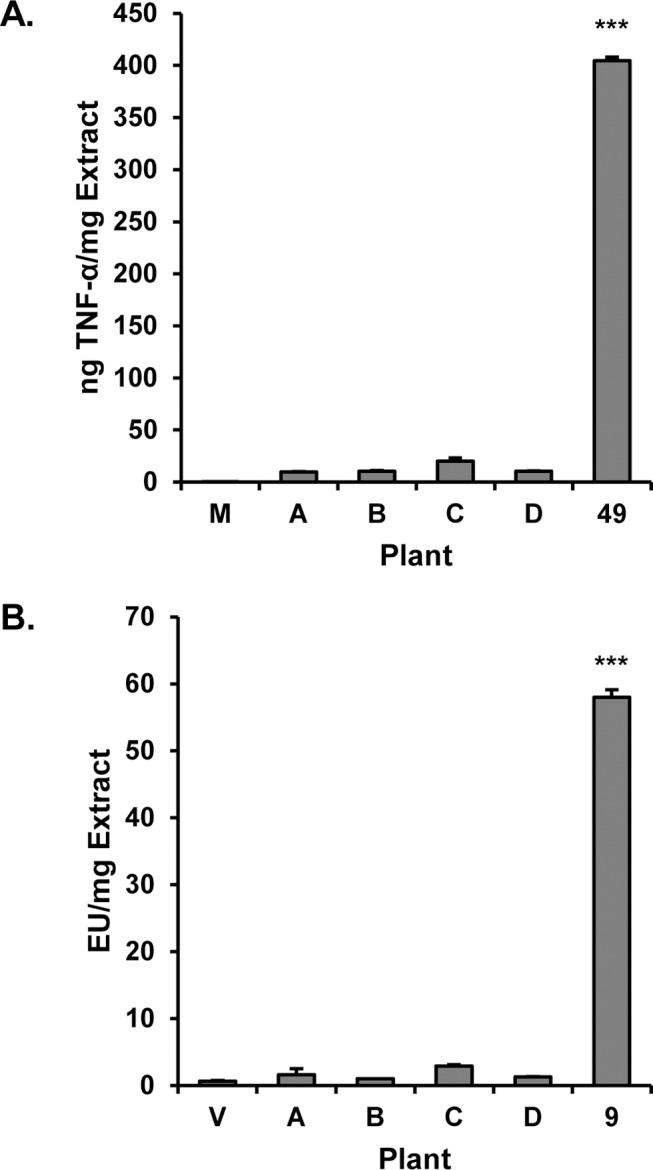
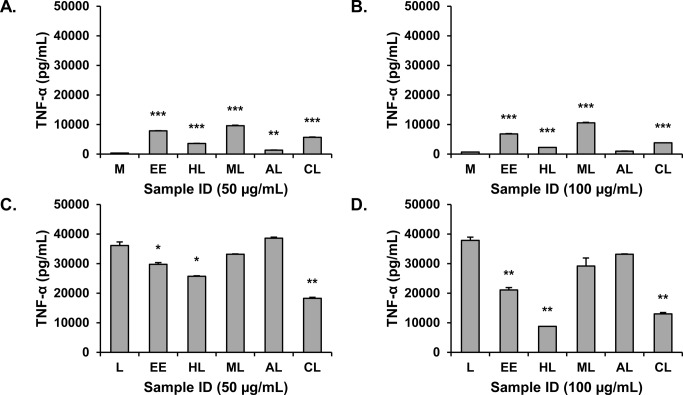
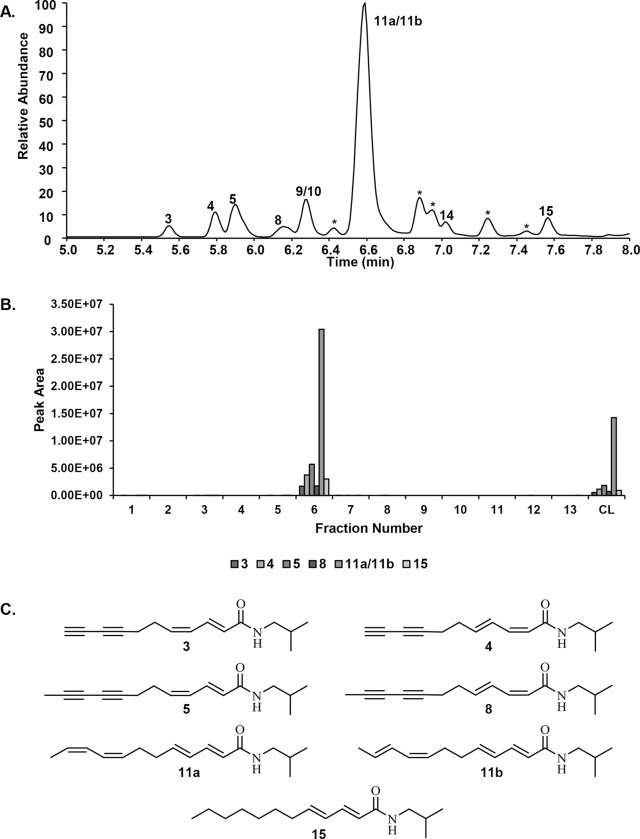
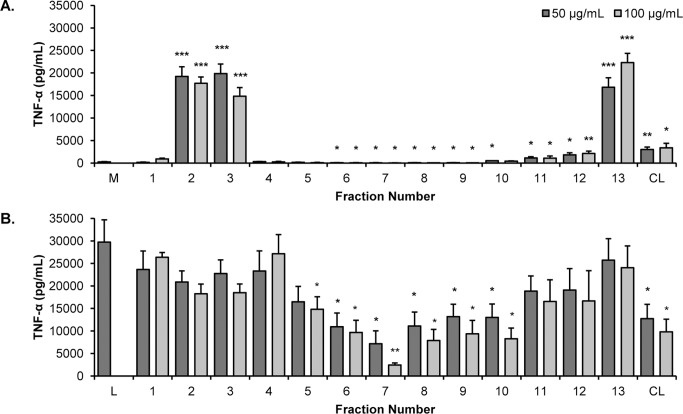
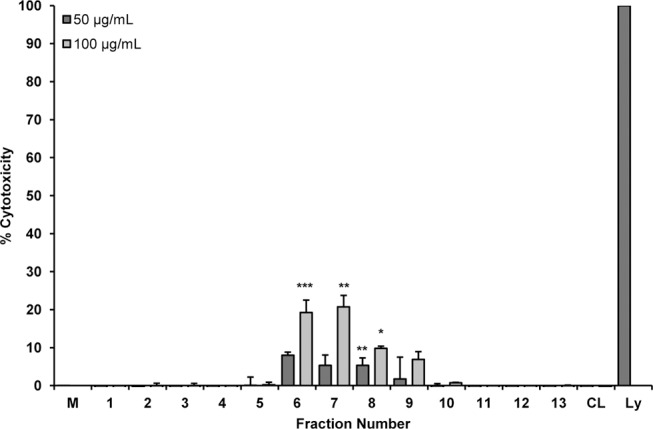
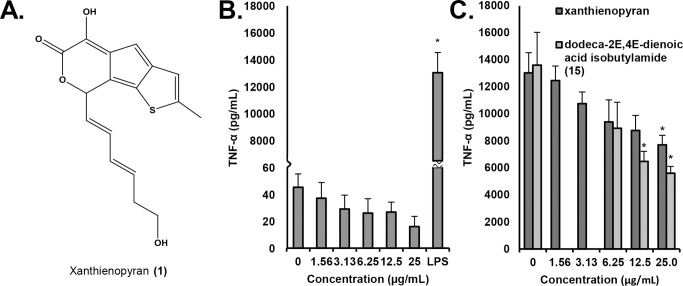
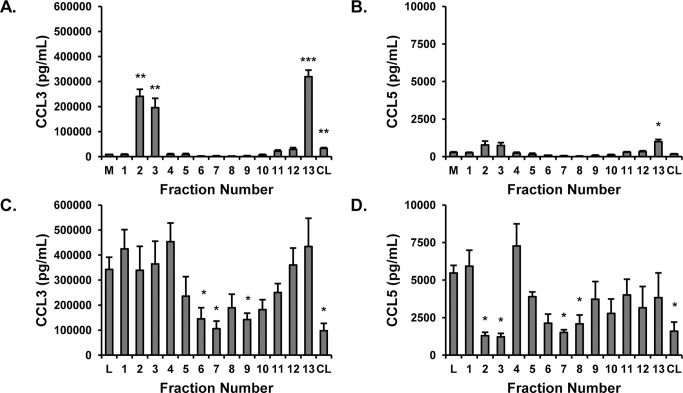
Echinacea preparations, which are used for the prevention and treatment of upper respiratory infections, account for 10% of the dietary supplement market in the U.S., with sales totaling more than $100 million annually. In an attempt to shed light on Echinacea's mechanism of action, we evaluated the effects of a 75% ethanolic root extract of Echinacea purpurea, prepared in accord with industry methods, on cytokine and chemokine production from RAW 264.7 macrophage-like cells. We found that the extract displayed dual activities; the extract could itself stimulate production of the cytokine TNF-α, and also suppress production of TNF-α in response to stimulation with exogenous LPS. Liquid:liquid partitioning followed by normal-phase flash chromatography resulted in separation of the stimulatory and inhibitory activities into different fractions, confirming the complex nature of this extract. We also studied the role of alkylamides in the suppressive activity of this E. purpurea extract. Our fractionation method concentrated the alkylamides into a single fraction, which suppressed production of TNF-α, CCL3, and CCL5; however fractions that did not contain detectable alkylamides also displayed similar suppressive effects. Alkylamides, therefore, likely contribute to the suppressive activity of the extract but are not solely responsible for that activity. From the fractions without detectable alkylamides, we purified xanthienopyran, a compound not previously known to be a constituent of the Echinacea genus. Xanthienopyran suppressed production of TNF-α suggesting that it may contribute to the suppressive activity of the crude ethanolic extract. Finally, we show that ethanolic extracts prepared from E. purpurea plants grown under sterile conditions and from sterilized seeds, do not contain LPS and do not stimulate macrophage production of TNF-α, supporting the hypothesis that the macrophage-stimulating activity in E. purpurea extracts can originate from endophytic bacteria. Together, our findings indicate that ethanolic E. purpurea extracts contain multiple constituents that differentially regulate cytokine production by macrophages.
紫锥菊制剂用于预防和治疗上呼吸道感染,占美国膳食补充剂市场的10%,年销售额总计超过1亿美元。为了阐明紫锥菊的作用机制,我们评估了按照行业方法制备的紫锥菊75%乙醇根提取物对RAW 264.7巨噬细胞样细胞产生细胞因子和趋化因子的影响。我们发现该提取物具有双重活性;该提取物本身可刺激细胞因子TNF-α的产生,并且还能抑制外源性LPS刺激引起的TNF-α产生。液-液分配后进行正相快速色谱法,将刺激和抑制活性分离到不同的组分中,证实了该提取物的复杂性。我们还研究了烷基酰胺在该紫锥菊提取物抑制活性中的作用。我们的分馏方法将烷基酰胺浓缩到一个单一的组分中,该组分抑制了TNF-α、CCL3和CCL5的产生;然而,不含可检测到的烷基酰胺的组分也表现出类似的抑制作用。因此,烷基酰胺可能有助于提取物的抑制活性,但并非唯一负责该活性。从不含可检测到的烷基酰胺的组分中,我们纯化出了呫吨并吡喃,一种以前未知是紫锥菊属植物成分的化合物。呫吨并吡喃抑制了TNF-α的产生,表明它可能有助于粗乙醇提取物的抑制活性。最后,我们表明,从无菌条件下生长的紫锥菊植物和灭菌种子制备的乙醇提取物不含LPS,并且不会刺激巨噬细胞产生TNF-α,支持了紫锥菊提取物中巨噬细胞刺激活性可能源自内生细菌的假设。总之,我们的研究结果表明,紫锥菊乙醇提取物含有多种成分,它们对巨噬细胞产生细胞因子的调节作用各不相同。