Agirre Eneritz, Bellora Nicolás, Alló Mariano, Pagès Amadís, Bertucci Paola, Kornblihtt Alberto R, Eyras Eduardo
Universitat Pompeu Fabra, E08003, Barcelona, Spain.
Present address: Institute of Human Genetics, CNRS UPR 1142, Montpellier, France.
BMC Biol. 2015 May 2;13:31. doi: 10.1186/s12915-015-0141-5.
Alternative splicing is primarily controlled by the activity of splicing factors and by the elongation of the RNA polymerase II (RNAPII). Recent experiments have suggested a new complex network of splicing regulation involving chromatin, transcription and multiple protein factors. In particular, the CCCTC-binding factor (CTCF), the Argonaute protein AGO1, and members of the heterochromatin protein 1 (HP1) family have been implicated in the regulation of splicing associated with chromatin and the elongation of RNAPII. These results raise the question of whether these proteins may associate at the chromatin level to modulate alternative splicing.
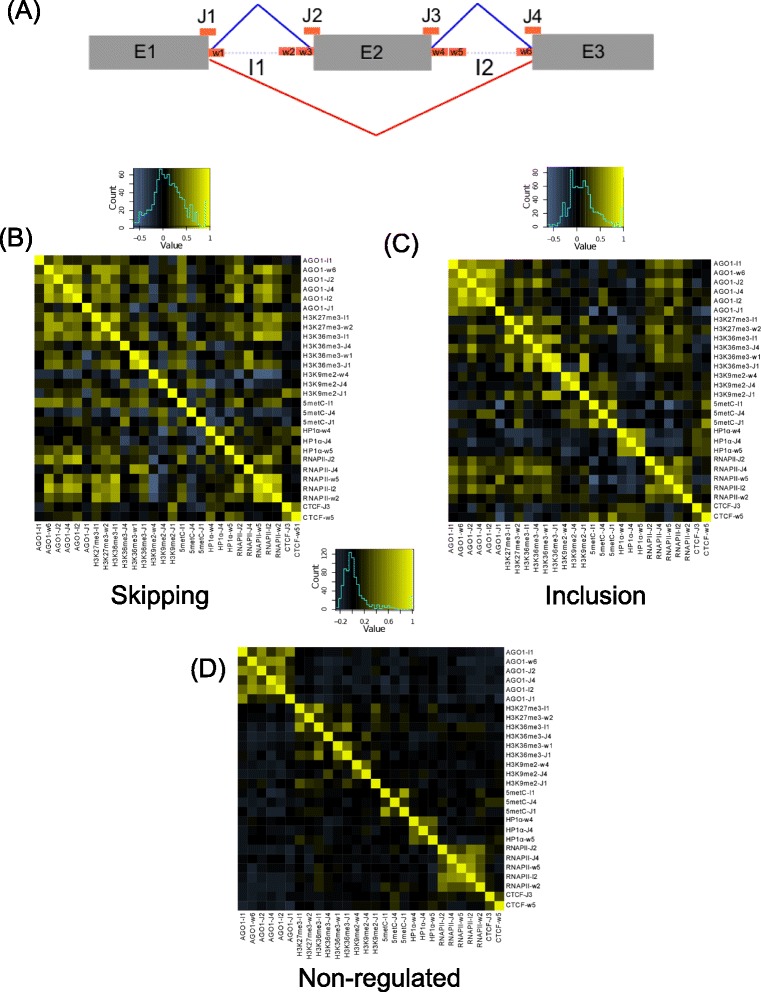
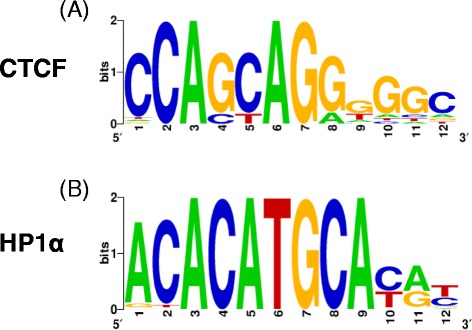
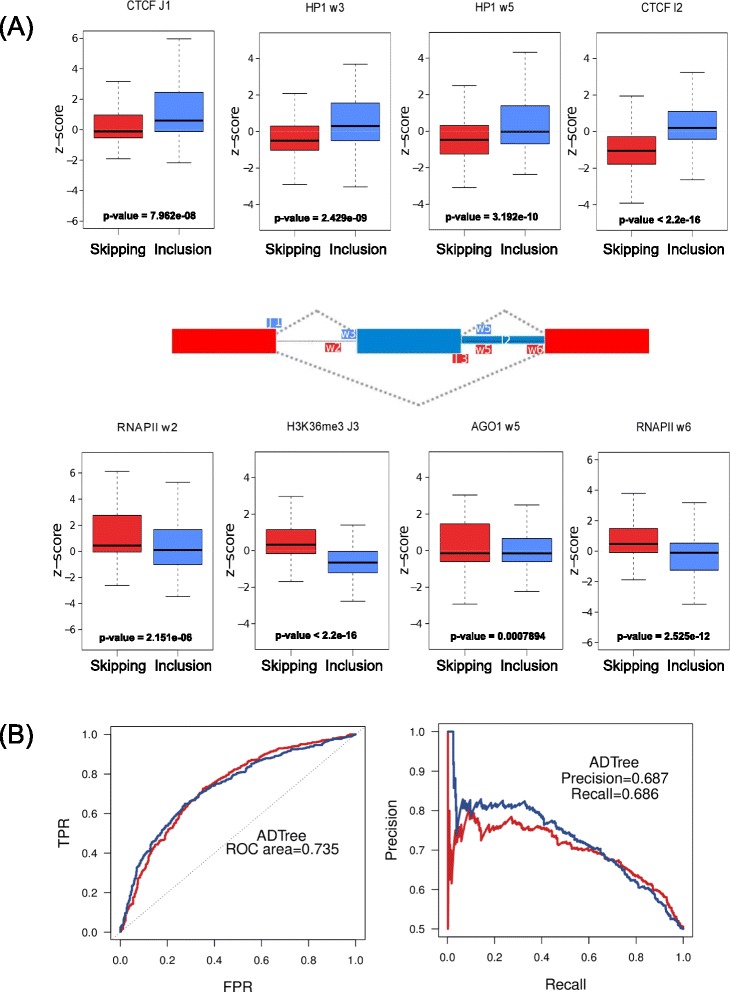
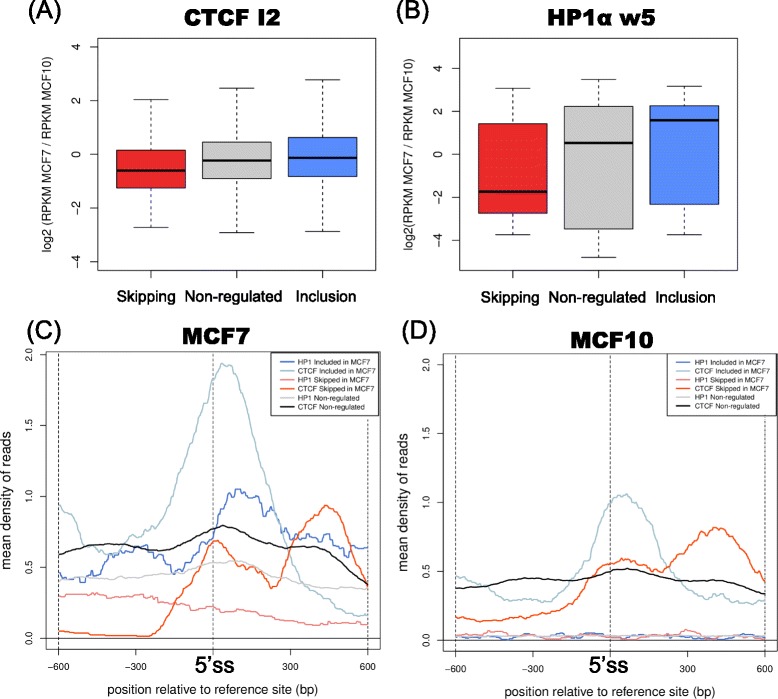
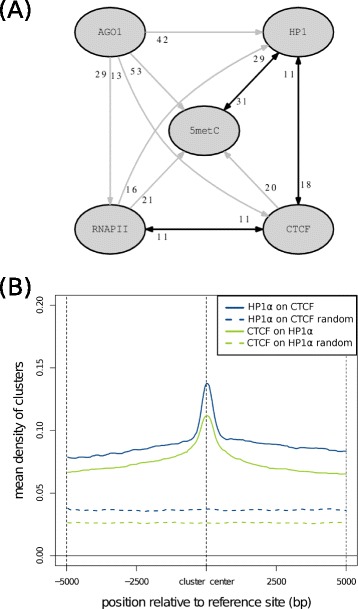
Using chromatin immunoprecipitation sequencing (ChIP-Seq) data for CTCF, AGO1, HP1α, H3K27me3, H3K9me2, H3K36me3, RNAPII, total H3 and 5metC and alternative splicing arrays from two cell lines, we have analyzed the combinatorial code of their binding to chromatin in relation to the alternative splicing patterns between two cell lines, MCF7 and MCF10. Using Machine Learning techniques, we identified the changes in chromatin signals that are most significantly associated with splicing regulation between these two cell lines. Moreover, we have built a map of the chromatin signals on the pre-mRNA, that is, a chromatin-based RNA-map, which can explain 606 (68.55%) of the regulated events between MCF7 and MCF10. This chromatin code involves the presence of HP1α, CTCF, AGO1, RNAPII and histone marks around regulated exons and can differentiate patterns of skipping and inclusion. Additionally, we found a significant association of HP1α and CTCF activities around the regulated exons and a putative DNA binding site for HP1α.
Our results show that a considerable number of alternative splicing events could have a chromatin-dependent regulation involving the association of HP1α and CTCF near regulated exons. Additionally, we find further evidence for the involvement of HP1α and AGO1 in chromatin-related splicing regulation.
可变剪接主要受剪接因子的活性以及RNA聚合酶II(RNAPII)延伸的控制。最近的实验表明,存在一个涉及染色质、转录和多种蛋白质因子的新的复杂剪接调控网络。特别地,CCCTC结合因子(CTCF)、AGO1蛋白以及异染色质蛋白1(HP1)家族成员已被证明与染色质相关的剪接调控以及RNAPII的延伸有关。这些结果提出了一个问题,即这些蛋白质是否可能在染色质水平上相互作用以调节可变剪接。
利用来自两种细胞系(MCF7和MCF10)的CTCF、AGO1、HP1α、H3K27me3、H3K9me2、H3K36me3、RNAPII、总H3和5metC的染色质免疫沉淀测序(ChIP-Seq)数据以及可变剪接阵列,我们分析了它们与染色质结合的组合密码,以及这两种细胞系之间的可变剪接模式。使用机器学习技术,我们确定了这两种细胞系之间与剪接调控最显著相关的染色质信号变化。此外,我们构建了前体mRNA上的染色质信号图谱,即基于染色质的RNA图谱,它可以解释MCF7和MCF10之间606个(68.55%)的调控事件。这种染色质密码涉及在受调控外显子周围存在HP1α、CTCF、AGO1、RNAPII和组蛋白标记,并且可以区分跳跃和包含模式。此外,我们发现HP1α和CTCF活性在受调控外显子周围存在显著关联,并且发现了一个HP1α的假定DNA结合位点。
我们的结果表明,相当数量的可变剪接事件可能存在染色质依赖性调控,涉及HP1α和CTCF在受调控外显子附近的相互作用。此外,我们进一步发现了HP1α和AGO1参与染色质相关剪接调控的证据。