Smith Kyle S, Yadav Vinod K, Pedersen Brent S, Shaknovich Rita, Geraci Mark W, Pollard Katherine S, De Subhajyoti
Department of Medicine, University of Colorado School of Medicine, Aurora, CO, USA Computational Biosciences Program, University of Colorado-Denver, Aurora, CO, USA.
Department of Medicine, University of Colorado School of Medicine, Aurora, CO, USA.
Nucleic Acids Res. 2015 Jun 23;43(11):5307-17. doi: 10.1093/nar/gkv419. Epub 2015 May 1.
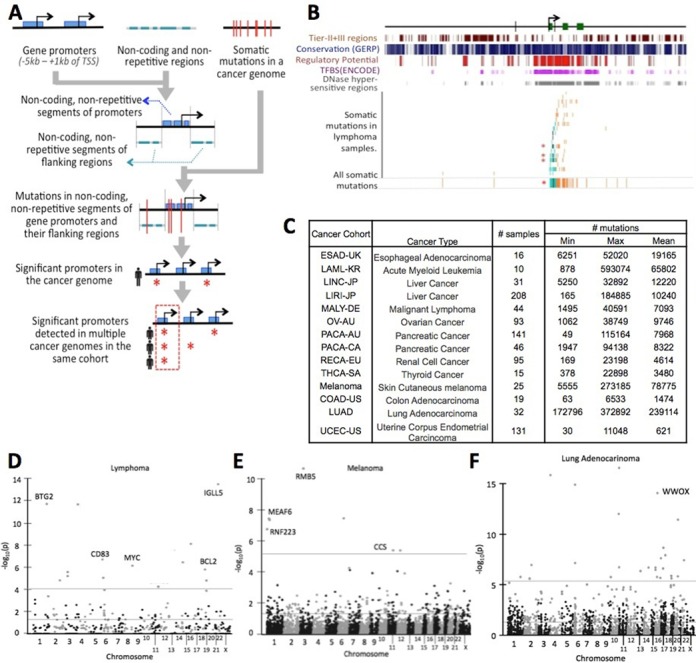
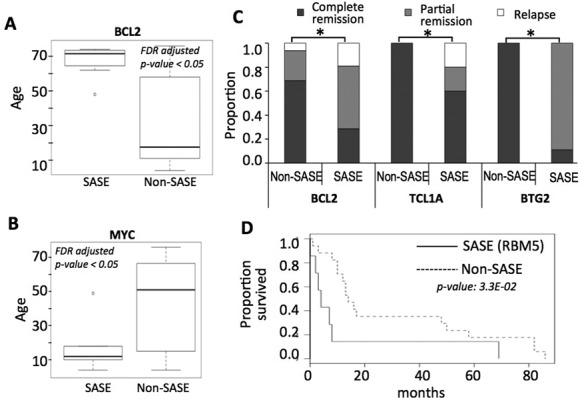
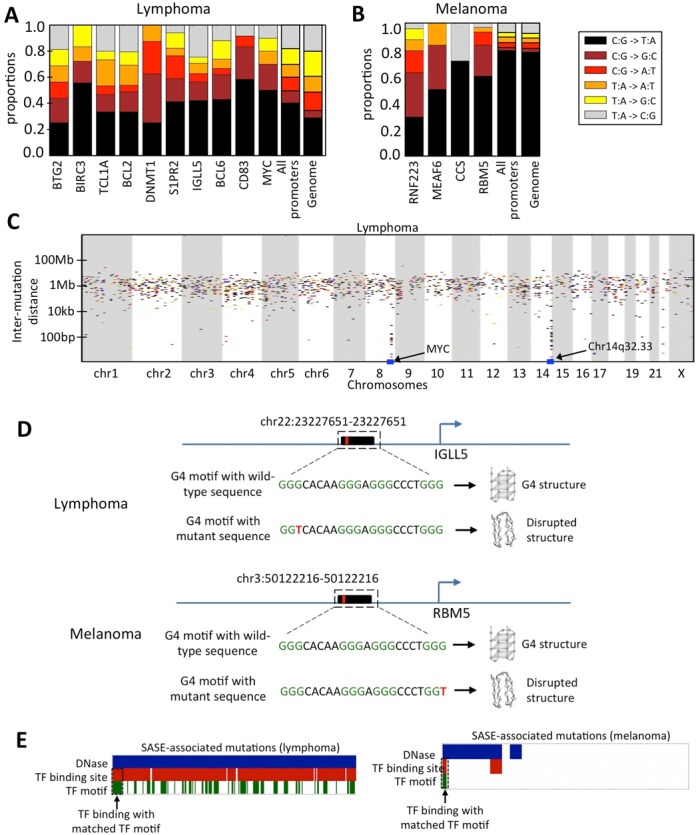
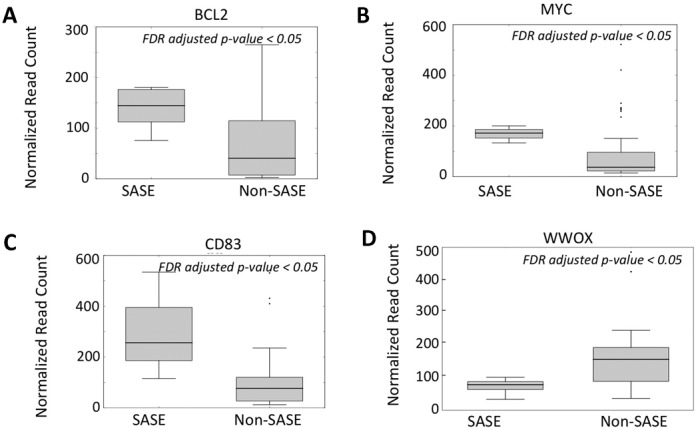
Cancer-associated somatic mutations outside protein-coding regions remain largely unexplored. Analyses of the TERT locus have indicated that non-coding regulatory mutations can be more frequent than previously suspected and play important roles in oncogenesis. Using a computational method called SASE-hunter, developed here, we identified a novel signature of accelerated somatic evolution (SASE) marked by a significant excess of somatic mutations localized in a genomic locus, and prioritized those loci that carried the signature in multiple cancer patients. Interestingly, even when an affected locus carried the signature in multiple individuals, the mutations contributing to SASE themselves were rarely recurrent at the base-pair resolution. In a pan-cancer analysis of 906 samples from 12 tumor types, we detected SASE in the promoters of several genes, including known cancer genes such as MYC, BCL2, RBM5 and WWOX. Nucleotide substitution patterns consistent with oxidative DNA damage and local somatic hypermutation appeared to contribute to this signature in selected gene promoters (e.g. MYC). SASEs in selected cancer gene promoters were associated with over-expression, and also correlated with the age of onset of cancer, aggressiveness of the disease and survival. Taken together, our work detects a hitherto under-appreciated and clinically important class of regulatory changes in cancer genomes.
蛋白质编码区域以外的癌症相关体细胞突变在很大程度上仍未得到充分研究。对端粒酶逆转录酶(TERT)基因座的分析表明,非编码调控突变可能比以前认为的更为频繁,并且在肿瘤发生中起重要作用。我们在此开发了一种名为SASE-hunter的计算方法,通过该方法,我们识别出了一种新的加速体细胞进化特征(SASE),其特征是基因组位点中存在大量体细胞突变,并对多位癌症患者中携带该特征的位点进行了优先级排序。有趣的是,即使受影响的位点在多个个体中都携带该特征,导致SASE的突变在碱基对分辨率上也很少重复出现。在对来自12种肿瘤类型的906个样本进行的泛癌分析中,我们在几个基因的启动子中检测到了SASE,包括已知的癌症相关基因,如MYC、BCL2、RBM5和WWOX。在选定的基因启动子(如MYC)中,与氧化性DNA损伤和局部体细胞高突变一致的核苷酸替换模式似乎促成了这一特征。选定癌症基因启动子中的SASE与基因过表达相关,也与癌症发病年龄、疾病侵袭性和生存率相关。综上所述,我们的研究发现了癌症基因组中一类迄今为止未被充分认识且具有临床重要性的调控变化。