Lamoke Folami, Mazzone Valeria, Persichini Tiziana, Maraschi Annamaria, Harris Michael Brennan, Venema Richard C, Colasanti Marco, Gliozzi Micaela, Muscoli Carolina, Bartoli Manuela, Mollace Vincenzo
Department of Ophthalmology, Georgia Regents University, Health Sciences Campus, 1120 15th St., Augusta, GA, 30912, USA.
Department of Biology, University of Rome 'Roma Tre', Via Ostiense, 169, Rome, 00154, Italy.
J Neuroinflammation. 2015 May 3;12:84. doi: 10.1186/s12974-015-0304-x.
Amyloid β (Aβ)-induced vascular dysfunction significantly contributes to the pathogenesis of Alzheimer's disease (AD). Aβ is known to impair endothelial nitric oxide synthase (eNOS) activity, thus inhibiting endothelial nitric oxide production (NO).
In this study, we investigated Aβ-effects on heat shock protein 90 (HSP90) interaction with eNOS and Akt in cultured vascular endothelial cells and also explored the role of oxidative stress in this process.
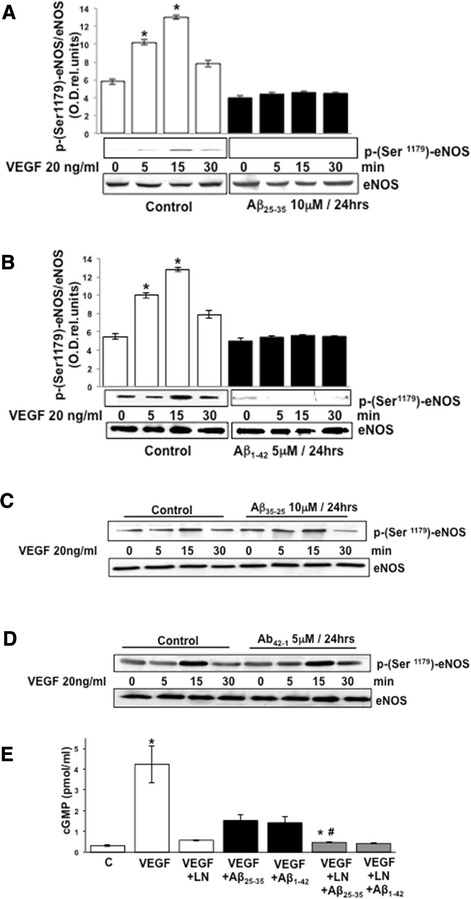
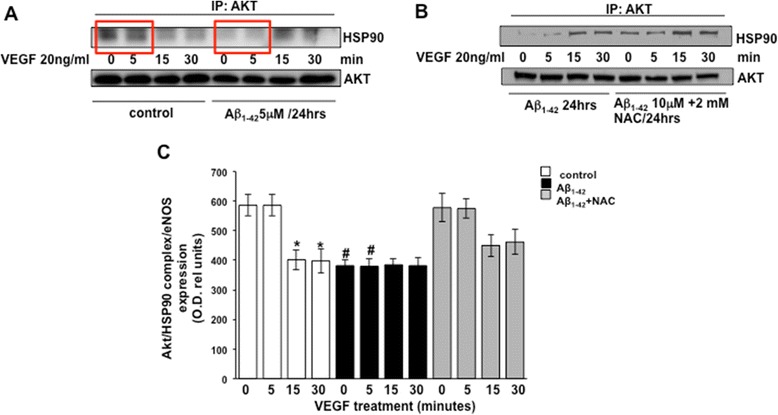
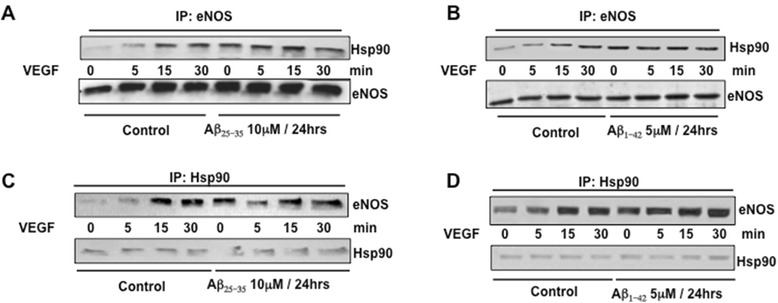
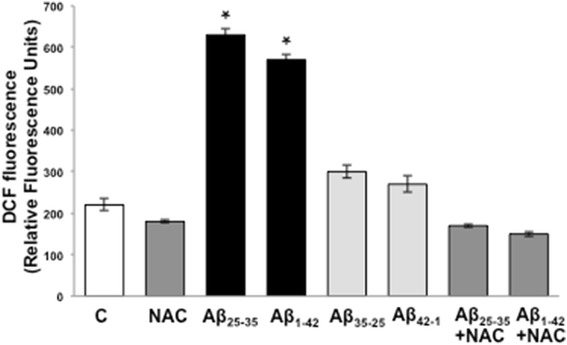
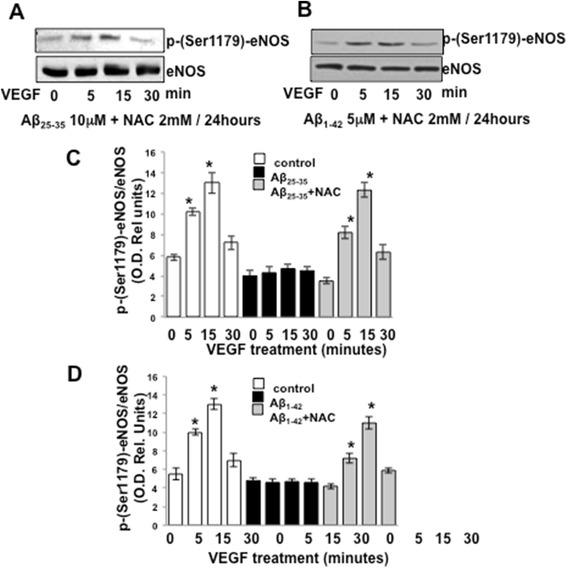
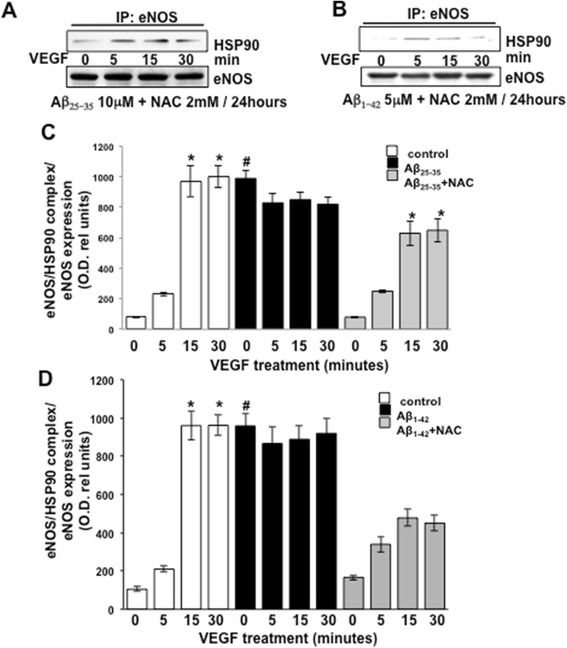
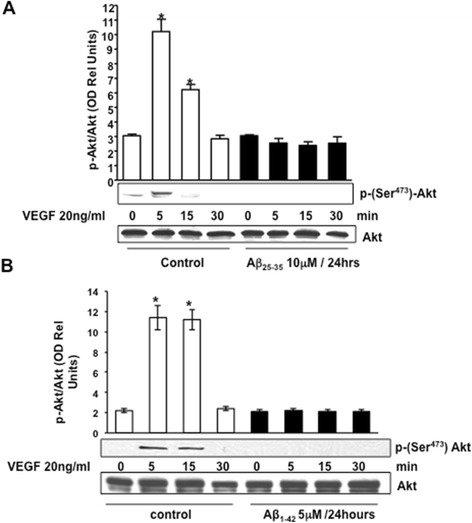
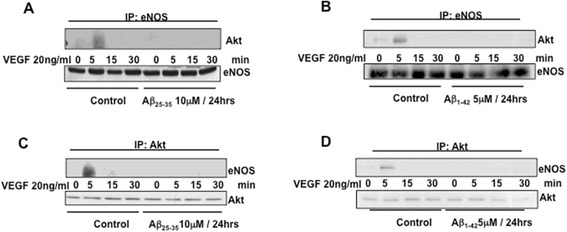
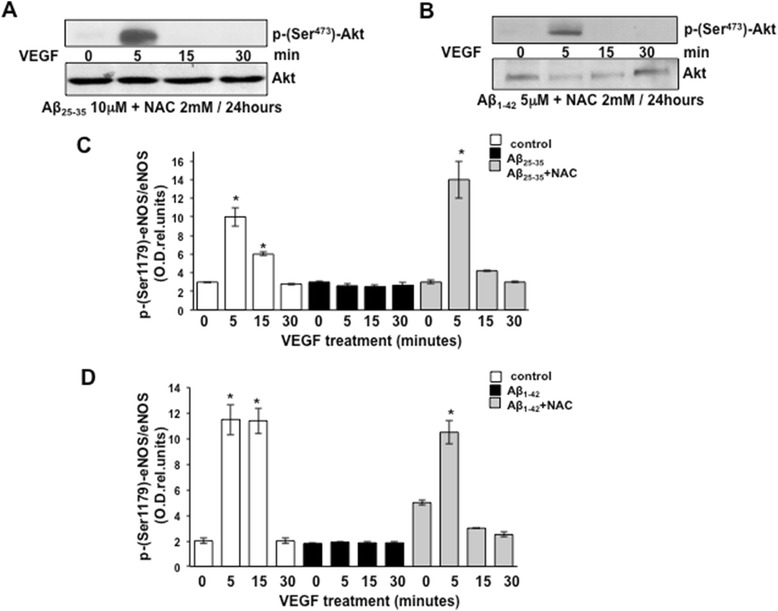
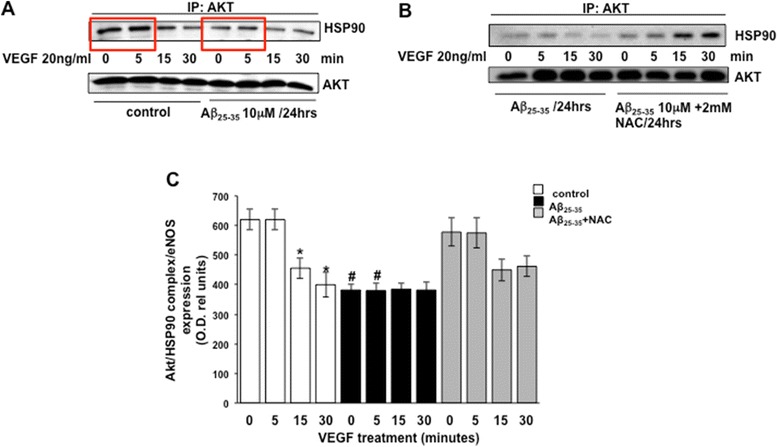
Treatments of endothelial cells (EC) with Aβ promoted the constitutive association of HSP90 with eNOS but abrogated agonist (vascular endothelial growth factor (VEGF))-mediated HSP90 interaction with Akt. This effect resulted in blockade of agonist-mediated phosphorylation of Akt and eNOS at serine 1179. Furthermore, Aβ stimulated the production of reactive oxygen species in endothelial cells and concomitant treatments of the cells with the antioxidant N-acetyl-cysteine (NAC) prevented Aβ effects in promoting HSP90/eNOS interaction and rescued agonist-mediated Akt and eNOS phosphorylation.
The obtained data support the hypothesis that oxidative damage caused by Aβ results in altered interaction of HSP90 with Akt and eNOS, therefore promoting vascular dysfunction. This mechanism, by contributing to Aβ-mediated blockade of nitric oxide production, may significantly contribute to the cognitive impairment seen in AD patients.
淀粉样β蛋白(Aβ)诱导的血管功能障碍在阿尔茨海默病(AD)的发病机制中起重要作用。已知Aβ会损害内皮型一氧化氮合酶(eNOS)的活性,从而抑制内皮一氧化氮(NO)的生成。
在本研究中,我们研究了Aβ对培养的血管内皮细胞中热休克蛋白90(HSP90)与eNOS及Akt相互作用的影响,并探讨了氧化应激在此过程中的作用。
用Aβ处理内皮细胞(EC)促进了HSP90与eNOS的组成性结合,但消除了激动剂(血管内皮生长因子(VEGF))介导的HSP90与Akt的相互作用。这种效应导致激动剂介导的Akt和eNOS在丝氨酸1179处的磷酸化受阻。此外,Aβ刺激内皮细胞中活性氧的产生,用抗氧化剂N-乙酰半胱氨酸(NAC)同时处理细胞可防止Aβ促进HSP90/eNOS相互作用的效应,并挽救激动剂介导的Akt和eNOS磷酸化。
获得的数据支持以下假设,即Aβ引起的氧化损伤导致HSP90与Akt和eNOS的相互作用改变,从而促进血管功能障碍。这一机制通过促成Aβ介导的一氧化氮生成受阻,可能对AD患者出现的认知障碍有显著影响。