Neuroscience Center, HiLIFE, University of Helsinki, Helsinki, Finland.
Department of Molecular and Translational Medicine, University of Brescia, Viale Europa 11, 25123, Brescia, BS, Italy.
Acta Neuropathol. 2024 Feb 12;147(1):39. doi: 10.1007/s00401-024-02696-z.
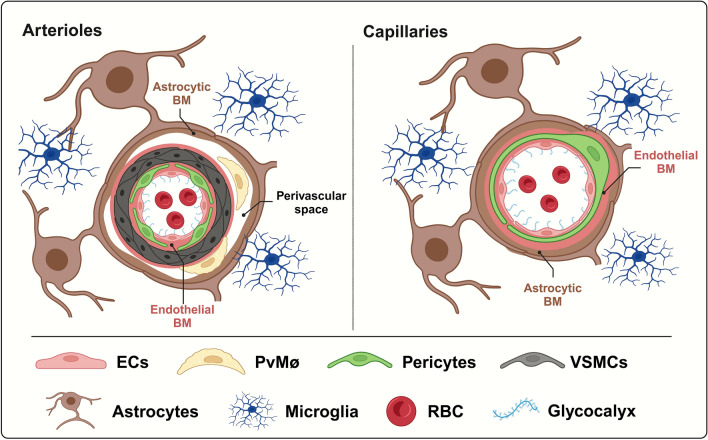
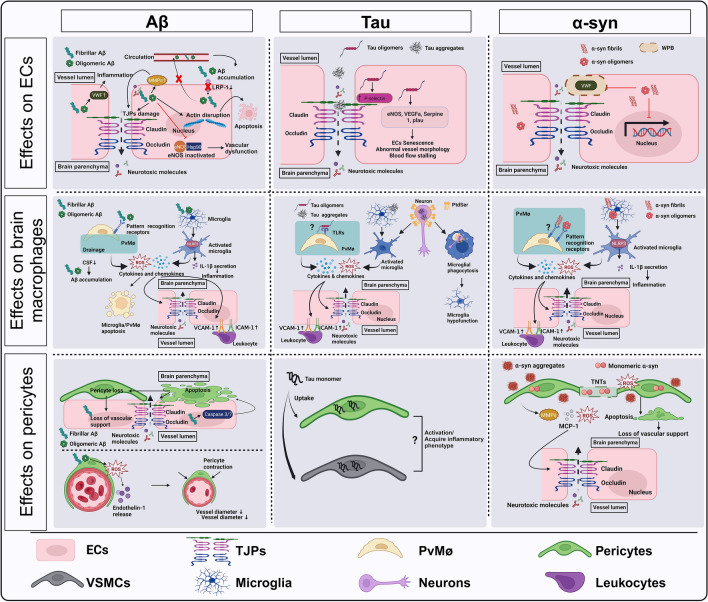
Central nervous system (CNS) accumulation of fibrillary deposits made of Amyloid β (Aβ), hyperphosphorylated Tau or α-synuclein (α-syn), present either alone or in the form of mixed pathology, characterizes the most common neurodegenerative diseases (NDDs) as well as the aging brain. Compelling evidence supports that acute neurological disorders, such as traumatic brain injury (TBI) and stroke, are also accompanied by increased deposition of toxic Aβ, Tau and α-syn species. While the contribution of these pathological proteins to neurodegeneration has been experimentally ascertained, the cellular and molecular mechanisms driving Aβ, Tau and α-syn-related brain damage remain to be fully clarified. In the last few years, studies have shown that Aβ, Tau and α-syn may contribute to neurodegeneration also by inducing and/or promoting blood-brain barrier (BBB) disruption. These pathological proteins can affect BBB integrity either directly by affecting key BBB components such as pericytes and endothelial cells (ECs) or indirectly, by promoting brain macrophages activation and dysfunction. Here, we summarize and critically discuss key findings showing how Aβ, Tau and α-syn can contribute to BBB damage in most common NDDs, TBI and stroke. We also highlight the need for a deeper characterization of the role of these pathological proteins in the activation and dysfunction of brain macrophages, pericytes and ECs to improve diagnosis and treatment of acute and chronic neurological disorders.
中枢神经系统(CNS)中纤维状沉积物的积累,由淀粉样β(Aβ)、过度磷酸化的 Tau 或 α-突触核蛋白(α-syn)组成,无论是单独存在还是混合存在,都表现为最常见的神经退行性疾病(NDDs)以及衰老的大脑的特征。有确凿的证据表明,急性神经障碍,如创伤性脑损伤(TBI)和中风,也伴随着有毒的 Aβ、Tau 和 α-syn 物种的沉积增加。虽然这些病理蛋白对神经退行性变的贡献已在实验上得到证实,但驱动 Aβ、Tau 和 α-syn 相关脑损伤的细胞和分子机制仍有待充分阐明。在过去几年中,研究表明,Aβ、Tau 和 α-syn 也可能通过诱导和/或促进血脑屏障(BBB)的破坏而导致神经退行性变。这些病理蛋白可以通过直接影响关键的 BBB 成分(如周细胞和内皮细胞(ECs))或间接通过促进脑巨噬细胞的激活和功能障碍来影响 BBB 的完整性。在这里,我们总结并批判性地讨论了关键发现,这些发现表明 Aβ、Tau 和 α-syn 如何在大多数常见的 NDDs、TBI 和中风中导致 BBB 损伤。我们还强调了需要更深入地研究这些病理蛋白在脑巨噬细胞、周细胞和 ECs 的激活和功能障碍中的作用,以改善急性和慢性神经障碍的诊断和治疗。