van der Sar Sonia A, Zielman Ronald, Terwindt Gisela M, van den Maagdenberg Arn M J M, Deelder André M, Mayboroda Oleg A, Meissner Axel, Ferrari Michel D
Center for Proteomics and Metabolomics, Leiden University Medical Center, Albinusdreef 2, 2333 ZA, Leiden, The Netherlands.
Anal Bioanal Chem. 2015 Jun;407(16):4835-9. doi: 10.1007/s00216-015-8663-9. Epub 2015 May 3.
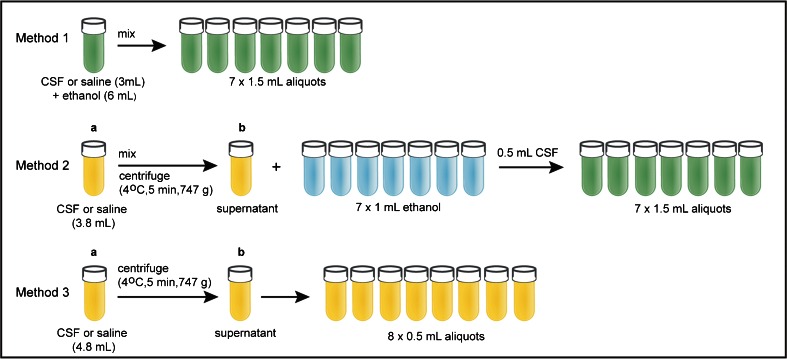
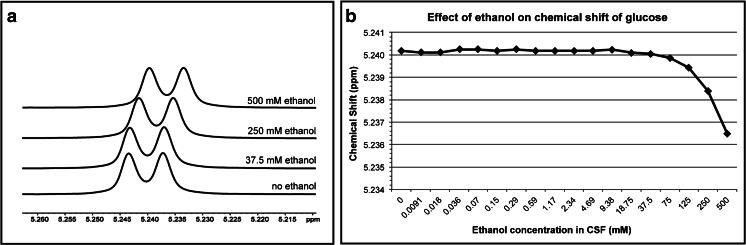
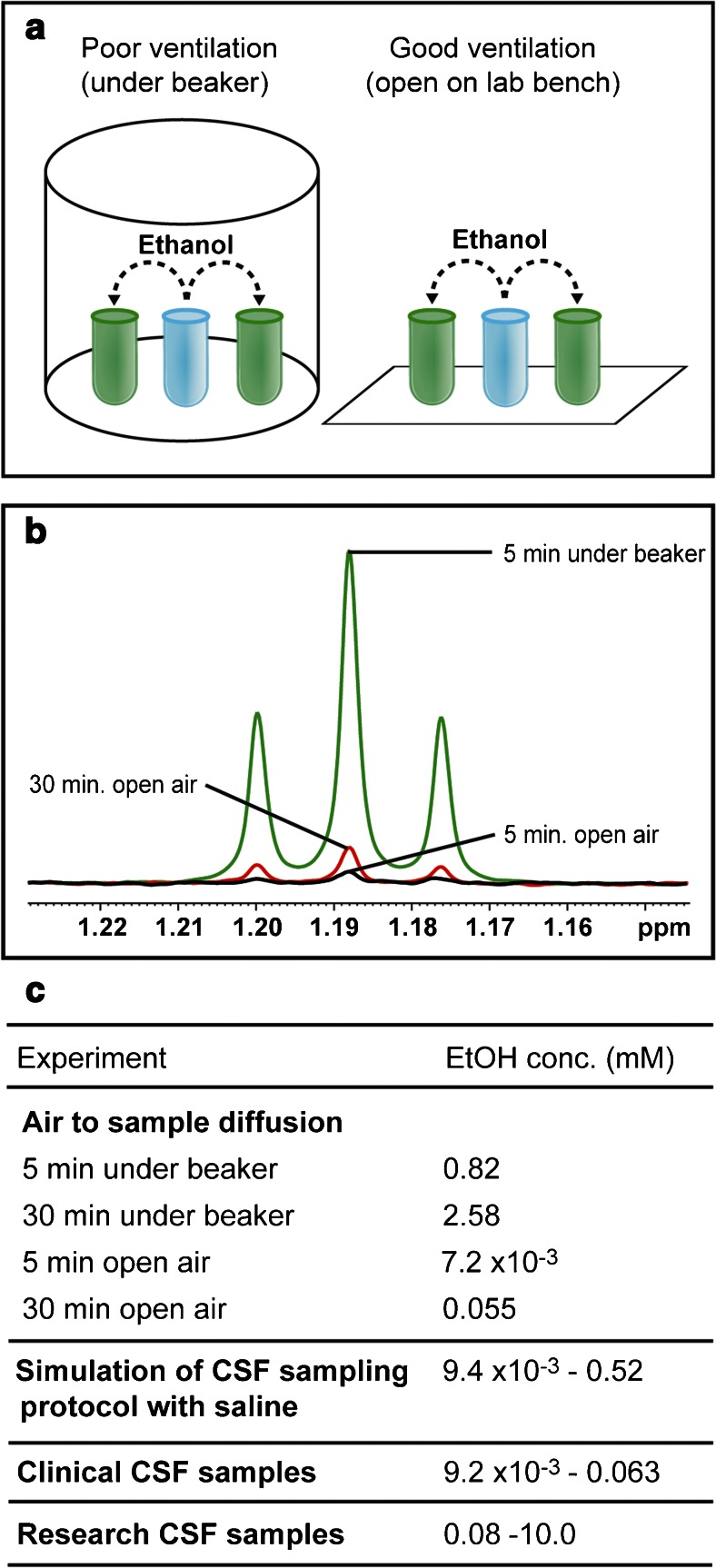
Standardization of body fluid sampling, processing and storage procedures is pivotal to ensure data quality in metabolomics studies. Yet, despite strict adherence to standard sampling guidelines, we detected variable levels of ethanol in the (1)H-NMR spectra of human cerebrospinal fluid (CSF) samples (range 9.2 × 10(-3)-10.0 mM). The presence of ethanol in all samples and the wide range of concentrations clearly indicated contamination of the samples of some sort, which affected the (1)H-NMR spectra quality and the interpretation. To determine where in the sampling protocol the ethanol contamination occurs, we performed a CSF sampling protocol simulation with 0.9 % NaCl (saline) instead of CSF and detected ethanol in all simulation samples. Ethanol diffusion through air during sampling and preparation stages appeared the only logical explanation. With a bench study, we showed that ethanol easily diffuses into ex vivo CSF samples via air transmission. Ethanol originated from routinely used skin disinfectants containing ethanol and from laboratory procedures. Ethanol affected the CSF sample matrix at concentrations above ~9.4 mM and obscured a significant part of the (1)H-NMR spectrum. CSF sample preparation for (1)H-NMR-based metabolomics analyses should therefore be carried out in a well-ventilated atmosphere with laminar flow, and use of ethanol should be avoided.
体液采样、处理和储存程序的标准化对于确保代谢组学研究中的数据质量至关重要。然而,尽管严格遵循标准采样指南,但我们在人类脑脊液(CSF)样本的氢核磁共振(1H-NMR)谱图中检测到了不同水平的乙醇(范围为9.2×10(-3)-10.0 mM)。所有样本中均存在乙醇且浓度范围较宽,这清楚地表明样本受到了某种程度的污染,从而影响了1H-NMR谱图质量及解读。为确定乙醇污染在采样方案的哪个环节发生,我们用0.9%氯化钠(生理盐水)代替脑脊液进行了脑脊液采样方案模拟,并在所有模拟样本中检测到了乙醇。采样和制备阶段乙醇通过空气扩散似乎是唯一合理的解释。通过一项实验室研究,我们表明乙醇可通过空气传播轻易扩散到离体脑脊液样本中。乙醇来源于常规使用的含乙醇皮肤消毒剂以及实验室操作。当乙醇浓度高于约9.4 mM时会影响脑脊液样本基质,并使1H-NMR谱图的很大一部分变得模糊。因此,基于1H-NMR的代谢组学分析的脑脊液样本制备应在有层流的通风良好的环境中进行,并且应避免使用乙醇。