Papi Enrica, Osei-Kuffour Denise, Chen Yen-Ming A, McGregor Alison H
Department of Surgery and Cancer, Imperial College London, London, UK.
Centre for Bio-Inspired Technology, Institute of Biomedical Engineering, Imperial College London, London, UK.
Med Eng Phys. 2015 Jul;37(7):698-704. doi: 10.1016/j.medengphy.2015.03.017. Epub 2015 Apr 30.
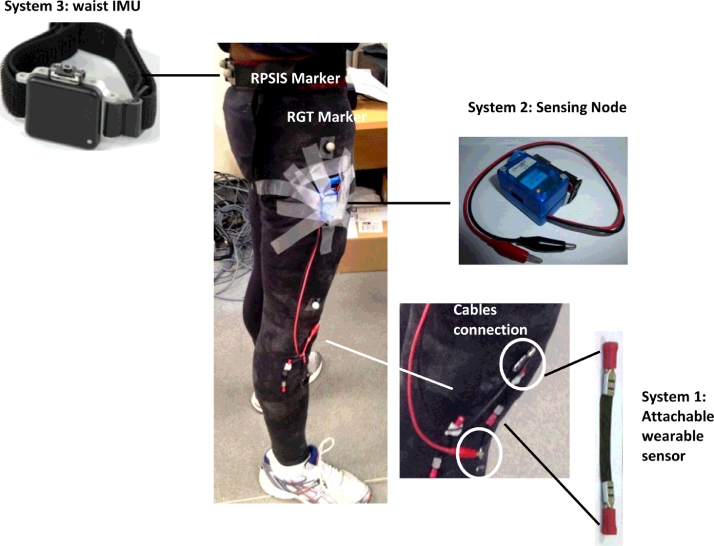
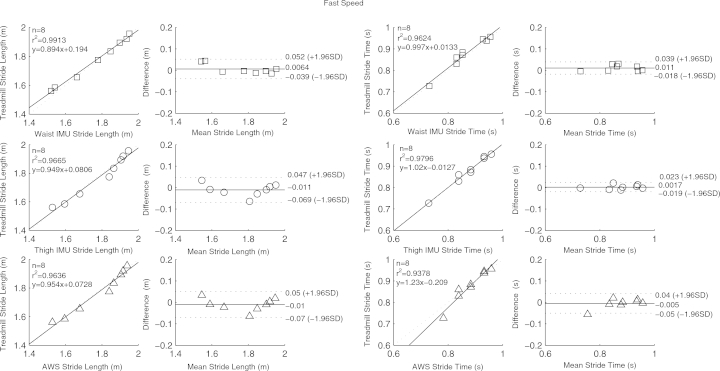
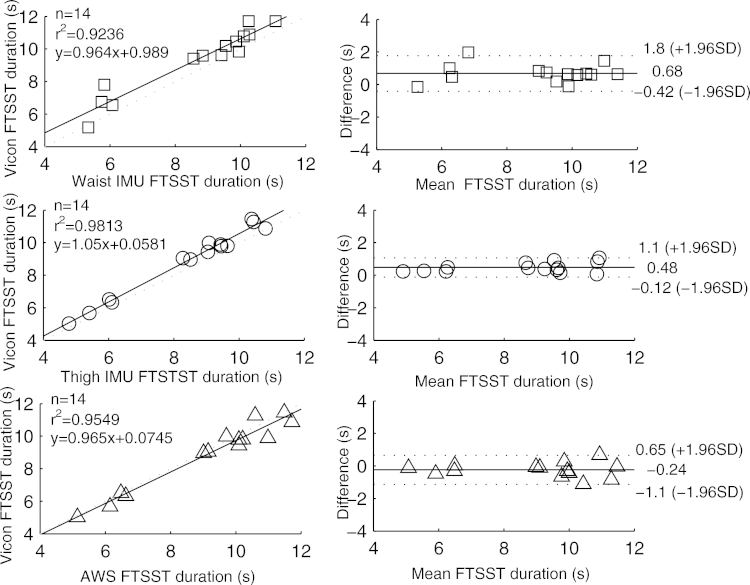
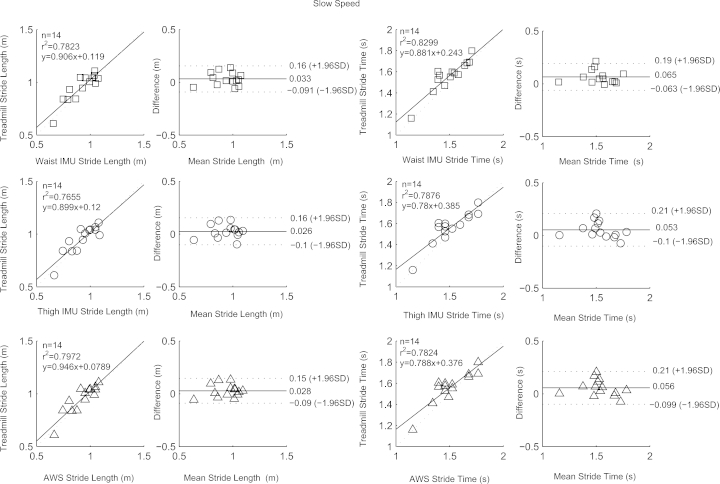
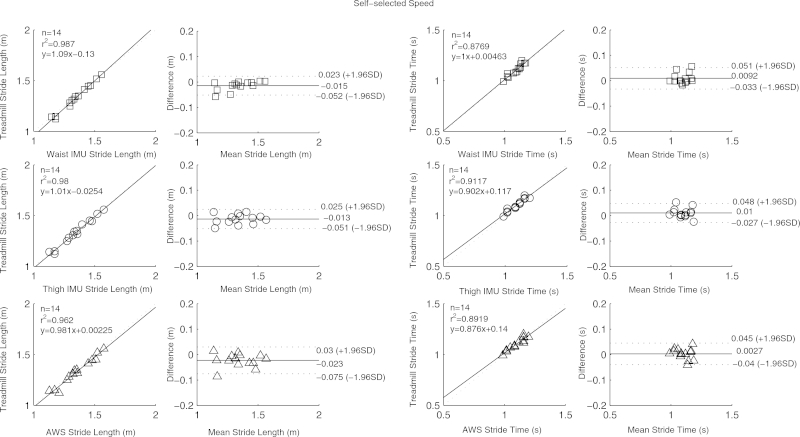
The prevalence of osteoarthritis is increasing globally but current compliance with rehabilitation remains poor. This study explores whether wearable sensors can be used to provide objective measures of performance with a view to using them as motivators to aid compliance to osteoarthritis rehabilitation. More specifically, the use of a novel attachable wearable sensor integrated into clothing and inertial measurement units located in two different positions, at the waist and thigh pocket, was investigated. Fourteen healthy volunteers were asked to complete exercises adapted from a knee osteoarthritis rehabilitation programme whilst wearing the three sensors including five times sit-to-stand test, treadmill walking at slow, preferred and fast speeds. The performances of the three sensors were validated against a motion capture system and an instrumented treadmill. The systems showed a high correlation (r(2) > 0.7) and agreement (mean difference range: -0.02-0.03 m, 0.005-0.68 s) with gold standards. The novel attachable wearable sensor was able to monitor exercise tasks as well as the inertial measurement units (ICC > 0.95). Results also suggested that a functional placement (e.g., situated in a pocket) is a valid position for performance monitoring. This study shows the potential use of wearable technologies for assessing subject performance during exercise and suggests functional solutions to enhance acceptance.
骨关节炎在全球的患病率正在上升,但目前康复治疗的依从性仍然很差。本研究探讨可穿戴传感器是否可用于提供客观的运动表现测量指标,以期将其作为激励因素来提高骨关节炎康复治疗的依从性。更具体地说,研究了一种集成在衣物中的新型可附着式可穿戴传感器以及位于腰部和大腿口袋两个不同位置的惯性测量单元的使用情况。14名健康志愿者被要求在佩戴这三种传感器的同时完成从膝关节骨关节炎康复计划改编而来的练习,包括五次坐立试验、在慢速、偏好速度和快速下的跑步机行走。这三种传感器的性能通过动作捕捉系统和仪器化跑步机进行了验证。这些系统与金标准显示出高度相关性(r²>0.7)和一致性(平均差异范围:-0.02 - 0.03米,0.005 - 0.68秒)。这种新型可附着式可穿戴传感器能够像惯性测量单元一样监测运动任务(组内相关系数>0.95)。结果还表明,功能性放置(例如放在口袋里)是进行运动表现监测的有效位置。本研究展示了可穿戴技术在评估运动过程中受试者表现方面的潜在用途,并提出了增强接受度的功能性解决方案。