Selim Shaimaa, Elo Kari, Jaakkola Seija, Karikoski Ninja, Boston Ray, Reilas Tiina, Särkijärvi Susanna, Saastamoinen Markku, Kokkonen Tuomo
Department of Agricultural Sciences, P.O. Box 28, FI-00014 University of Helsinki, Helsinki, Finland.
Department of Equine and Small Animal Medicine, P.O. Box 57, FI-00014 University of Helsinki, Helsinki, Finland.
PLoS One. 2015 May 4;10(5):e0125968. doi: 10.1371/journal.pone.0125968. eCollection 2015.
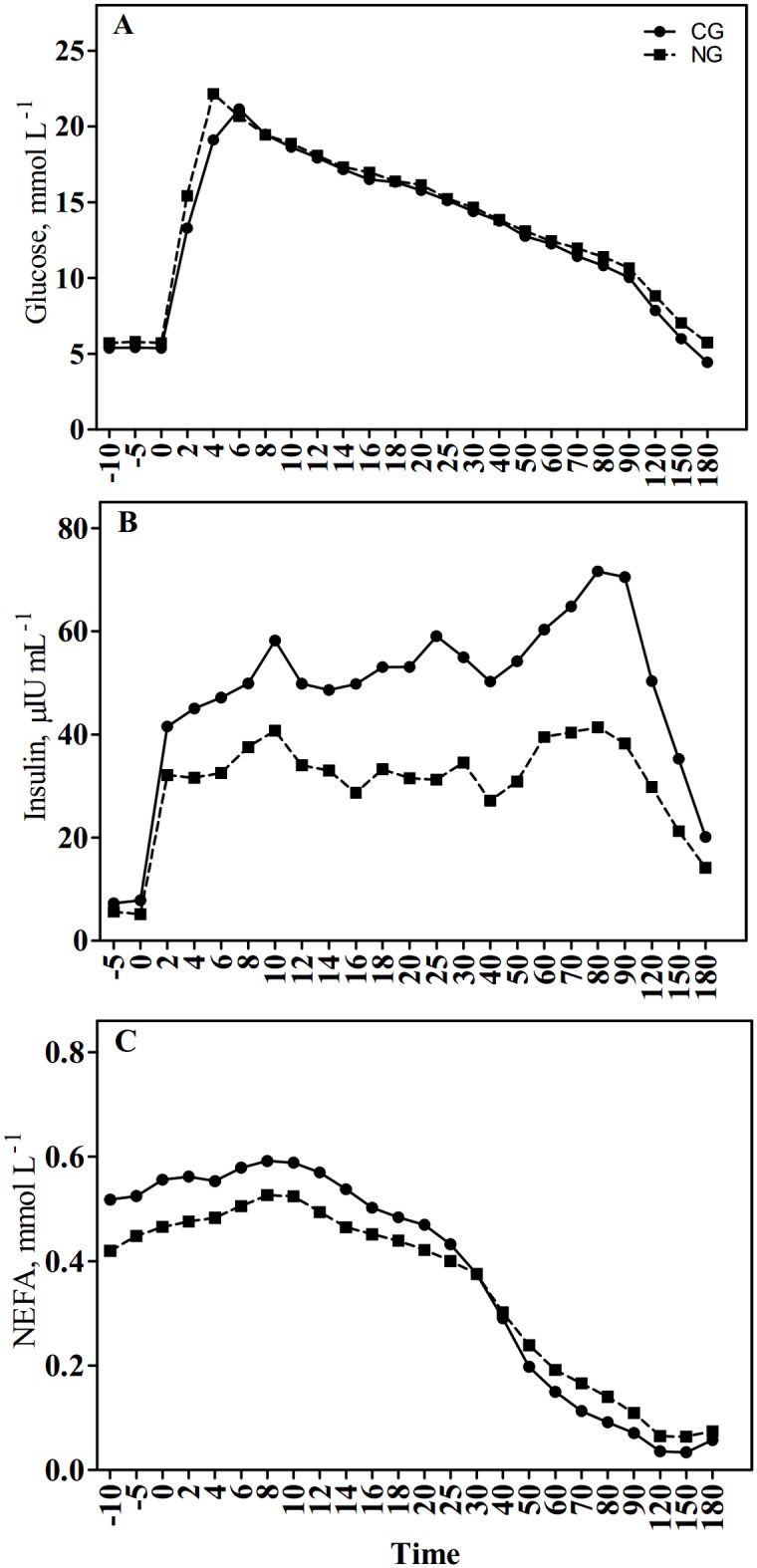
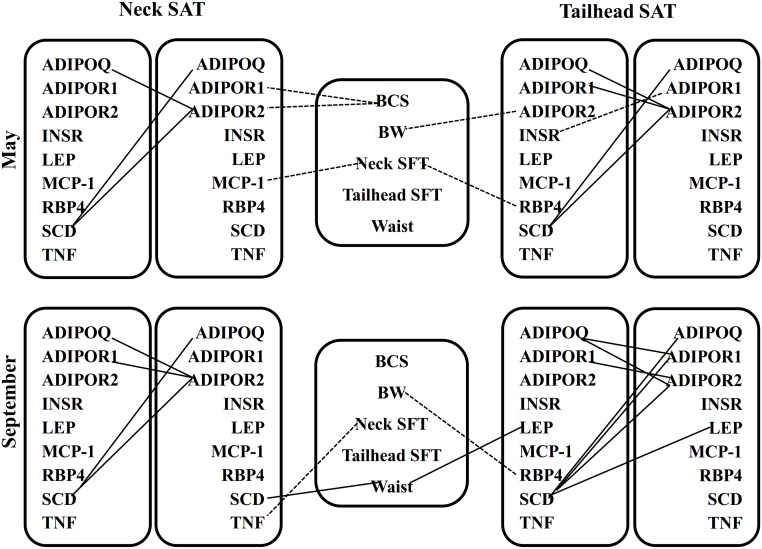
Obesity and insulin resistance have been shown to be risk factors for laminitis in horses. The objective of the study was to determine the effect of changes in body condition during the grazing season on insulin resistance and the expression of genes associated with obesity and insulin resistance in subcutaneous adipose tissue (SAT). Sixteen Finnhorse mares were grazing either on cultivated high-yielding pasture (CG) or semi-natural grassland (NG) from the end of May to the beginning of September. Body measurements, intravenous glucose tolerance test (IVGTT), and neck and tailhead SAT gene expressions were measured in May and September. At the end of grazing, CG had higher median body condition score (7 vs. 5.4, interquartile range 0.25 vs. 0.43; P=0.05) and body weight (618 kg vs. 572 kg ± 10.21 (mean ± SEM); P=0.02), and larger waist circumference (P=0.03) than NG. Neck fat thickness was not different between treatments. However, tailhead fat thickness was smaller in CG compared to NG in May (P=0.04), but this difference disappeared in September. Greater basal and peak insulin concentrations, and faster glucose clearance rate (P=0.03) during IVGTT were observed in CG compared to NG in September. A greater decrease in plasma non-esterified fatty acids during IVGTT (P<0.05) was noticed in CG compared to NG after grazing. There was down-regulation of insulin receptor, retinol binding protein 4, leptin, and monocyte chemoattractant protein-1, and up-regulation of adiponectin (ADIPOQ), adiponectin receptor 1 and stearoyl-CoA desaturase (SCD) gene expressions in SAT of both groups during the grazing season (P<0.05). Positive correlations were observed between ADIPOQ and its receptors and between SCD and ADIPOQ in SAT (P<0.01). In conclusion, grazing on CG had a moderate effect on responses during IVGTT, but did not trigger insulin resistance. Significant temporal differences in gene expression profiles were observed during the grazing season.
肥胖和胰岛素抵抗已被证明是马患蹄叶炎的风险因素。本研究的目的是确定放牧季节身体状况变化对胰岛素抵抗以及皮下脂肪组织(SAT)中与肥胖和胰岛素抵抗相关基因表达的影响。16匹芬兰马母马于5月底至9月初在人工高产牧场(CG)或半天然草地(NG)放牧。在5月和9月测量了身体指标、静脉葡萄糖耐量试验(IVGTT)以及颈部和尾根SAT的基因表达。放牧结束时,CG的中位身体状况评分更高(7对5.4,四分位间距0.25对0.43;P = 0.05),体重更重(618千克对572千克±10.21(均值±标准误);P = 0.02),腰围更大(P = 0.03),高于NG。各处理间颈部脂肪厚度无差异。然而,5月时CG的尾根脂肪厚度比NG小(P = 0.04),但这种差异在9月消失。与9月的NG相比,9月的CG在IVGTT期间观察到更高的基础和峰值胰岛素浓度以及更快的葡萄糖清除率(P = 0.03)。与NG相比,放牧后CG在IVGTT期间血浆非酯化脂肪酸的下降幅度更大(P < 0.05)。放牧季节两组SAT中胰岛素受体、视黄醇结合蛋白4、瘦素和单核细胞趋化蛋白-1均下调(P < 0.05),脂联素(ADIPOQ)、脂联素受体1和硬脂酰辅酶A去饱和酶(SCD)基因表达上调(P < 0.05)。SAT中ADIPOQ与其受体之间以及SCD与ADIPOQ之间呈正相关(P < 0.01)。总之,在CG上放牧对IVGTT期间的反应有中等影响,但未引发胰岛素抵抗。在放牧季节观察到基因表达谱存在显著的时间差异。