Jørgensen J S, Sidky E Y
Department of Applied Mathematics and Computer Science, Technical University of Denmark, Richard Petersens Plads, Kongens Lyngby 2800, Denmark
Department of Radiology MC-2026, University of Chicago, 5841 South Maryland Avenue, Chicago, IL 60637, USA.
Philos Trans A Math Phys Eng Sci. 2015 Jun 13;373(2043). doi: 10.1098/rsta.2014.0387.
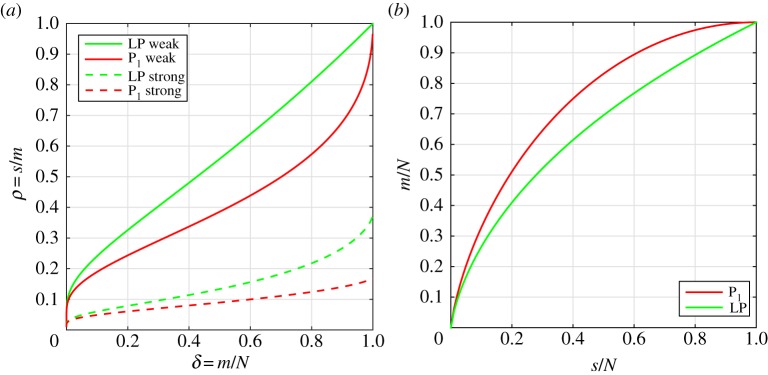
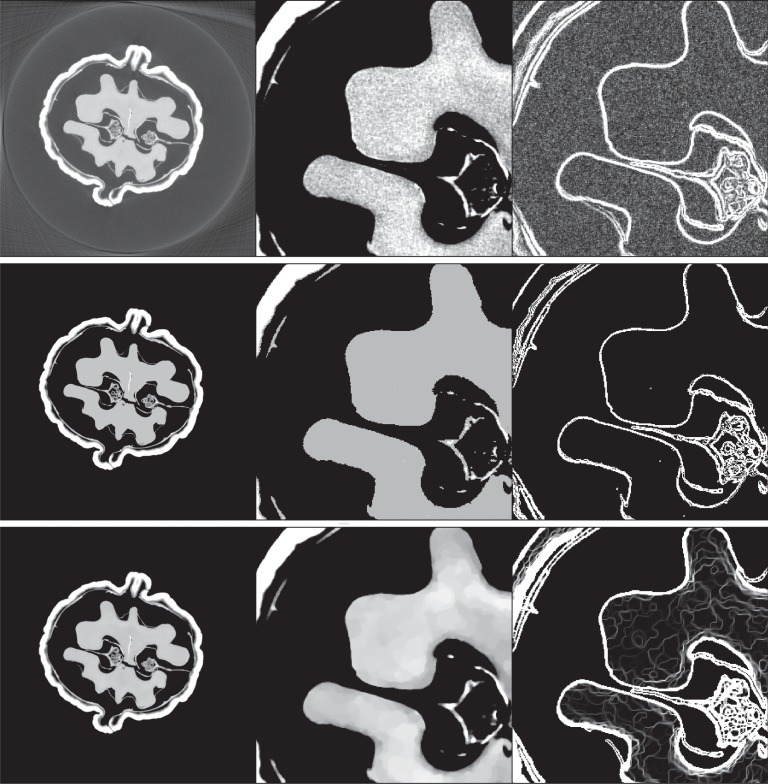
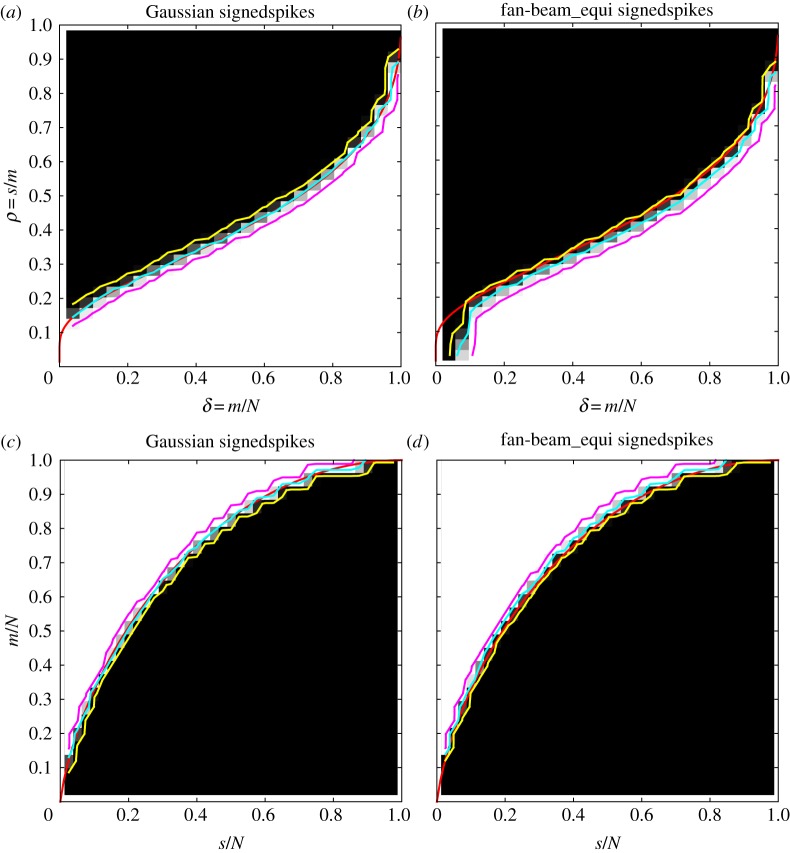
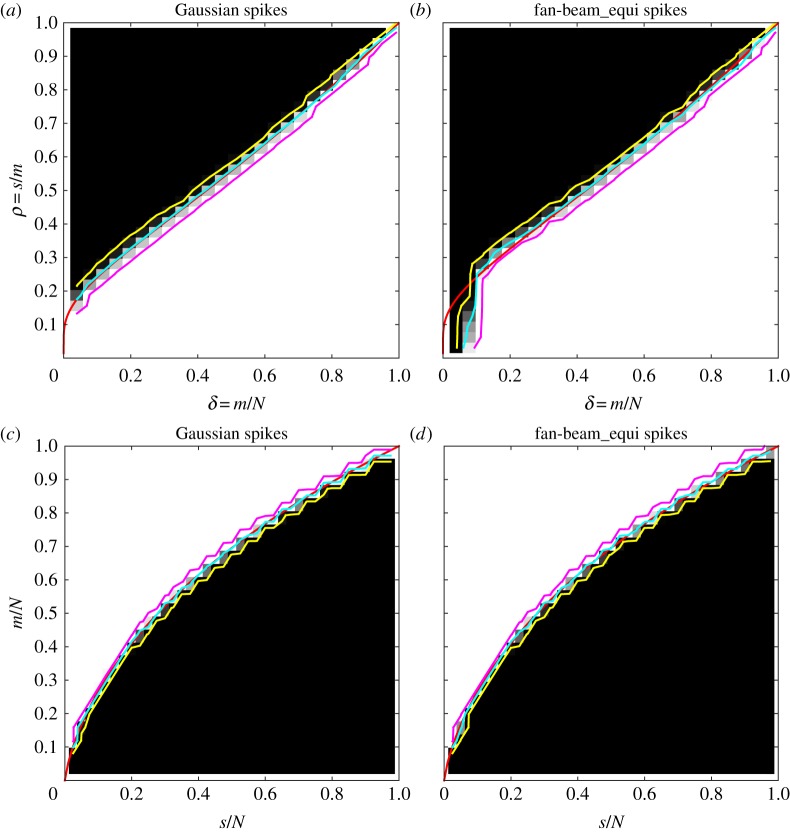
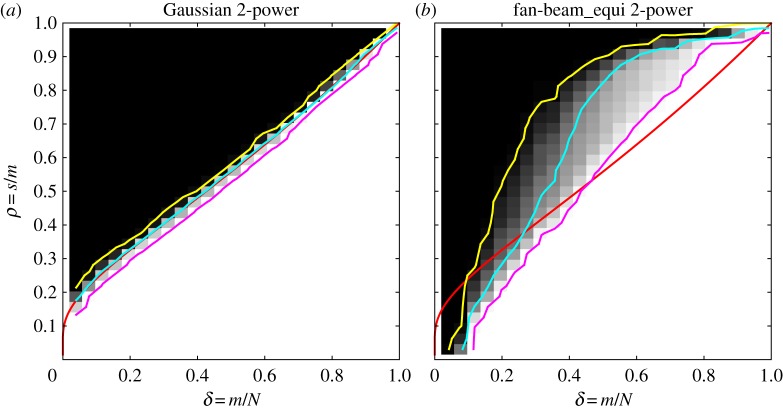
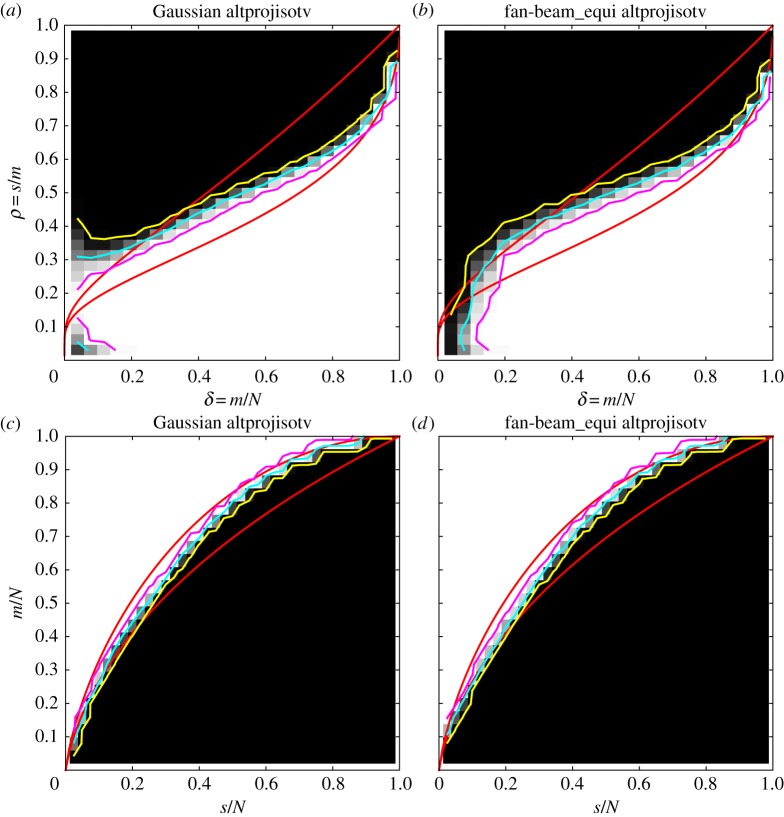
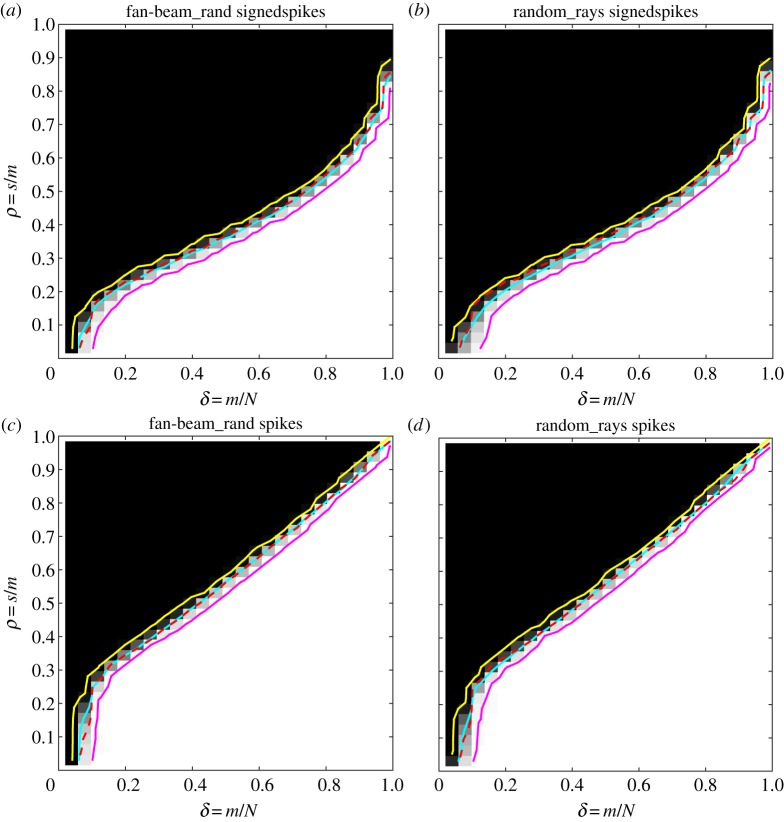
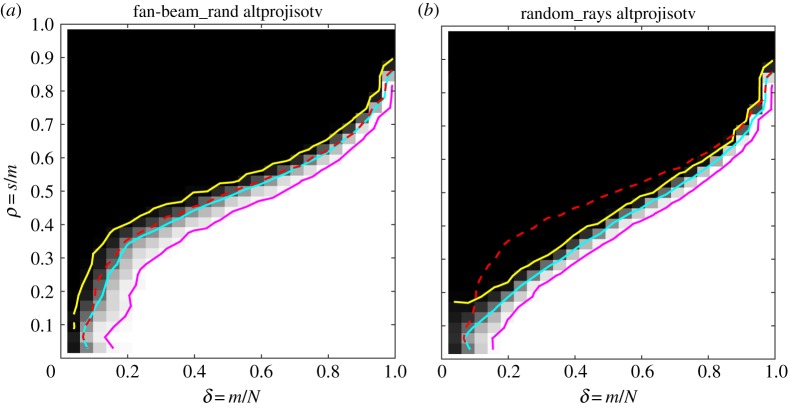
We introduce phase-diagram analysis, a standard tool in compressed sensing (CS), to the X-ray computed tomography (CT) community as a systematic method for determining how few projections suffice for accurate sparsity-regularized reconstruction. In CS, a phase diagram is a convenient way to study and express certain theoretical relations between sparsity and sufficient sampling. We adapt phase-diagram analysis for empirical use in X-ray CT for which the same theoretical results do not hold. We demonstrate in three case studies the potential of phase-diagram analysis for providing quantitative answers to questions of undersampling. First, we demonstrate that there are cases where X-ray CT empirically performs comparably with a near-optimal CS strategy, namely taking measurements with Gaussian sensing matrices. Second, we show that, in contrast to what might have been anticipated, taking randomized CT measurements does not lead to improved performance compared with standard structured sampling patterns. Finally, we show preliminary results of how well phase-diagram analysis can predict the sufficient number of projections for accurately reconstructing a large-scale image of a given sparsity by means of total-variation regularization.
我们将压缩感知(CS)中的标准工具——相图分析,引入到X射线计算机断层扫描(CT)领域,作为一种系统方法,用于确定需要多少投影才能实现准确的稀疏正则化重建。在压缩感知中,相图是研究和表达稀疏性与充分采样之间某些理论关系的便捷方式。我们将相图分析进行调整,以便在X射线CT中进行实证应用,尽管相同的理论结果并不成立。我们通过三个案例研究证明了相图分析在为欠采样问题提供定量答案方面的潜力。首先,我们证明在某些情况下,X射线CT在经验上与近乎最优的压缩感知策略(即使用高斯传感矩阵进行测量)表现相当。其次,我们表明,与预期相反,与标准结构化采样模式相比,采用随机CT测量并不会带来性能提升。最后,我们展示了相图分析在通过总变差正则化准确重建给定稀疏度的大规模图像时,预测所需投影数量的初步结果。