Chung I-Hsiao, Chen Cheng-Yi, Lin Yang-Hsiang, Chi Hsiang-Cheng, Huang Ya-Hui, Tai Pei-Ju, Liao Chia-Jung, Tsai Chung-Ying, Lin Syuan-Ling, Wu Meng-Han, Chen Ching-Ying, Lin Kwang-Huei
Department of Biochemistry, School of Medicine, Chang-Gung University, Taoyuan, Taiwan.
Department of Medical Research, Mackay Memorial Hospital, Taipei, Taiwan.
Oncotarget. 2015 Jun 20;6(17):15050-64. doi: 10.18632/oncotarget.3670.
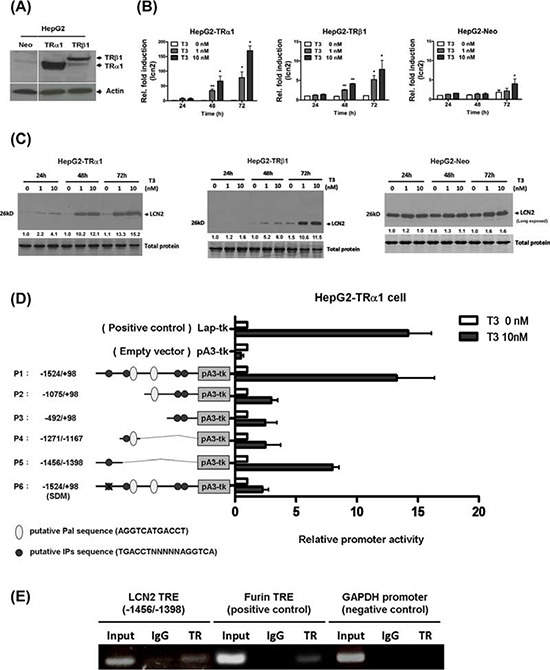
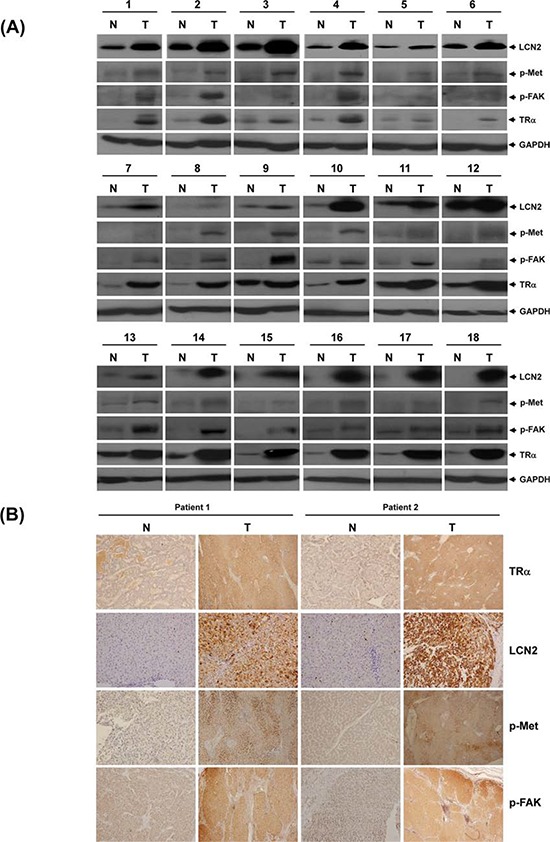
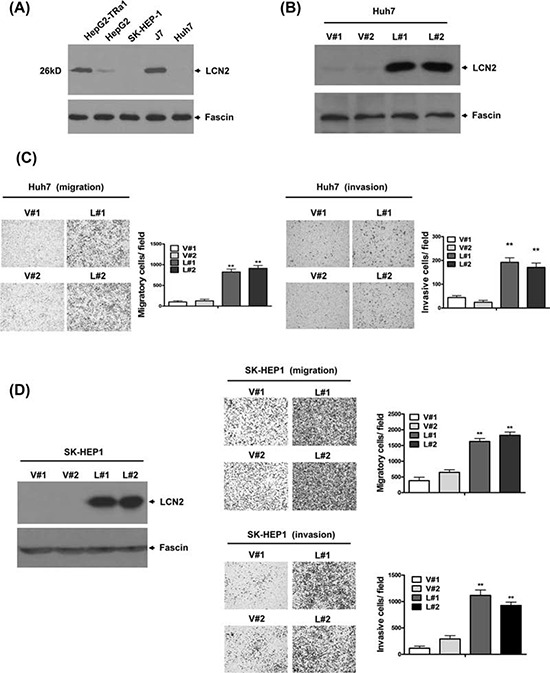
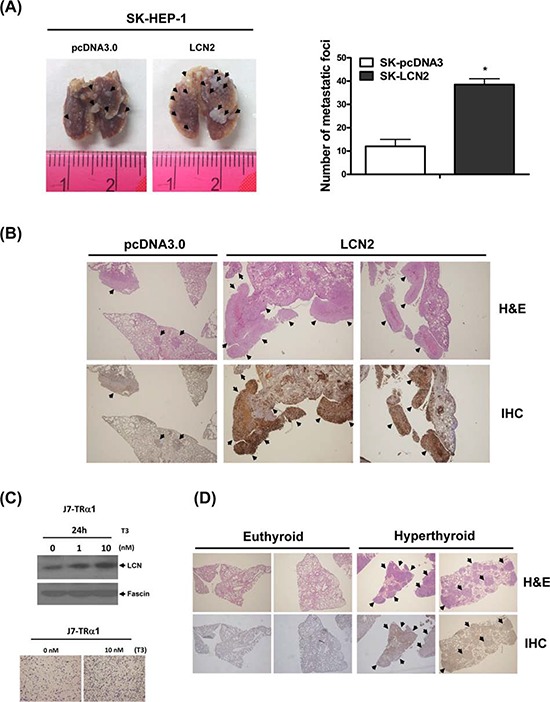
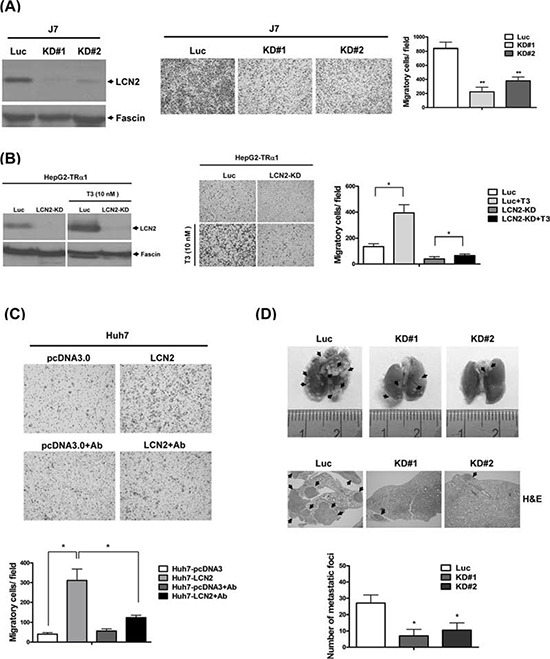
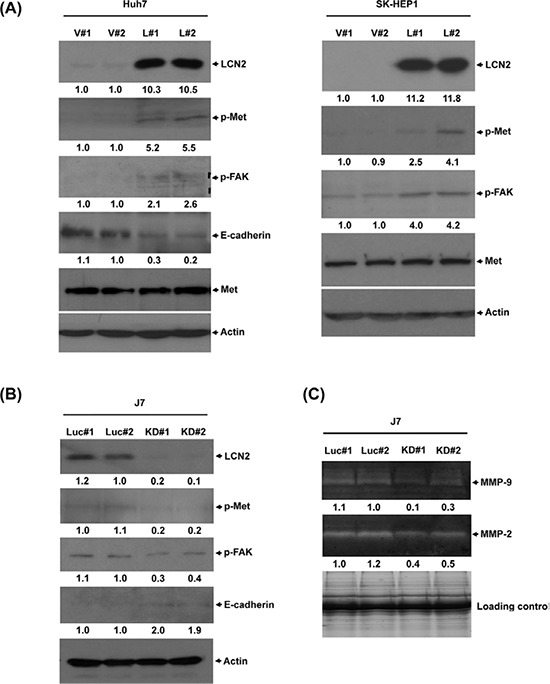
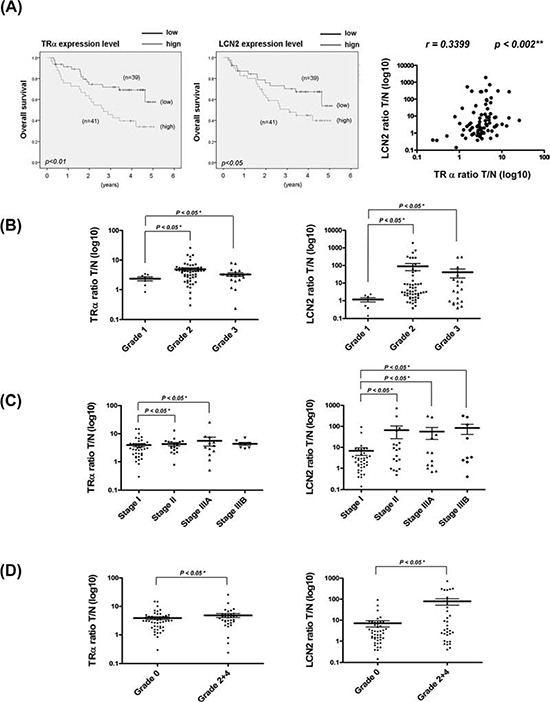
The thyroid hormone, 3,3',5-triiodo-L-thyronine (T3), regulates cell growth, development and differentiation via interactions with thyroid hormone receptors (TR), but the mechanisms underlying T3-mediated modulation of cancer progression are currently unclear. Lipocalin 2 (LCN2), a tumor-associated protein, is overexpressed in a variety of cancer types. Oligonucleotide microarray, coupled with proteomic analysis, has revealed that LCN2 is positively regulated by T3/TR. However, the physiological role and pathway of T3-mediated regulation of LCN2 in hepatocellular carcinogenesis remain to be characterized. Upregulation of LCN2 after T3 stimulation was observed in a time- and dose-dependent manner. Additionally, TRE on the LCN2 promoter was identified at positions -1444/-1427. Overexpression of LCN2 enhanced tumor cell migration and invasion, and conversely, its knockdown suppressed migration and invasion, both in vitro and in vivo. LCN2-induced migration occurred through activation of the Met/FAK cascade. LCN2 was overexpressed in clinical hepatocellular carcinoma (HCC) patients, compared with normal subjects, and positively correlated with TRα levels. Both TRα and LCN2 showed similar expression patterns in relation to survival rate, tumor grade, tumor stage and vascular invasion. Our findings collectively support a potential role of T3/TR in cancer progression through regulation of LCN2 via the Met/FAK cascade. LCN2 may thus be effectively utilized as a novel marker and therapeutic target in HCC.
甲状腺激素3,3',5-三碘-L-甲状腺原氨酸(T3)通过与甲状腺激素受体(TR)相互作用来调节细胞生长、发育和分化,但目前T3介导癌症进展调控的潜在机制尚不清楚。脂质运载蛋白2(LCN2)是一种肿瘤相关蛋白,在多种癌症类型中均有过表达。寡核苷酸微阵列与蛋白质组学分析相结合显示,LCN2受T3/TR正向调控。然而,T3介导的LCN2调控在肝细胞癌发生过程中的生理作用和途径仍有待明确。T3刺激后,LCN2的上调呈时间和剂量依赖性。此外,在LCN2启动子-1444/-1427位置鉴定到甲状腺激素反应元件(TRE)。LCN2的过表达增强了肿瘤细胞的迁移和侵袭能力,相反,在体外和体内实验中,其表达下调均抑制了迁移和侵袭。LCN2诱导的迁移是通过激活Met/FAK级联反应实现的。与正常受试者相比,临床肝细胞癌(HCC)患者中LCN2过表达,且与TRα水平呈正相关。TRα和LCN2在生存率、肿瘤分级、肿瘤分期和血管侵犯方面表现出相似的表达模式。我们的研究结果共同支持了T3/TR通过Met/FAK级联反应调控LCN2在癌症进展中的潜在作用。因此,LCN2可能作为HCC一种新的标志物和治疗靶点而得到有效应用。