Institute of Molecular Pathobiochemistry, Experimental Gene Therapy and Clinical Chemistry (IFMPEGKC), RWTH University Hospital Aachen, 52074 Aachen, Germany.
Int J Mol Sci. 2021 Mar 11;22(6):2865. doi: 10.3390/ijms22062865.
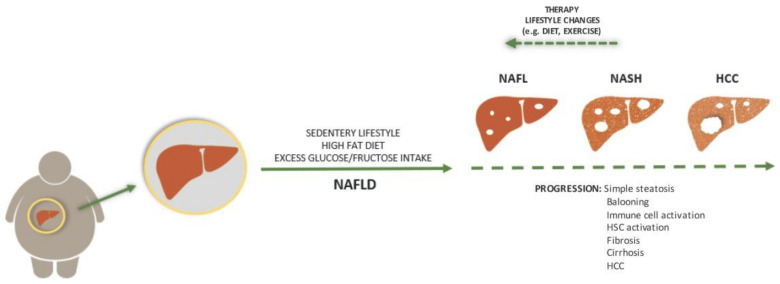
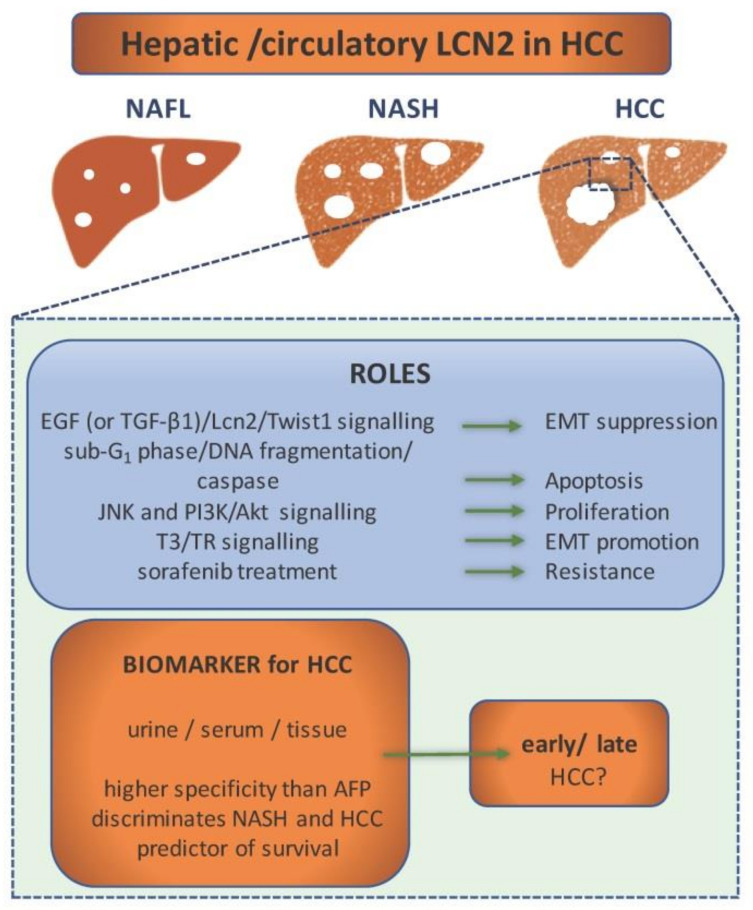
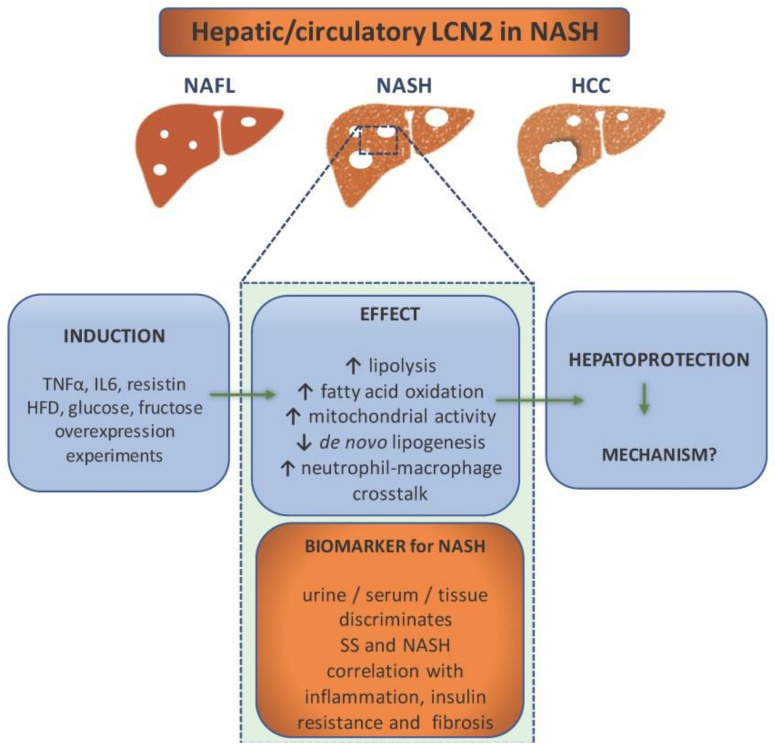
Excess calorie intake and a sedentary lifestyle have made non-alcoholic fatty liver disease (NAFLD) one of the fastest growing forms of liver disease of the modern world. It is characterized by abnormal accumulation of fat in the liver and can range from simple steatosis and non-alcoholic steatohepatitis (NASH) to cirrhosis as well as development of hepatocellular carcinoma (HCC). Biopsy is the golden standard for the diagnosis and differentiation of all NAFLD stages, but its invasiveness poses a risk for patients, which is why new, non-invasive ways of diagnostics ought to be discovered. Lipocalin-2 (LCN2), which is a part of the lipocalin transport protein family, is a protein formally known for its role in iron transport and in inflammatory response. However, in recent years, its implication in the pathogenesis of NAFLD has become apparent. LCN2 shows significant upregulation in several benign and malignant liver diseases, making it a good candidate for the NAFLD biomarker or even a therapeutic target. What makes LCN2 more interesting to study is the fact that it is overexpressed in HCC development induced by chronic NASH, which is one of the primary causes of cancer-related deaths. However, to this day, neither its role as a biomarker for NAFLD nor the molecular mechanisms of its implication in NAFLD pathogenesis have been completely elucidated. This review aims to gather and closely dissect the current knowledge about, sometimes conflicting, evidence on LCN2 as a biomarker for NAFLD, its involvement in NAFLD, and NAFLD-HCC related pathogenesis, while comparing it to the findings in similar pathologies.
过量的卡路里摄入和久坐的生活方式使非酒精性脂肪性肝病 (NAFLD) 成为现代世界增长最快的肝病形式之一。其特征是肝脏脂肪异常堆积,可从单纯性脂肪变性和非酒精性脂肪性肝炎 (NASH) 发展为肝硬化以及肝细胞癌 (HCC)。活检是诊断和区分所有 NAFLD 阶段的金标准,但由于其侵入性对患者存在风险,因此需要发现新的、非侵入性的诊断方法。脂联素 2 (LCN2) 是脂联素转运蛋白家族的一部分,作为一种正式的铁转运和炎症反应蛋白而闻名。然而,近年来,其在 NAFLD 发病机制中的作用变得明显。LCN2 在几种良性和恶性肝病中均有明显上调,使其成为 NAFLD 生物标志物甚至治疗靶点的良好候选物。使 LCN2 更具研究价值的是,它在慢性 NASH 诱导的 HCC 发展中过度表达,这是非酒精性脂肪性肝病相关死亡的主要原因之一。然而,迄今为止,其作为 NAFLD 生物标志物的作用及其在 NAFLD 发病机制中的作用的分子机制尚未完全阐明。本综述旨在收集和仔细剖析有关 LCN2 作为 NAFLD 生物标志物的、有时相互矛盾的现有知识,其在 NAFLD 中的作用以及与 NAFLD-HCC 相关的发病机制,同时将其与类似病理的发现进行比较。