Moshe Adi, Belausov Eduard, Niehl Annette, Heinlein Manfred, Czosnek Henryk, Gorovits Rena
Institute of Plant Sciences and Genetics in Agriculture and the Otto Warburg Minerva Center for Agricultural Biotechnology, The Robert H. Smith Faculty of Agriculture, Food and Environment, The Hebrew University of Jerusalem, Rehovot, Israel.
Institute of Plant Sciences, Volcani Center, Bet Dagan, Israel.
Sci Rep. 2015 May 5;5:9967. doi: 10.1038/srep09967.
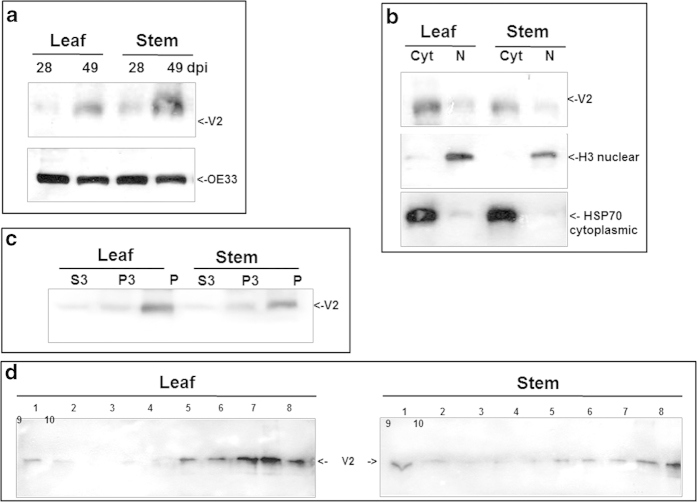
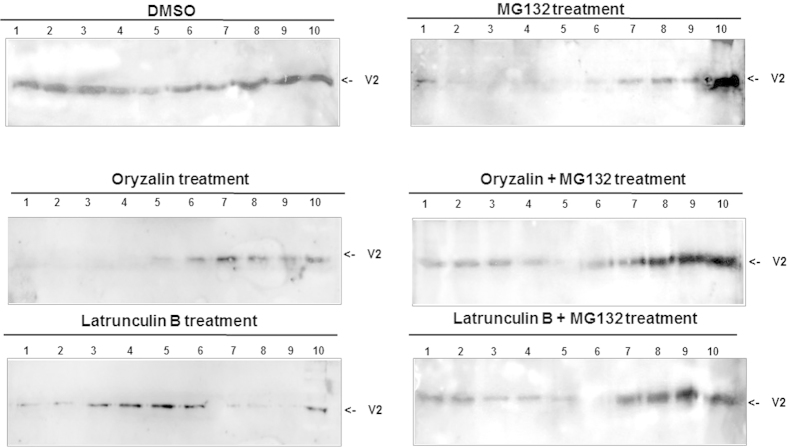
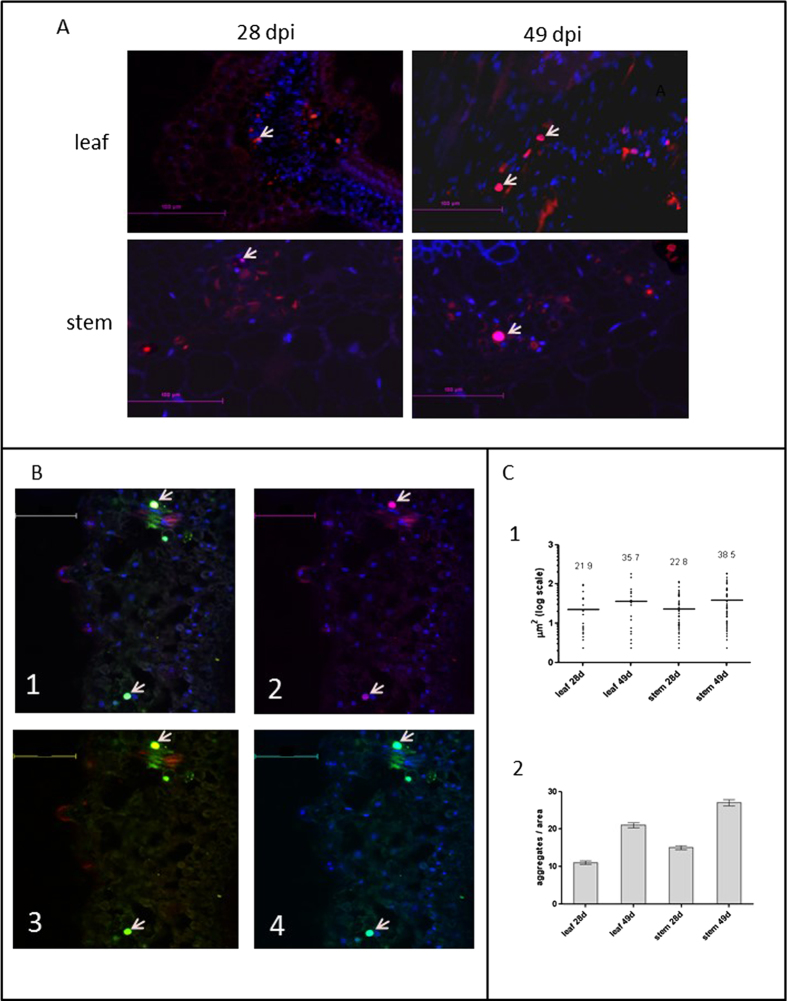
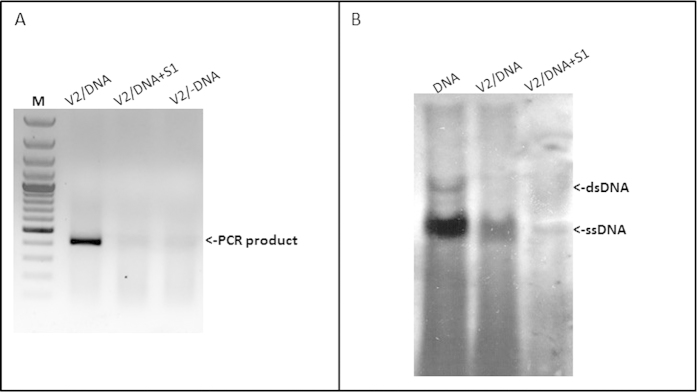
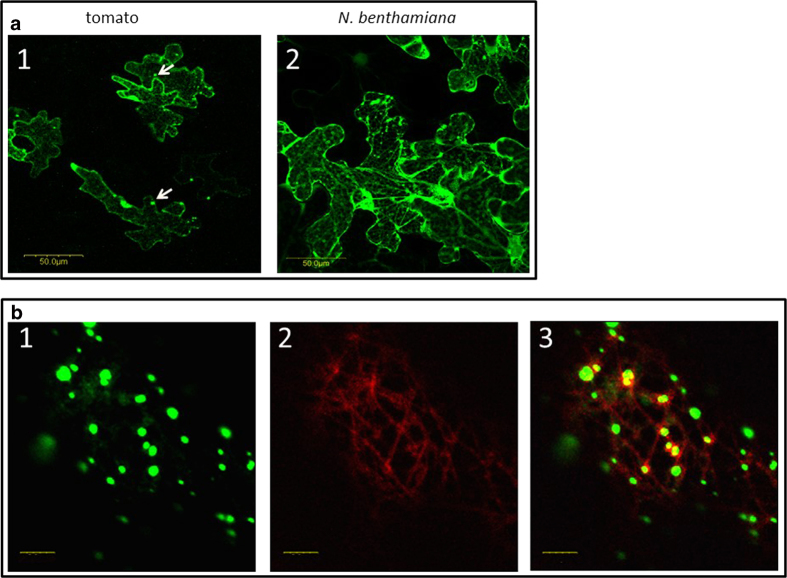
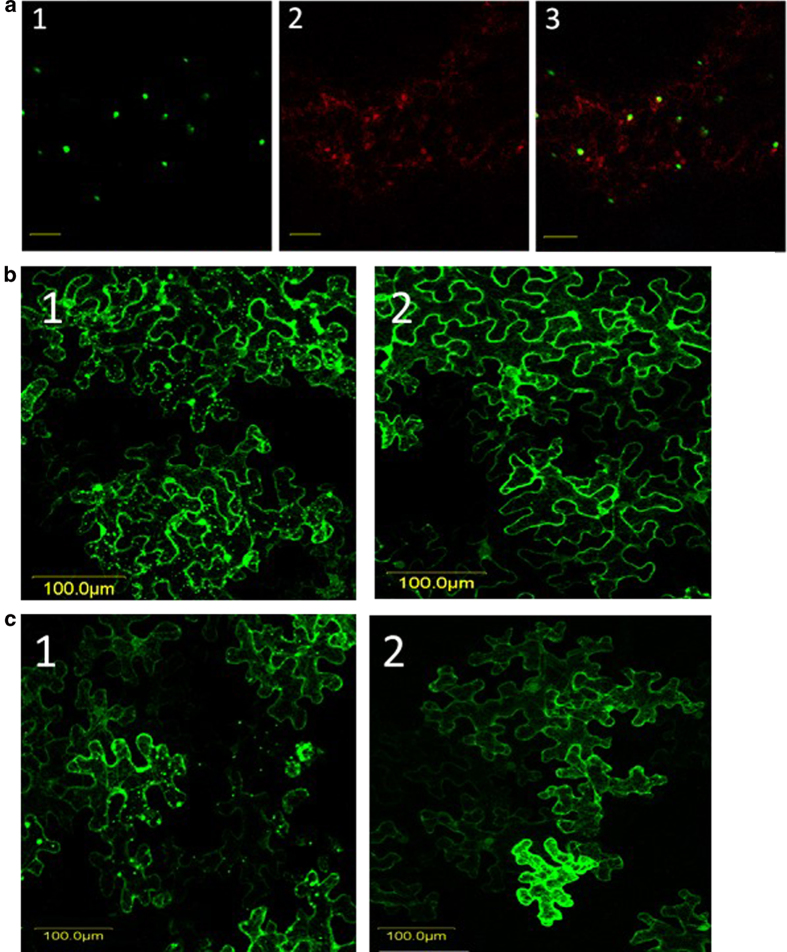
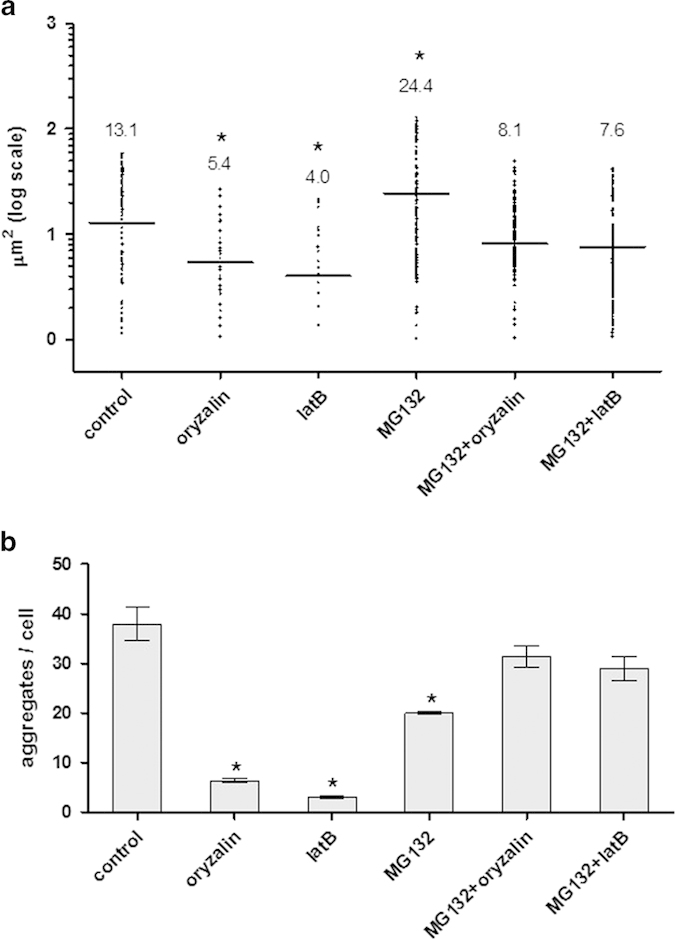
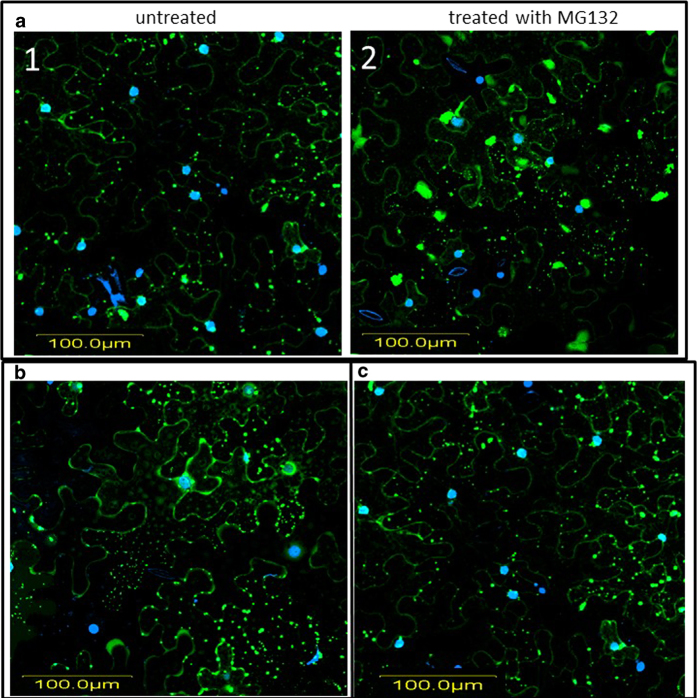
The spread of Tomato yellow leaf curl virus (TYLCV) was accompanied by the formation of coat protein (CP) aggregates of increasing size in the cytoplasm and nucleus of infected tomato (Solanum lycopersicum) cells. In order to better understand the TYLCV-host interaction, we investigated the properties and the subcellular accumulation pattern of the non-structural viral protein V2. CP and V2 are the only sense-oriented genes on the virus circular single-stranded DNA genome. Similar to CP, V2 localized to cytoplasmic aggregates of increasing size and as infection progressed was also found in nuclei, where it co-localized with CP. V2 was associated with viral genomic DNA molecules, suggesting that V2 functions as a DNA shuttling protein. The formation and the 26S proteasome-mediated degradation of V2 aggregates were dependent on the integrity of the actin and microtubule cytoskeleton. We propose that the cytoskeleton-dependent formation and growth of V2 aggregates play an important role during TYLCV infection, and that microtubules and actin filaments are important for the delivery of V2 to the 26S proteasome.
番茄黄化曲叶病毒(TYLCV)的传播伴随着感染番茄(Solanum lycopersicum)细胞的细胞质和细胞核中大小不断增加的衣壳蛋白(CP)聚集体的形成。为了更好地理解TYLCV与宿主的相互作用,我们研究了非结构病毒蛋白V2的特性和亚细胞积累模式。CP和V2是病毒环状单链DNA基因组上仅有的正义链基因。与CP相似,V2定位于大小不断增加的细胞质聚集体中,并且随着感染的进展,在细胞核中也被发现,在细胞核中它与CP共定位。V2与病毒基因组DNA分子相关联,表明V2作为一种DNA穿梭蛋白发挥作用。V2聚集体的形成和26S蛋白酶体介导的降解依赖于肌动蛋白和微管细胞骨架的完整性。我们提出,V2聚集体的细胞骨架依赖性形成和生长在TYLCV感染过程中起重要作用,并且微管和肌动蛋白丝对于将V2递送至26S蛋白酶体很重要。