Fu Zhi-chao, Wang Feng-mei, Cai Jian-ming
Department of Radiotherapy, Fu Zhou General Hospital, Fuzhou, Fujian, China (mainland).
Department of Obstetrics and Gynecology, Fu Zhou General Hospital, Fuzhou, Fujian, China (mainland).
Med Sci Monit. 2015 May 5;21:1276-87. doi: 10.12659/MSM.893689.
Different sensitivity of advanced cervical cancer to irradiation can decrease effectiveness of radiotherapy in some cases. We attempted to identify the differentially expressed genes in residual cervical cancer after radiotherapy that might be associated with poor prognosis and radioresistance.
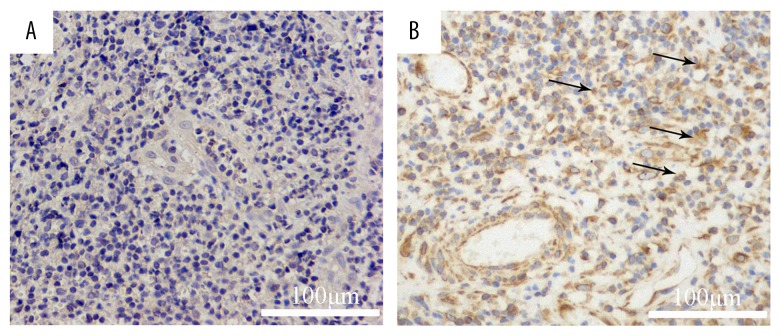
MATERIAL/METHODS: Differential genes expression was identified by an oligonucleotide microarray in cervical cancer tissues before radiation and after a 50-Gy dose of radiation. The microarray results were validated by quantitative real-time PCR. CXCL12 was validated by immunohistochemistry in paraffin-embedded cervical cancer tissues before radiotherapy. The relationship between the differentiated gene and prognosis was validated by survival analysis.
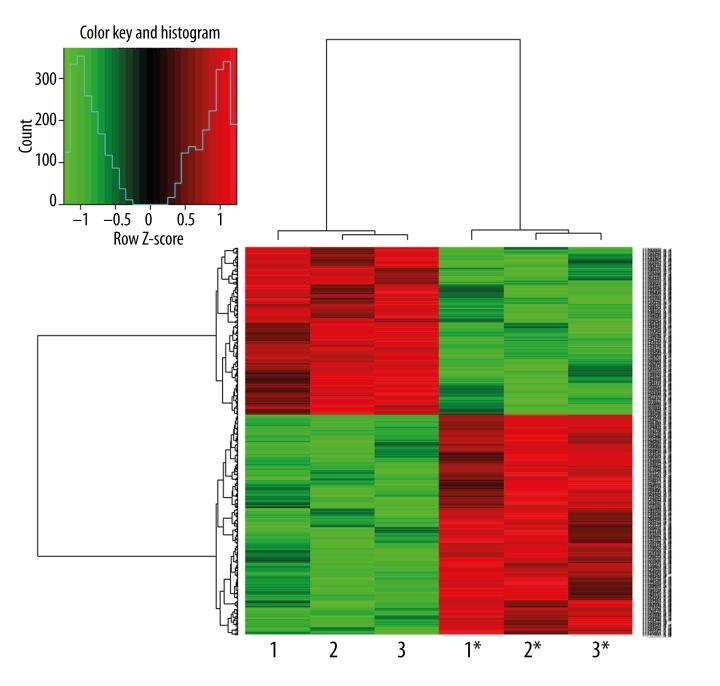
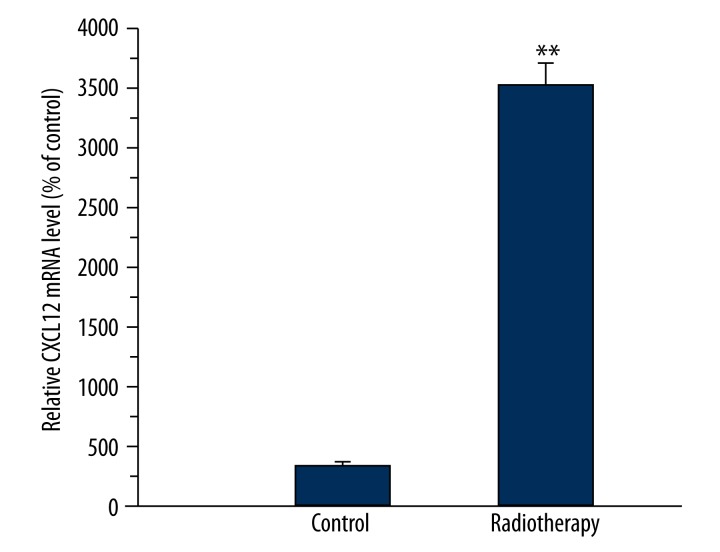
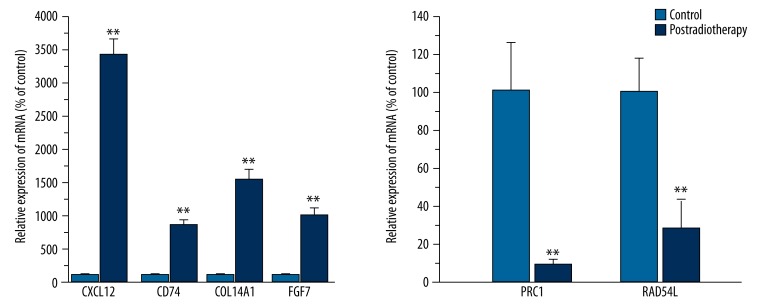
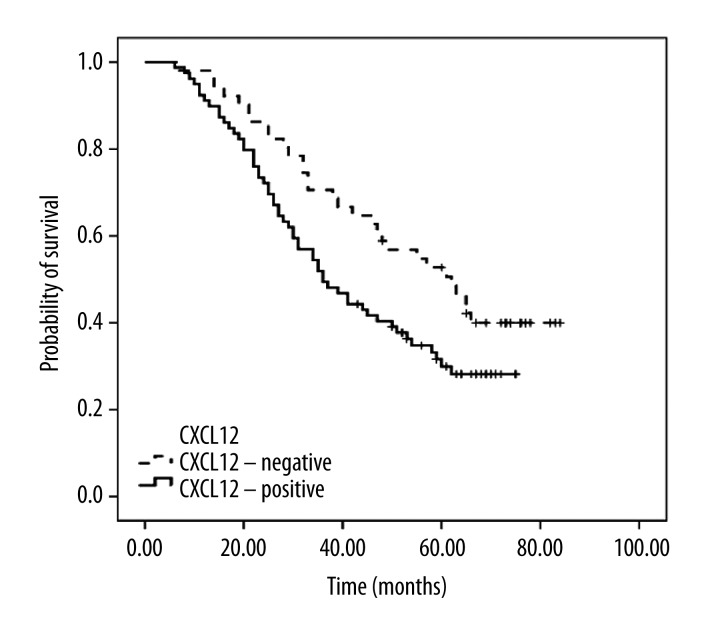
Hierarchic cluster analysis identified 238 differentiated genes that exhibited ≥3.0-fold change and p<0.05. We found 111 genes that were in persistent up-regulation and 127 in persistent down-regulation after a 50-Gy dose of radiation when compared with the control group. These genes were involved in processes such as cell growth and death, cell-apoptosis, cell cycle regulation, cell signaling, DNA synthesis and repair, and cell adhesion. High differential expression of CXCL12, CD74, FGF7, COL14A1, PRC1, and RAD54L genes was validated by quantitative PCR before and after radiotherapy. Survival analysis results showed that the high expression of CXCL12 was closely related to poor prognosis.
The higher expression of CXCL12 might be informative regarding poor prognosis in patients undergoing radical radiotherapy. The differentially expressed genes identified in our study might provide a new method for diagnosis and treatment of radioresistance in cervical cancer.
晚期宫颈癌对放疗的不同敏感性在某些情况下会降低放射治疗的效果。我们试图鉴定放疗后残留宫颈癌中差异表达的基因,这些基因可能与预后不良和放射抗性相关。
材料/方法:通过寡核苷酸微阵列鉴定宫颈癌组织放疗前及50 Gy剂量放疗后的差异基因表达。微阵列结果通过定量实时PCR进行验证。CXCL12通过免疫组织化学在放疗前石蜡包埋的宫颈癌组织中进行验证。通过生存分析验证差异基因与预后的关系。
层次聚类分析鉴定出238个差异基因,其变化倍数≥3.0且p<0.05。与对照组相比,我们发现50 Gy剂量放疗后有111个基因持续上调,127个基因持续下调。这些基因参与细胞生长与死亡、细胞凋亡、细胞周期调控、细胞信号传导、DNA合成与修复以及细胞黏附等过程。放疗前后通过定量PCR验证了CXCL12、CD74、FGF7、COL14A1、PRC1和RAD54L基因的高差异表达。生存分析结果表明,CXCL12的高表达与预后不良密切相关。
CXCL12的高表达可能提示接受根治性放疗患者的预后不良。我们研究中鉴定出的差异表达基因可能为宫颈癌放射抗性的诊断和治疗提供新方法。