Van de Water Karen, Sterckx Yann G J, Volkov Alexander N
1] Jean Jeener NMR Centre, Structural Biology Brussels, Vrije Universiteit Brussel, Pleinlaan 2, Brussels 1050, Belgium [2] Structural Biology Research Center, VIB, Pleinlaan 2, Brussels 1050, Belgium.
1] Structural Biology Research Center, VIB, Pleinlaan 2, Brussels 1050, Belgium [2] Research Unit for Cellular and Molecular Immunology (CMIM), Vrije Universiteit Brussel, Pleinlaan 2, Brussels 1050, Belgium.
Nat Commun. 2015 May 6;6:7073. doi: 10.1038/ncomms8073.
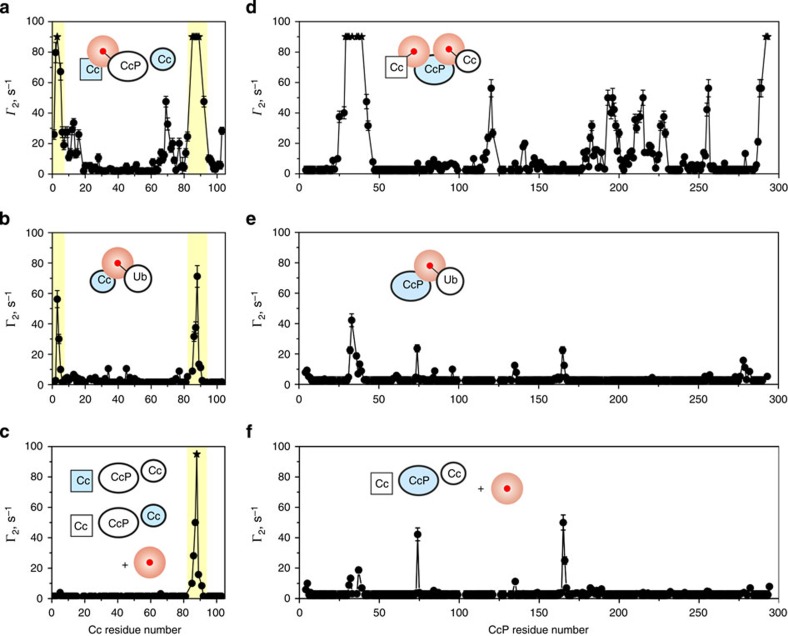
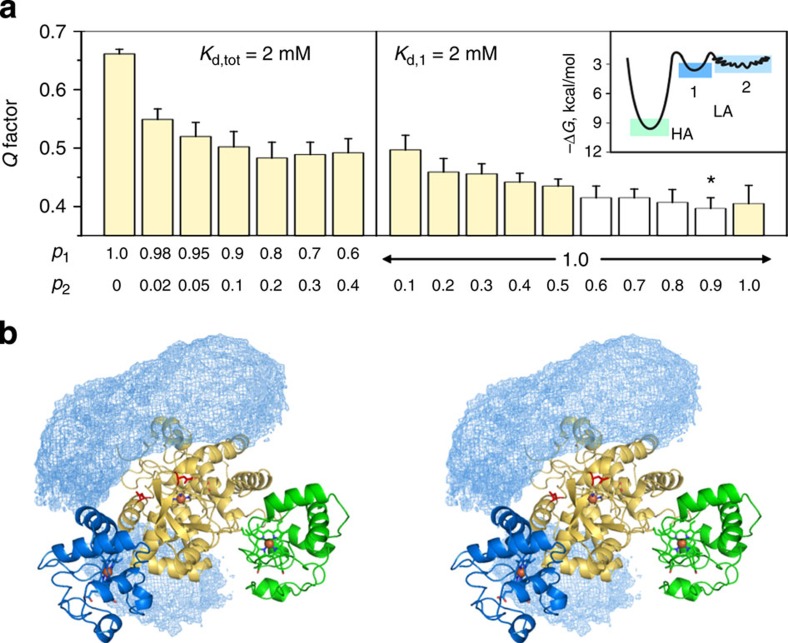
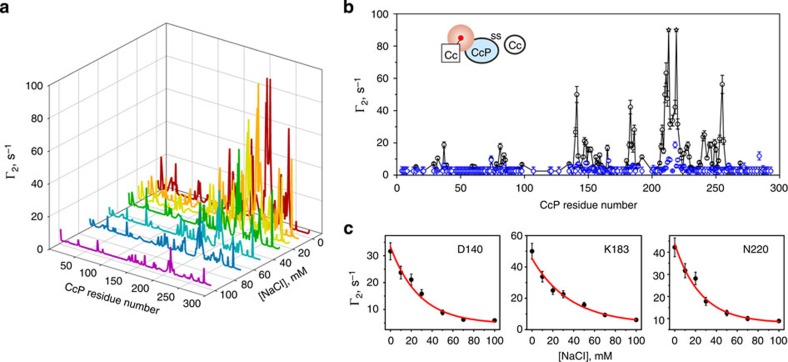
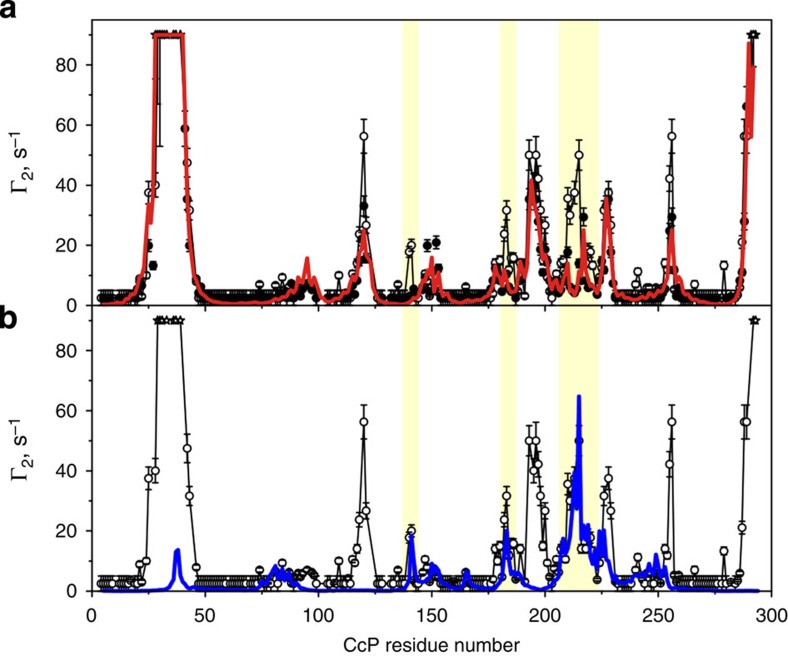
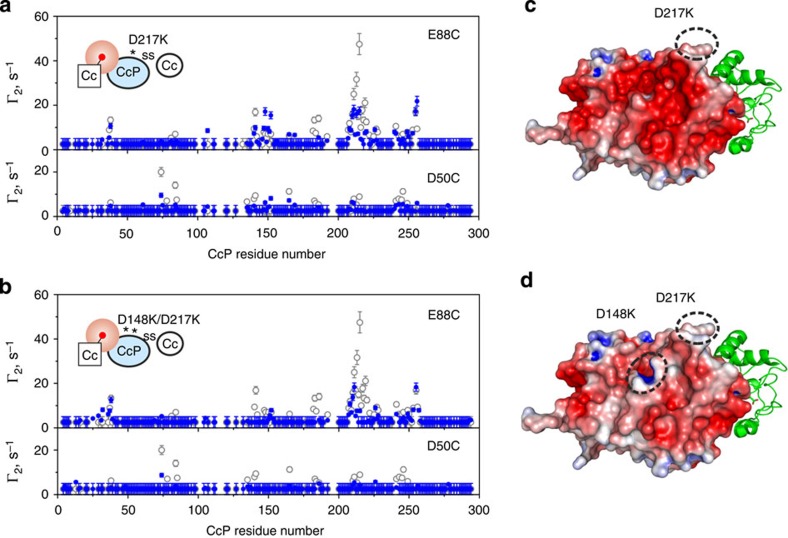
The complex of yeast cytochrome c peroxidase and cytochrome c is a paradigm of the biological electron transfer (ET). Building on seven decades of research, two different models have been proposed to explain its functional redox activity. One postulates that the intermolecular ET occurs only in the dominant, high-affinity protein-protein orientation, while the other posits formation of an additional, low-affinity complex, which is much more active than the dominant one. Unlike the high-affinity interaction-extensively studied by X-ray crystallography and NMR spectroscopy-until now the binding of cytochrome c to the low-affinity site has not been observed directly, but inferred mainly from kinetics experiments. Here we report the structure of this elusive, weak protein complex and show that it consists of a dominant, inactive bound species and an ensemble of minor, ET-competent protein-protein orientations, which summarily account for the experimentally determined value of the ET rate constant.
酵母细胞色素c过氧化物酶与细胞色素c的复合物是生物电子转移(ET)的一个范例。基于七十年来的研究,人们提出了两种不同的模型来解释其功能性氧化还原活性。一种假设分子间电子转移仅发生在占主导地位的高亲和力蛋白质-蛋白质方向,而另一种则假定形成了一种额外的低亲和力复合物,其活性比占主导地位的复合物高得多。与通过X射线晶体学和核磁共振光谱广泛研究的高亲和力相互作用不同,到目前为止,细胞色素c与低亲和力位点的结合尚未直接观察到,而是主要从动力学实验中推断出来的。在这里,我们报告了这种难以捉摸的弱蛋白质复合物的结构,并表明它由一个占主导地位的无活性结合物种和一组次要的、具有电子转移能力的蛋白质-蛋白质方向组成,这些方向共同解释了实验测定的电子转移速率常数的值。