Zhang Renyi, Ludwig Arne, Zhang Cunfang, Tong Chao, Li Guogang, Tang Yongtao, Peng Zuogang, Zhao Kai
1] Key Laboratory of Adaptation and Evolution of Plateau Biota, Northwest Institute of Plateau Biology, Chinese Academy of Sciences, Xining 810001, China [2] University of Chinese Academy of Sciences, Beijing 100049, China.
Department of Evolutionary Genetics, Leibniz Institute for Zoo and Wildlife Research, Berlin 10324, Germany.
Sci Rep. 2015 May 6;5:9780. doi: 10.1038/srep09780.
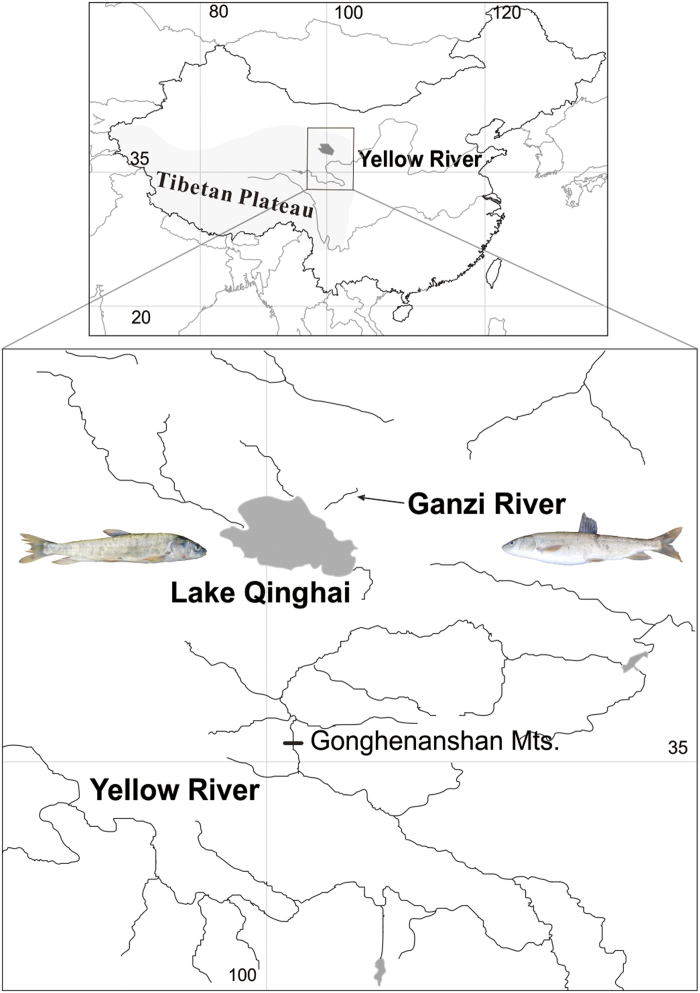
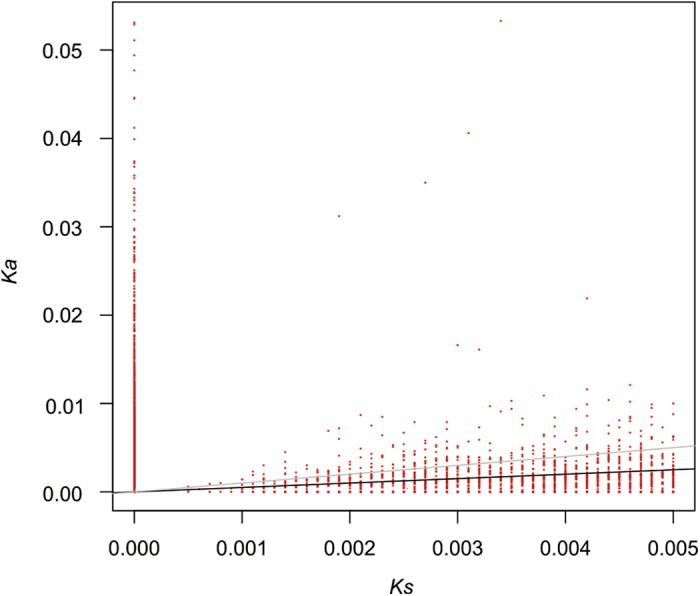
Divergent selection among environments affects species distributions and can lead to speciation. In this article, we investigated the transcriptomes of two ecotypes of scaleless carp (Gymnocypris przewalskii przewalskii and G. p. ganzihonensis) from the Tibetan Plateau. We used a transcriptome sequencing approach to screen approximately 250,000 expressed sequence tags (ESTs) from the gill and kidney tissues of twelve individuals from the Ganzi River and Lake Qinghai to understand how this freshwater fish has adapted to an ecological niche shift from saline to freshwater. We identified 9,429 loci in the gill transcriptome and 12,034 loci in the kidney transcriptome with significant differences in their expression, of which 242 protein-coding genes exhibited strong positive selection (Ka/Ks > 1). Many of the genes are involved in ion channel functions (e.g., Ca(2+)-binding proteins), immune responses (e.g., nephrosin) or cellular water absorption functions (e.g., aquaporins). These results have potentially broad importance in understanding shifts from saline to freshwater habitats. Furthermore, this study provides the first transcriptome of G. przewalskii, which will facilitate future ecological genomics studies and aid in the identification of genes underlying adaptation and incipient ecological speciation.
环境间的趋异选择会影响物种分布并可能导致物种形成。在本文中,我们研究了来自青藏高原的两种裸鲤生态型(青海湖裸鲤指名亚种和青海湖裸鲤甘子河亚种)的转录组。我们采用转录组测序方法,从甘孜河和青海湖的12个个体的鳃和肾组织中筛选了约250,000个表达序列标签(EST),以了解这种淡水鱼是如何适应从咸水到淡水的生态位转变的。我们在鳃转录组中鉴定出9429个位点,在肾转录组中鉴定出12034个位点,它们的表达存在显著差异,其中242个蛋白质编码基因表现出强烈的正选择(Ka/Ks>1)。许多基因参与离子通道功能(如钙结合蛋白)、免疫反应(如肾素)或细胞吸水功能(如水通道蛋白)。这些结果对于理解从咸水栖息地到淡水栖息地的转变可能具有广泛的重要意义。此外,本研究提供了青海湖裸鲤的首个转录组,这将有助于未来的生态基因组学研究,并有助于鉴定适应和初始生态物种形成背后的基因。