Khan Mushfiquddin, Dhammu Tajinder S, Matsuda Fumiyo, Baarine Mauhammad, Dhindsa Tejbir Singh, Singh Inderjit, Singh Avtar K
Department of Pediatrics, Medical University of South Carolina, Charleston, SC, USA.
Department of Pediatrics, Medical University of South Carolina, Charleston, SC, USA ; School of Health Sciences, Kagoshima University, Kagoshima, Japan.
Drug Des Devel Ther. 2015 Apr 17;9:2233-47. doi: 10.2147/DDDT.S77115. eCollection 2015.
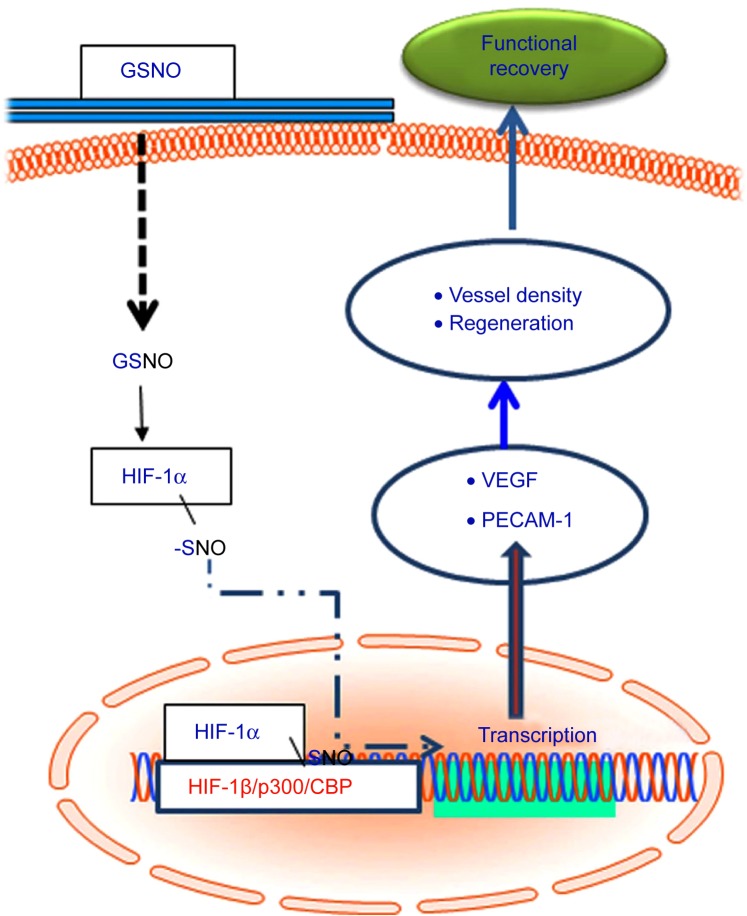
For stroke patients, stimulating neurorepair mechanisms is necessary to reduce morbidity and disability. Our previous studies on brain and spinal cord trauma show that exogenous treatment with the S-nitrosylating agent S-nitrosoglutathione (GSNO) - a nitric oxide and glutathione metabolite of the human body - stimulates neurorepair and aids functional recovery. Using a rat model of cerebral ischemia and reperfusion (IR) in this study, we tested the hypothesis that GSNO invokes the neurorepair process and improves neurobehavioral functions through the angiogenic HIF-1α/VEGF pathway.
Stroke was induced by middle cerebral artery occlusion for 60 minutes followed by reperfusion in adult male rats. The injured animals were treated with saline (IR group, n=7), GSNO (0.25 mg/kg, GSNO group, n=7), and GSNO plus the HIF-1α inhibitor 2-methoxyestra-diol (2-ME) (0.25 mg/kg GSNO + 5.0 mg/kg 2-ME, GSNO + 2-ME group, n=7). The groups were studied for either 7 or 14 days to determine neurorepair mediators and functional recovery. Brain capillary endothelial cells were used to show that GSNO promotes angiogenesis and that GSNO-mediated induction of VEGF and the stimulation of angiogenesis are dependent on HIF-1α activity.
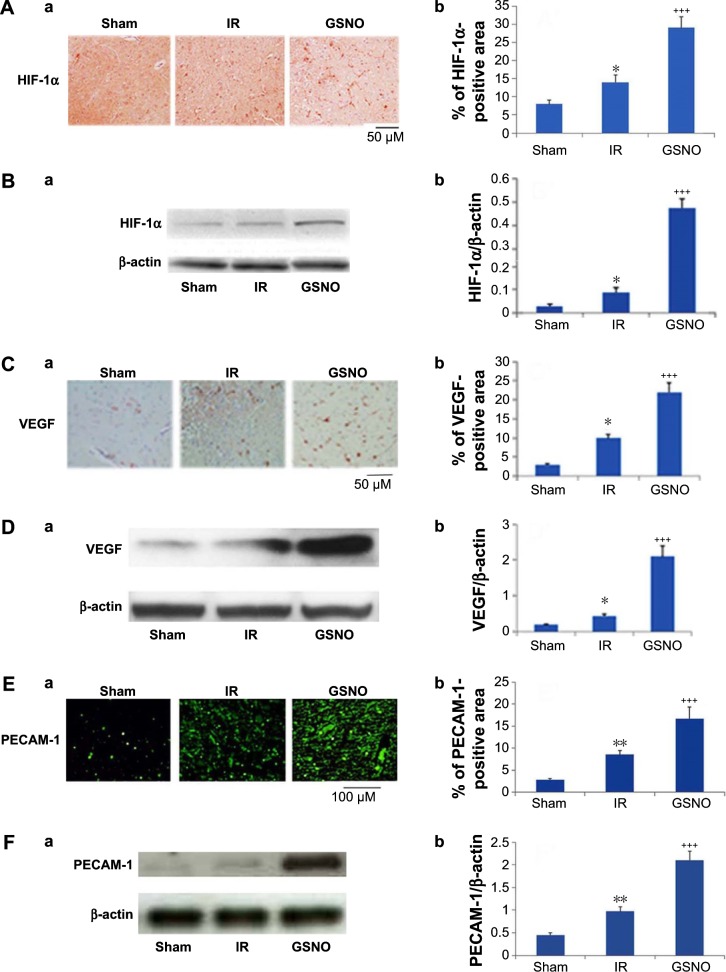
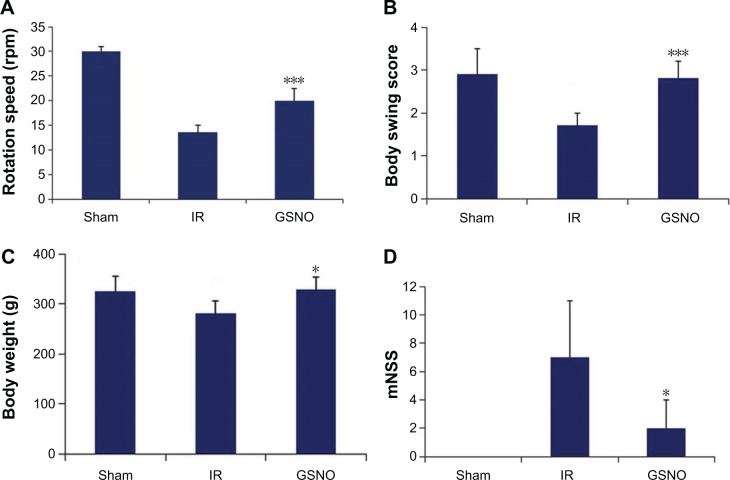
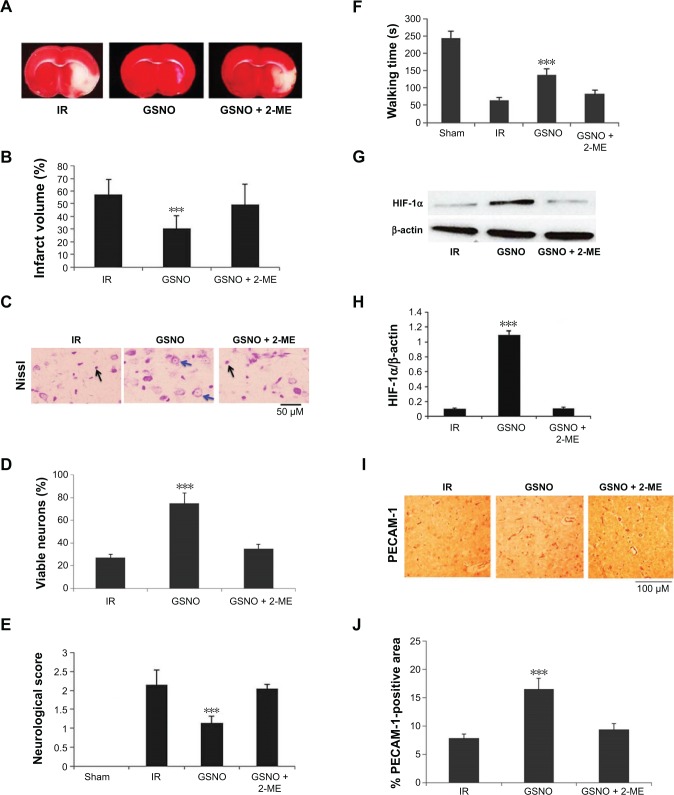
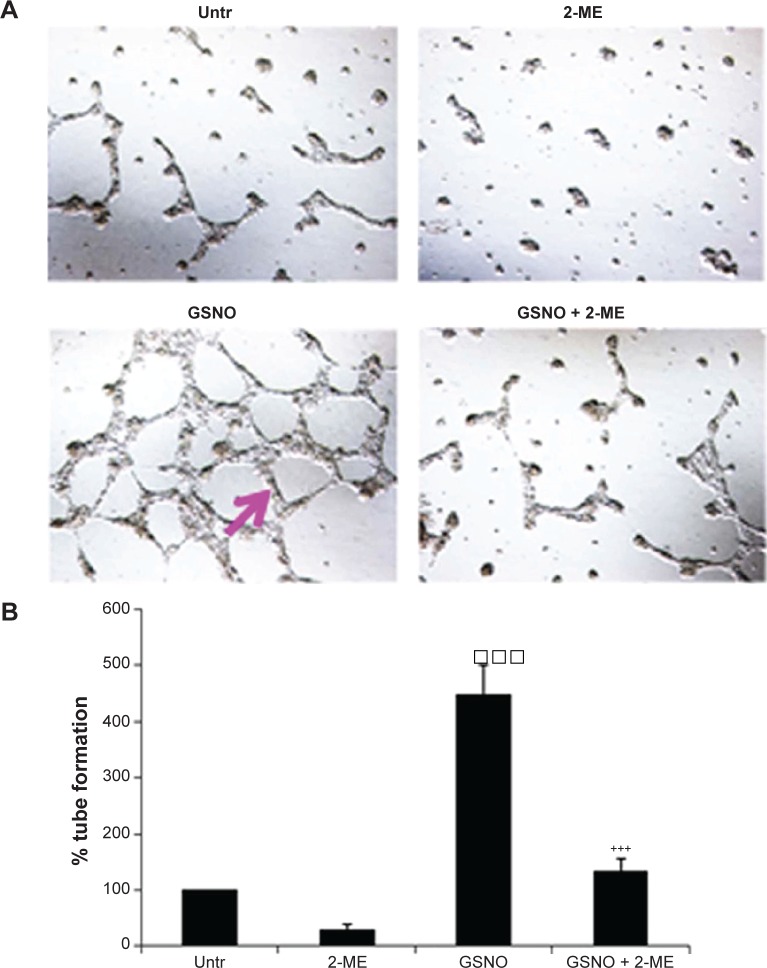
IR injury increased the expression of neurorepair mediators HIF-1α, VEGF, and PECAM-1 and vessel markers to a limited degree that correlate well with significantly compromised neurobehavioral functions compared with sham animals. GSNO treatment of IR not only remarkably enhanced further the expression of HIF-1α, VEGF, and PECAM-1 but also improved functioning compared with IR. The GSNO group also had a higher degree of vessel density than the IR group. Increased expression of VEGF and the degree of tube formation (angiogenesis) by GSNO were reduced after the inhibition of HIF-1α by 2-ME in an endothelial cell culture model. 2-ME treatment of the GSNO group also blocked not only GSNO's effect of reduced infarct volume, decreased neuronal loss, and enhanced expression of PECAM-1 (P<0.001), but also its improvement of motor and neurological functions (P<0.001).
GSNO stimulates the process of neurorepair, promotes angiogenesis, and aids functional recovery through the HIF-1α-dependent pathway, showing therapeutic and translational promise for stroke.
对于中风患者,刺激神经修复机制对于降低发病率和残疾率至关重要。我们之前对脑和脊髓创伤的研究表明,用人体一氧化氮和谷胱甘肽代谢产物亚硝基谷胱甘肽(GSNO)进行外源性治疗可刺激神经修复并有助于功能恢复。在本研究中,我们使用大鼠脑缺血再灌注(IR)模型,检验了GSNO通过血管生成性缺氧诱导因子-1α(HIF-1α)/血管内皮生长因子(VEGF)途径引发神经修复过程并改善神经行为功能的假设。
通过大脑中动脉闭塞60分钟后再灌注诱导成年雄性大鼠发生中风。对受伤动物分别给予生理盐水(IR组,n = 7)、GSNO(0.25 mg/kg,GSNO组,n = 7)以及GSNO加HIF-1α抑制剂2-甲氧基雌二醇(2-ME)(0.25 mg/kg GSNO + 待添加文本5.0 mg/kg 2-ME,GSNO + 2-ME组,n = 7)。对这些组进行7天或14天的研究,以确定神经修复介质和功能恢复情况。使用脑毛细血管内皮细胞来证明GSNO促进血管生成,且GSNO介导的VEGF诱导和血管生成刺激依赖于HIF-1α活性。
与假手术动物相比,IR损伤使神经修复介质HIF-1α、VEGF和血小板内皮细胞黏附分子-1(PECAM-1)以及血管标志物的表达仅有限增加,这与显著受损的神经行为功能密切相关。与IR组相比,GSNO治疗IR不仅显著进一步增强了HIF-1α、VEGF和PECAM-1的表达,还改善了功能。GSNO组的血管密度也高于IR组。在体外内皮细胞培养模型中,用2-ME抑制HIF-1α后,GSNO诱导的VEGF表达增加和管形成(血管生成)程度降低。GSNO组的2-ME治疗不仅阻断了GSNO减少梗死体积、减少神经元丢失和增强PECAM-1表达的作用(P < 0.001),还阻断了其改善运动和神经功能的作用(P < 0.001)。
GSNO通过HIF-1α依赖性途径刺激神经修复过程,促进血管生成,并有助于功能恢复,对中风显示出治疗和转化前景。