Khan Mushfiquddin, Qiao Fei, Kumar Pavan, Touhidul Islam S M, Singh Avtar K, Won Jeseong, Singh Inderjit
Department of Pediatrics, Medical University of South Carolina, Charleston, SC, USA.
Department of Pathology and Laboratory Medicine, Medical University of South Carolina, Charleston, SC, USA.
Neural Regen Res. 2022 Jan;17(1):185-193. doi: 10.4103/1673-5374.314312.
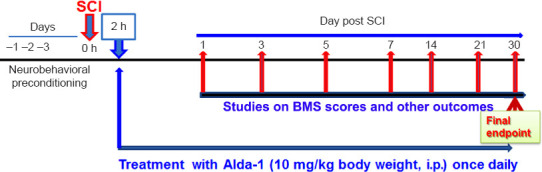
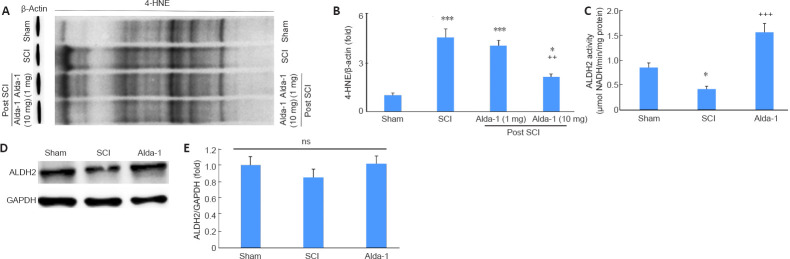
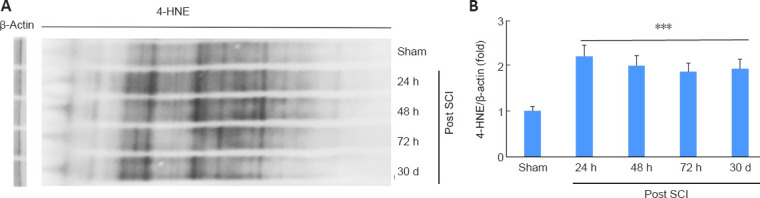
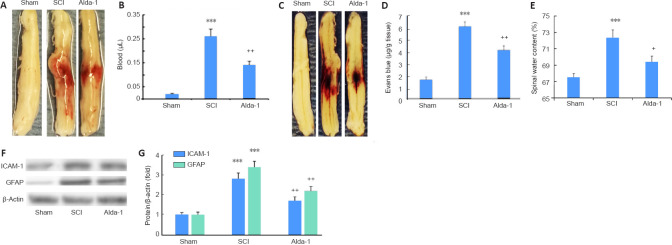
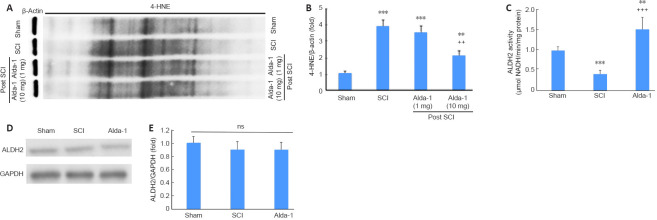
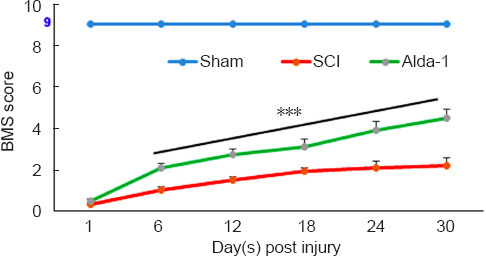
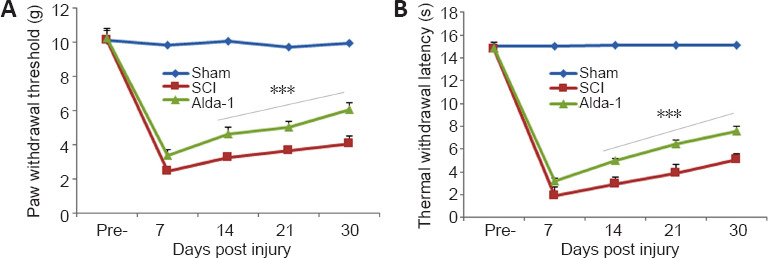
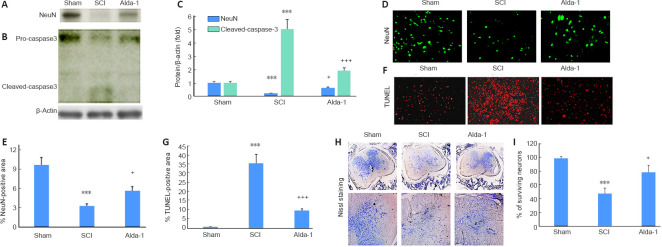
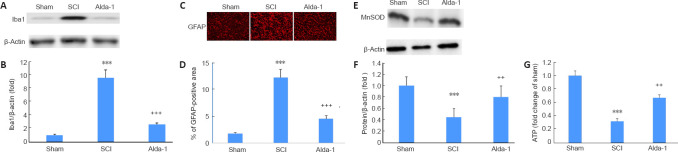
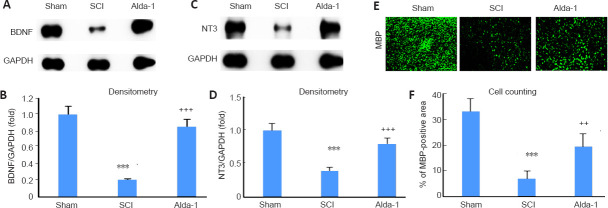
Spinal cord injury (SCI) is associated with high production and excessive accumulation of pathological 4-hydroxy-trans-2-nonenal (4-HNE), a reactive aldehyde, formed by SCI-induced metabolic dysregulation of membrane lipids. Reactive aldehyde load causes redox alteration, neuroinflammation, neurodegeneration, pain-like behaviors, and locomotion deficits. Pharmacological scavenging of reactive aldehydes results in limited improved motor and sensory functions. In this study, we targeted the activity of mitochondrial enzyme aldehyde dehydrogenase 2 (ALDH2) to detoxify 4-HNE for accelerated functional recovery and improved pain-like behavior in a male mouse model of contusion SCI. N-(1,3-benzodioxol-5-ylmethyl)-2,6-dichlorobenzamide (Alda-1), a selective activator of ALDH2, was used as a therapeutic tool to suppress the 4-HNE load. SCI was induced by an impactor at the T9-10 vertebral level. Injured animals were initially treated with Alda-1 at 2 hours after injury, followed by once-daily treatment with Alda-1 for 30 consecutive days. Locomotor function was evaluated by the Basso Mouse Scale, and pain-like behaviors were assessed by mechanical allodynia and thermal algesia. ALDH2 activity was measured by enzymatic assay. 4-HNE protein adducts and enzyme/protein expression levels were determined by western blot analysis and histology/immunohistochemistry. SCI resulted in a sustained and prolonged overload of 4-HNE, which parallels with the decreased activity of ALDH2 and low functional recovery. Alda-1 treatment of SCI decreased 4-HNE load and enhanced the activity of ALDH2 in both the acute and the chronic phases of SCI. Furthermore, the treatment with Alda-1 reduced neuroinflammation, oxidative stress, and neuronal loss and increased adenosine 5'-triphosphate levels stimulated the neurorepair process and improved locomotor and sensory functions. Conclusively, the results provide evidence that enhancing the ALDH2 activity by Alda-1 treatment of SCI mice suppresses the 4-HNE load that attenuates neuroinflammation and neurodegeneration, promotes the neurorepair process, and improves functional outcomes. Consequently, we suggest that Alda-1 may have therapeutic potential for the treatment of human SCI. Animal procedures were approved by the Institutional Animal Care and Use Committee (IACUC) of MUSC (IACUC-2019-00864) on December 21, 2019.
脊髓损伤(SCI)与病理性4-羟基反式-2-壬烯醛(4-HNE)的高生成和过度积累有关,4-HNE是一种反应性醛类,由SCI诱导的膜脂代谢失调形成。反应性醛负荷会导致氧化还原改变、神经炎症、神经退行性变、疼痛样行为和运动功能障碍。对反应性醛进行药理清除只能有限地改善运动和感觉功能。在本研究中,我们针对线粒体酶醛脱氢酶2(ALDH2)的活性,以解毒4-HNE,从而在雄性挫伤性SCI小鼠模型中加速功能恢复并改善疼痛样行为。N-(1,3-苯并二氧杂环戊烯-5-基甲基)-2,6-二氯苯甲酰胺(Alda-1),一种ALDH2的选择性激活剂,被用作治疗工具来抑制4-HNE负荷。在T9-10椎体水平用撞击器诱导SCI。受伤动物在受伤后2小时开始用Alda-1治疗,随后连续30天每天用Alda-1治疗一次。通过Basso小鼠量表评估运动功能,通过机械性异常性疼痛和热痛觉过敏评估疼痛样行为。通过酶促测定法测量ALDH2活性。通过蛋白质印迹分析以及组织学/免疫组织化学测定4-HNE蛋白加合物和酶/蛋白表达水平。SCI导致4-HNE持续且长期过载,这与ALDH2活性降低和功能恢复不佳平行。Alda-1治疗SCI可在SCI的急性期和慢性期降低4-HNE负荷并增强ALDH2活性。此外,Alda-1治疗可减少神经炎症、氧化应激和神经元损失,并增加三磷酸腺苷水平,刺激神经修复过程并改善运动和感觉功能。总之,结果提供了证据表明,通过Alda-1治疗SCI小鼠增强ALDH2活性可抑制4-HNE负荷,从而减轻神经炎症和神经退行性变,促进神经修复过程并改善功能结果。因此,我们认为Alda-1可能具有治疗人类SCI的潜力。动物实验程序于2019年12月21日获得MUSC机构动物护理和使用委员会(IACUC)的批准(IACUC-2019-00864)。