Glenthøj Andreas, Nickles Katrin, Cowland Jack, Borregaard Niels
The Granulocyte Research Laboratory, Department of Hematology, Rigshospitalet, University of Copenhagen, Denmark.
Poliklinik für Parodontologie, Zentrum der Zahn-, Mund- und Kieferheilkunde (Carolinum), Johann Wolfgang Goethe-Universität, Frankfurt, Germany.
PLoS One. 2015 May 6;10(5):e0125483. doi: 10.1371/journal.pone.0125483. eCollection 2015.
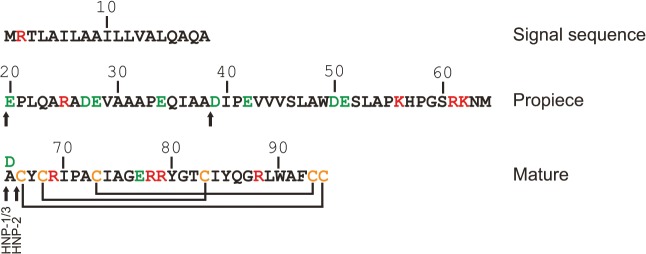
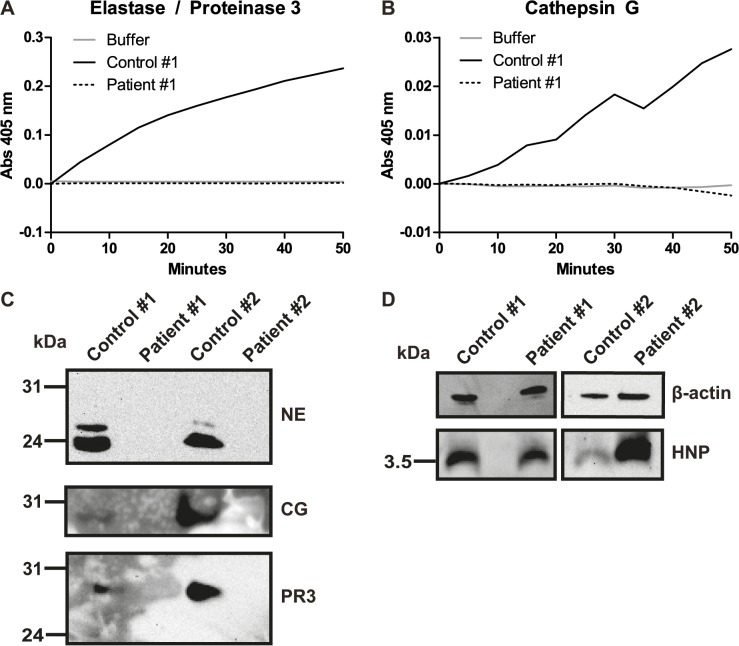
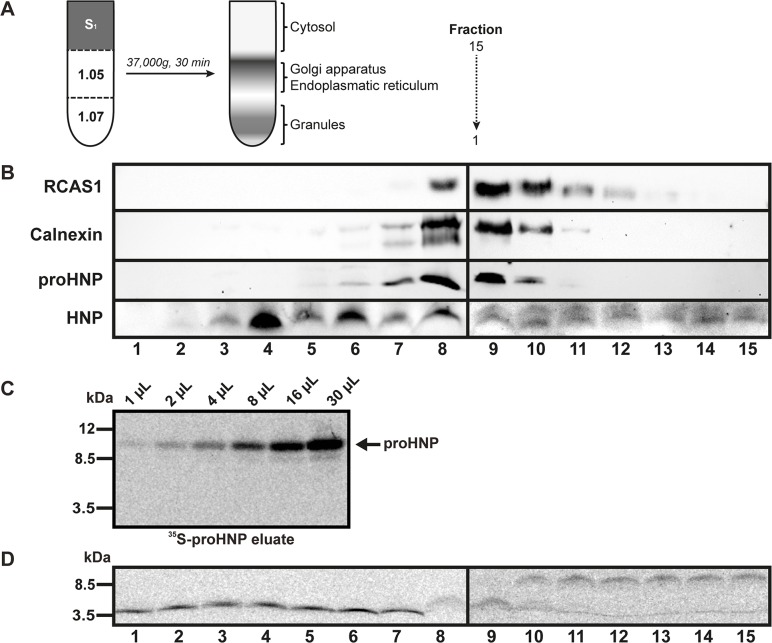
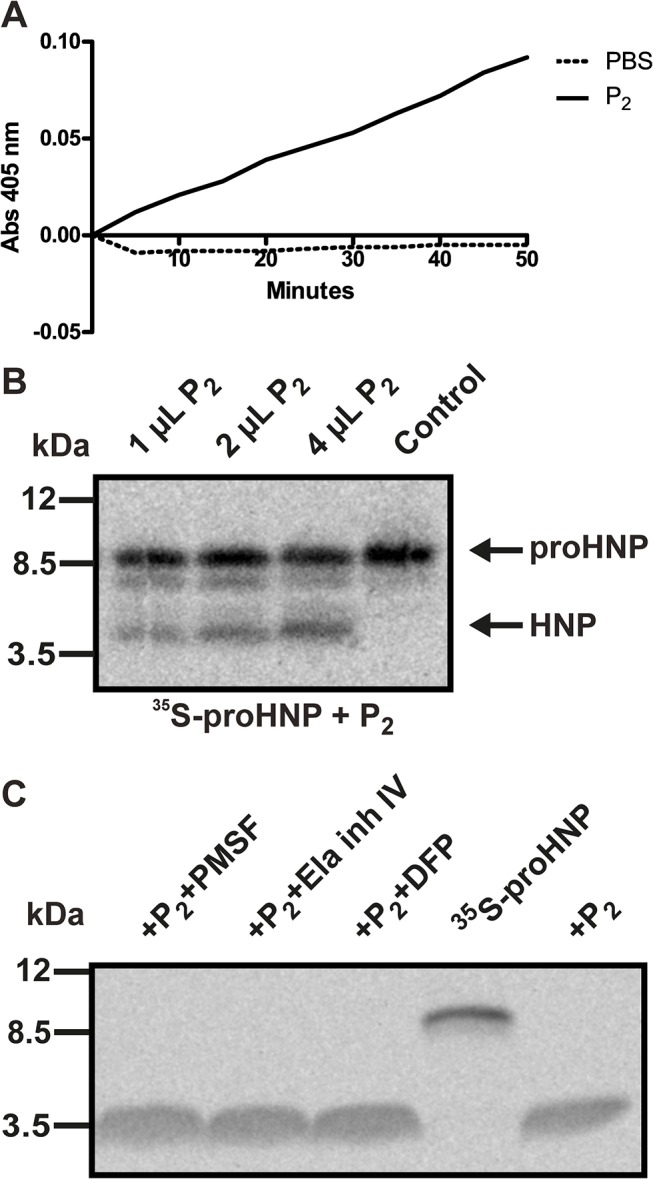
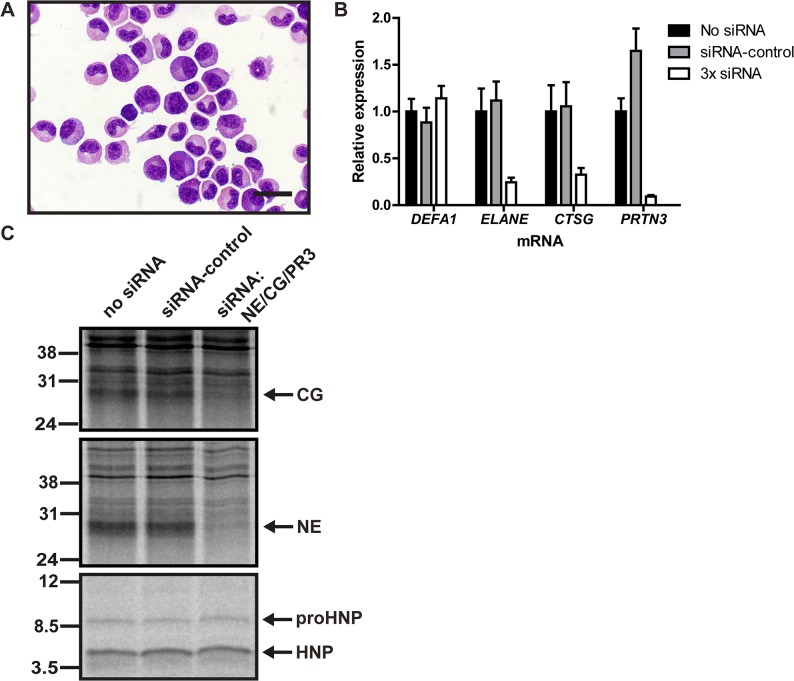
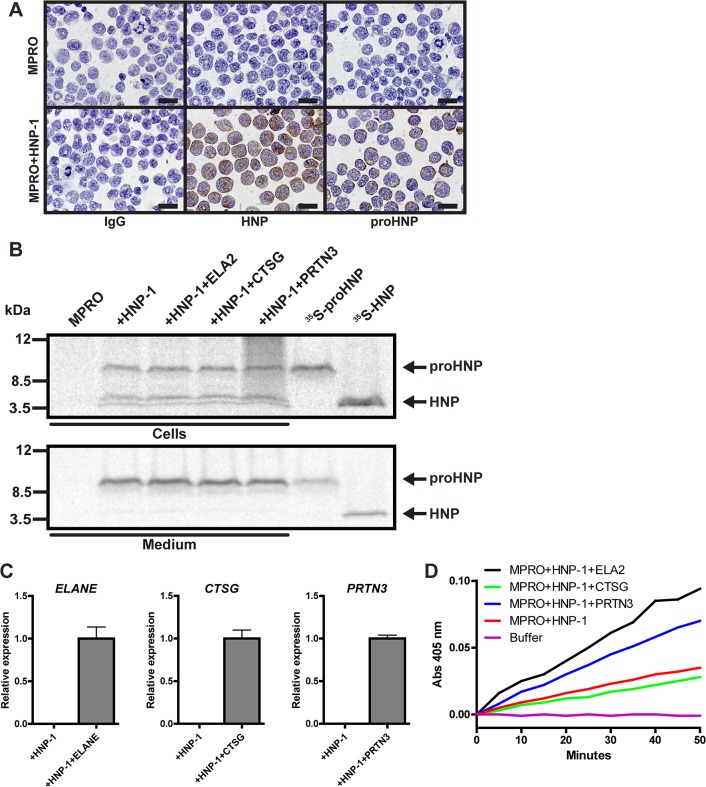
The α-defensins, human neutrophil peptides (HNPs) are the predominant antimicrobial peptides of neutrophil granules. They are synthesized in promyelocytes and myelocytes as proHNPs, but only processed in promyelocytes and stored as mature HNPs in azurophil granules. Despite decades of search, the mechanisms underlying the posttranslational processing of neutrophil defensins remain unidentified. Thus, neither the enzyme that processes proHNPs nor the localization of processing has been identified. It has been hypothesized that proHNPs are processed by the serine proteases highly expressed in promyelocytes: Neutrophil elastase (NE), cathepsin G (CG), and proteinase 3 (PR3), all of which are able to process recombinant proHNP into HNP in vitro. We investigated whether serine proteases are in fact responsible for processing of proHNP in human bone marrow cells and in human and murine myeloid cell lines. Subcellular fractionation of the human promyelocytic cell line PLB-985 demonstrated proHNP processing to commence in fractions containing endoplasmic reticulum. Processing of 35S-proHNP was insensitive to serine protease inhibitors. Simultaneous knockdown of NE, CG, and PR3 did not decrease proHNP processing in primary human bone marrow cells. Furthermore, introduction of NE, CG, and PR3 into murine promyelocytic cells did not enhance the proHNP processing capability. Finally, two patients suffering from Papillon-Lefèvre syndrome, who lack active neutrophil serine proteases, demonstrated normal levels of fully processed HNP in peripheral neutrophils. Contradicting earlier assumptions, our study found serine proteases dispensable for processing of proHNPs in vivo. This calls for study of other protease classes in the search for the proHNP processing protease(s).
α-防御素,即人中性粒细胞肽(HNPs),是中性粒细胞颗粒中主要的抗菌肽。它们在早幼粒细胞和中幼粒细胞中以前体HNPs的形式合成,但仅在早幼粒细胞中进行加工,并以成熟的HNPs形式储存在嗜天青颗粒中。尽管经过数十年的研究,中性粒细胞防御素翻译后加工的潜在机制仍未明确。因此,既未鉴定出加工前体HNPs的酶,也未确定加工的定位。有人推测,前体HNPs是由早幼粒细胞中高表达的丝氨酸蛋白酶加工的:中性粒细胞弹性蛋白酶(NE)、组织蛋白酶G(CG)和蛋白酶3(PR3),所有这些酶都能够在体外将重组前体HNP加工成HNP。我们研究了丝氨酸蛋白酶是否实际上负责人类骨髓细胞以及人类和小鼠髓系细胞系中前体HNP的加工。人早幼粒细胞系PLB-985的亚细胞分级分离表明,前体HNP的加工在含有内质网的级分中开始。35S-前体HNP的加工对丝氨酸蛋白酶抑制剂不敏感。同时敲低NE、CG和PR3并没有降低原代人骨髓细胞中前体HNP的加工。此外,将NE、CG和PR3引入小鼠早幼粒细胞中并没有增强前体HNP的加工能力。最后,两名患有帕皮永-勒费弗尔综合征且缺乏活性中性粒细胞丝氨酸蛋白酶的患者,其外周血中性粒细胞中完全加工的HNP水平正常。与早期的假设相反,我们的研究发现丝氨酸蛋白酶在体内对前体HNPs的加工并非必需。这就需要研究其他蛋白酶类别,以寻找前体HNP加工蛋白酶。